


Carved Wooden Counters
Carved wooden counters bring tangible texture and historic utility into a room, offering tactile connection to past domestic and commercial life.
Carved Wooden Counters
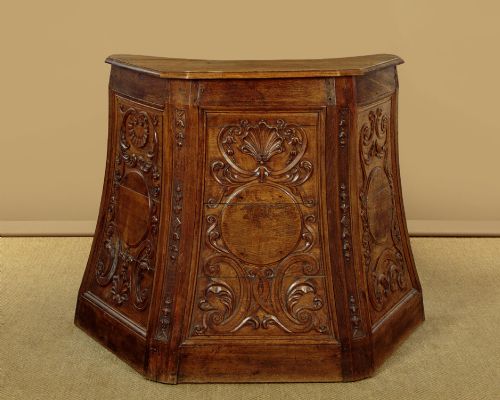
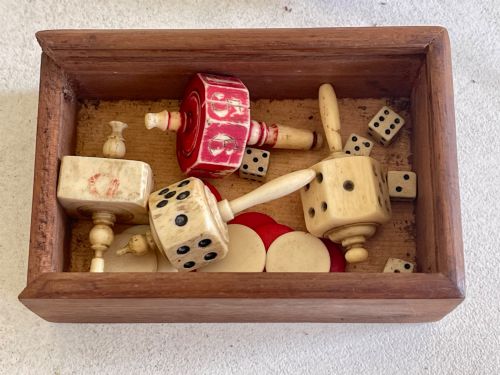
When you search for carved wooden counters, you encounter pieces spanning the nineteenth and early twentieth centuries, though the inventory here leans heavily toward game pieces, boxes, and related items rather than shop counters.
The selection includes items shaped from varied timbers, reflecting forms from the Victorian era up to the Art Deco period.
Buyers seeking this type of item often find functional gaming accessories or smaller turned wooden objects rather than large architectural fixtures.
How they were made
Craftsmen utilised traditional hardwoods such as mahogany, oak, walnut, and elm, selecting each timber for its grain pattern and durability.
Working by hand and with lathe turning, makers shaped these materials into functional objects, employing carving techniques suited to domestic and social pastimes.
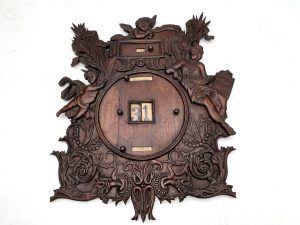
Even games counters needed somewhere to live, tucked safely inside carved Black Forest boxes.
What varies in quality
The degree of crispness in the carved detail and the selection of figured timber distinguish the finer examples from simpler utilitarian pieces.
Proportion and the preservation of original surfaces play a significant role in determining the character and integrity of each individual piece.
The Carved Wooden Counters Glossary
- Mahogany
- A durable hardwood prized for its rich reddish-brown colour and stable grain, frequently utilised in nineteenth-century cabinetmaking.
- Oak
- A robust timber with prominent medullary rays, commonly chosen for sturdy furniture and architectural elements.
- Victorian
- Pertaining to the reign of Queen Victoria, characterised by eclectic revivals and robust domestic craftsmanship.
- Art Deco
- A twentieth-century design style favouring geometric lines and streamlined forms.
- Turned
- Shaped on a lathe by rotating the timber against a cutting tool to create symmetrical profiles.
Carved Wooden Counters: Frequently Asked Questions
What are carved wooden counters used for?
These items serve primarily as gaming accessories, scorekeeping items, or decorative desktop objects within a traditional interior scheme.
They offer a tactile link to historical pastimes and domestic organisation.
How do I date a wooden counter?
Dating relies upon timber selection, tool marks, and stylistic indicators associated with periods like the Victorian era or the early twentieth century.
Comparison with documented examples helps narrow down the decade of production.
Are these counters made from solid wood?
Most examples utilise solid hardwoods such as mahogany, oak, or walnut, chosen for their longevity and weight.
Turned and carved elements demonstrate the density and grain characteristics of the chosen timber.
How do I care for antique wooden items?
Keep wooden pieces away from direct heat sources and dramatic humidity fluctuations to prevent splitting or warping.
Apply traditional wax sparingly to nourish the surface and maintain the natural lustre of the timber.