

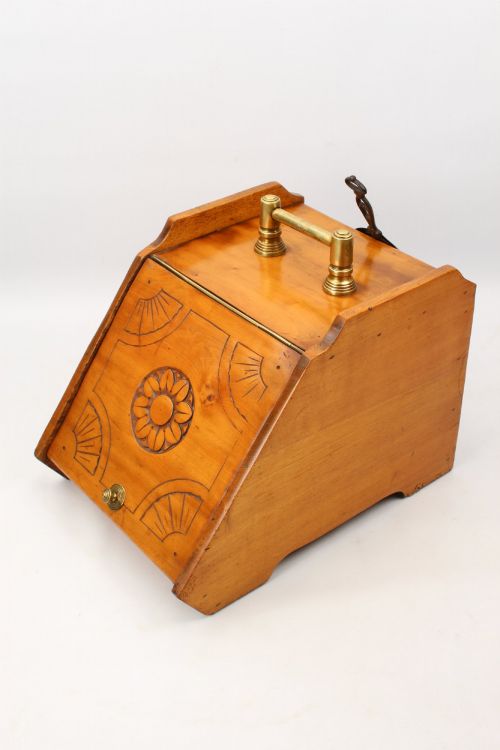


Carved Wooden Coal Bin
A carved wooden coal bin is a sturdy fireside essential that brings period character and practical fuel storage to a room.
Carved Wooden Coal Bin
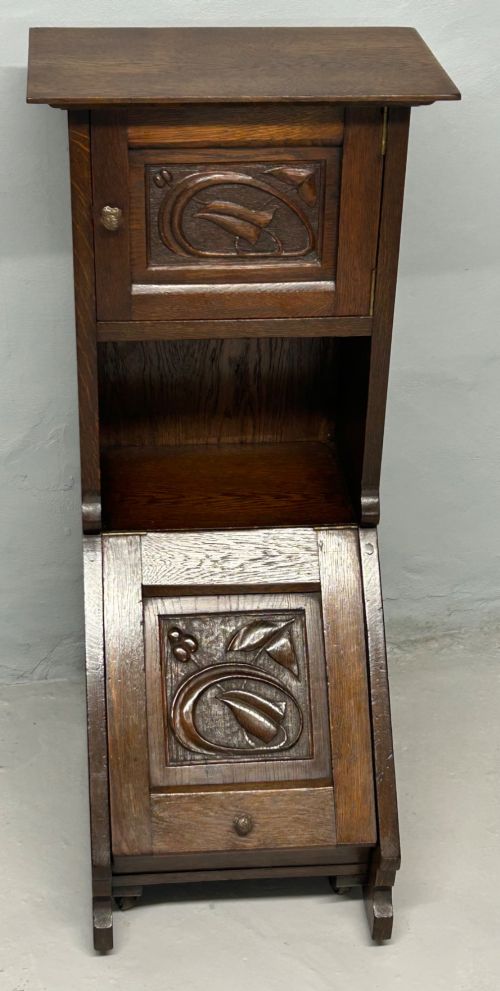
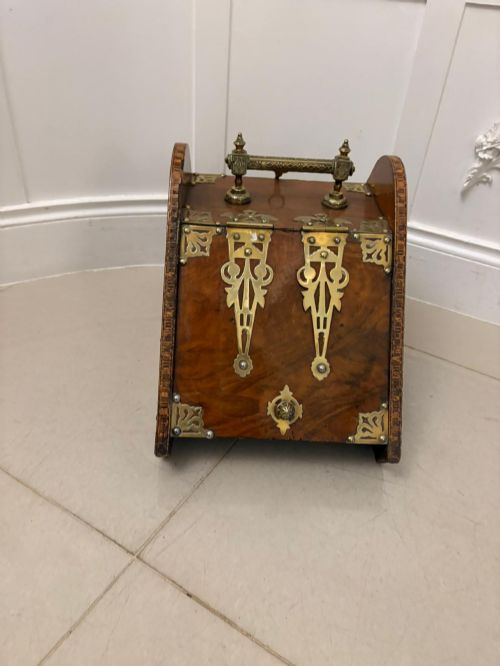
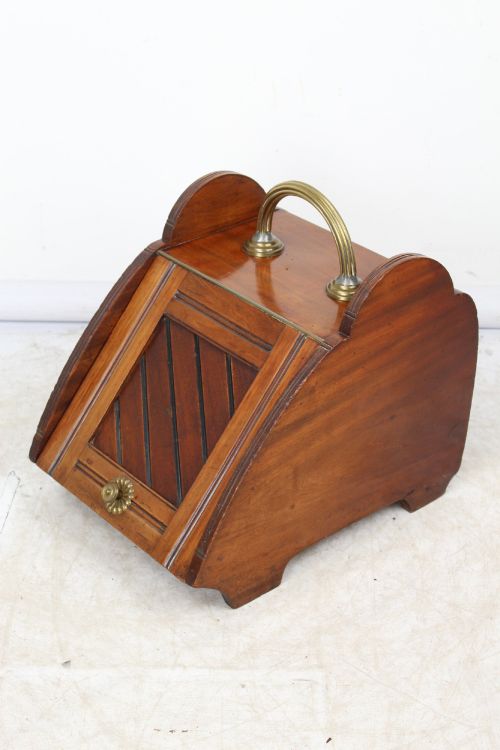
The versions most likely to meet you on this page are Victorian and Edwardian examples made from oak, mahogany, or walnut, often fitted with metal liners and matching shovels. Many feature carved fronts and brass mounts, reflecting the domestic utility and decorative tastes of their respective periods.
How they were made
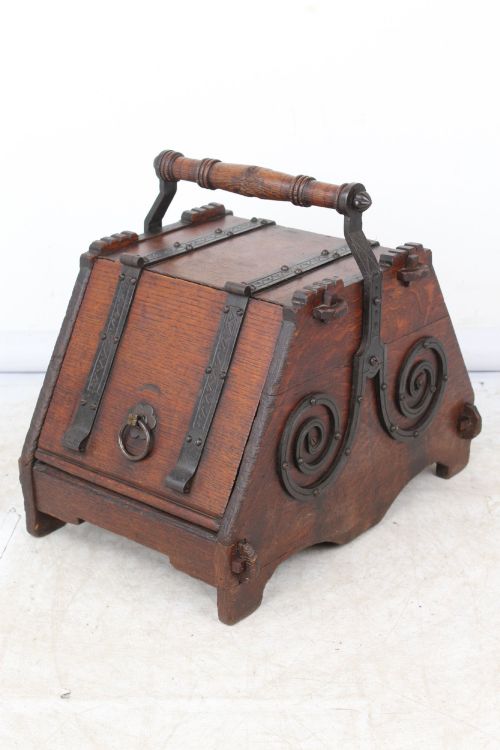
Cabinetmakers constructed these coal boxes and purdoniums using solid timbers like oak, walnut, and mahogany, frequently applying hand-carved details to the front panels. Durable metals such as brass and iron were utilised for handles, hinges, and internal liners to withstand the heavy wear of daily fuel storage.
Many examples incorporate drop-front mechanisms or sloped lids designed for easy access, paired with wrought iron or brass fixtures. The inclusion of an original metal liner helped protect the wood from dampness and coal dust.
Carved Wooden Coal Bin Retail Price Guide 2026
Typical asking prices for carved wooden coal bin among the pieces listed under this phrase on Sellingantiques today, from the lower quarter to the upper quarter. They describe what is for sale here now, not the wider market.
Several of these fireside boxes come with their original shovels, surviving decades of hearthside service without getting lost.
What varies in quality
The distinction between a standard fireside box and a superior piece lies in the depth and crispness of the wood carving, alongside the selection of timber figure such as pollard oak. Better examples feature substantial brass mounts, robust original liners, and matching shovels that remain intact.
Construction methods also separate the ranges, with superior pieces showing careful joinery and well-engineered drop-front mechanisms that operate smoothly despite the weight of the fuel inside.
Christopher Dresser
The Carved Wooden Coal Bin Glossary
- Purdonium
- A specialised coal box featuring a sloping front door that drops forward to reveal an internal metal shovel and liner. This form became particularly popular in middle-class homes during the late nineteenth century.
- Coal Scuttle
- A deep-bodied fireside vessel traditionally designed with a hinged lid and a carrying handle. These pieces were built to transport fuel from a cellar or coal bunker directly to the hearth.
- Pollard Oak
- Timber taken from the trunk of an oak tree that has been pollarded, producing a heavily knotted and decorative grain pattern. Cabinetmakers prized this wood for its distinctive mottled appearance on statement furniture.
- Gothic Revival
- A nineteenth-century design style drawing inspiration from medieval architecture and motifs. Pieces in this style often incorporate pointed arches, heavy chamfering, and structured geometric carvings.
Carved Wooden Coal Bin: Frequently Asked Questions
What is a purdonium?
A purdonium is a specific type of coal box with a drop-front door that conceals an internal metal liner and shovel.
They were designed to keep fuel neatly contained while presenting a decorative wooden exterior to the room.
Are these coal boxes still usable?
Many of these pieces remain structurally sound and can be used to store logs or kindling by an active fireplace.
Using an intact original metal liner helps protect the historic timber from moisture and dirt.
Why do some have liners?
Metal liners were inserted into the wooden boxes to catch coal dust and prevent moisture from rotting the timber.
Finding a piece with its original liner is a significant bonus for collectors.