

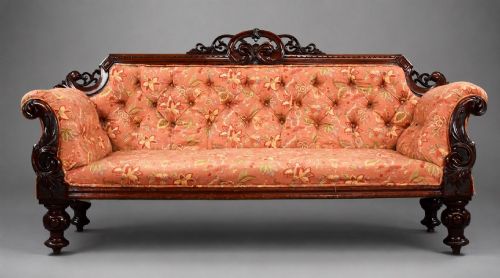
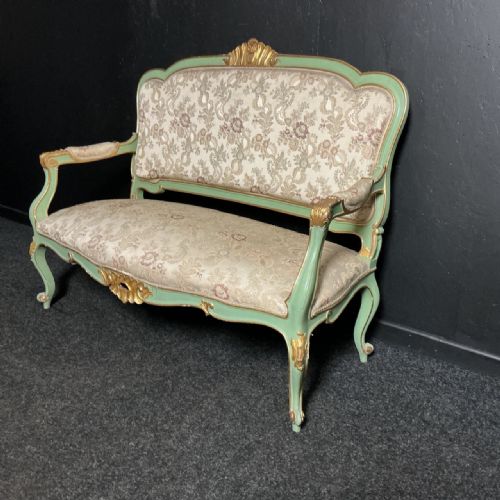
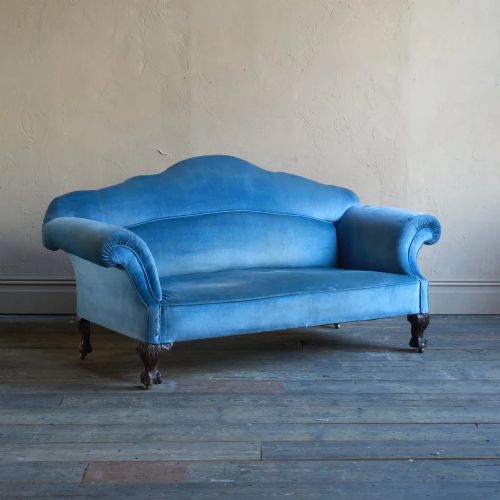
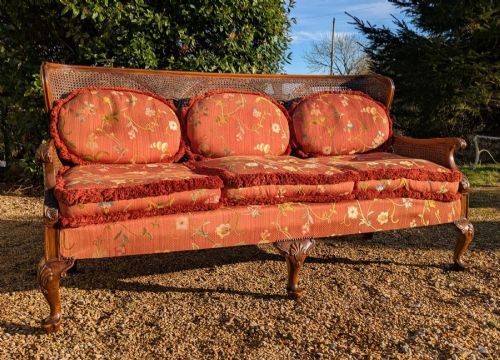
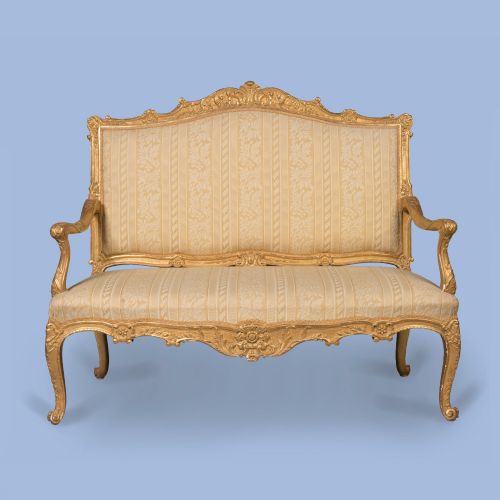
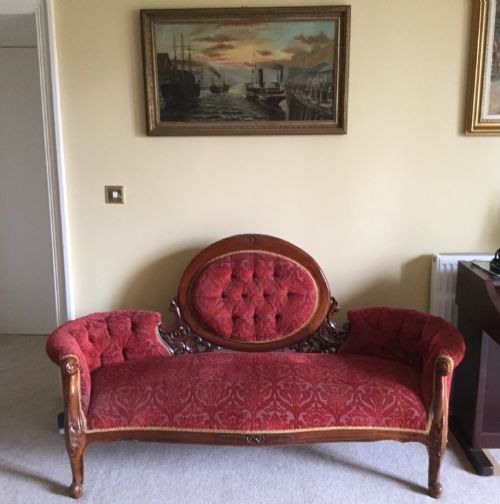


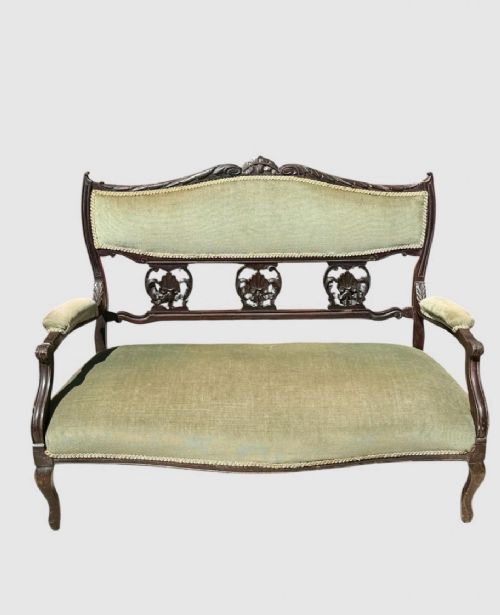


Carved Wood Upholstered Settee
A carved wood upholstered settee brings seating of grand scale and considerable presence to a room, offering deep comfort within a historic wooden frame.
Carved Wood Upholstered Settee
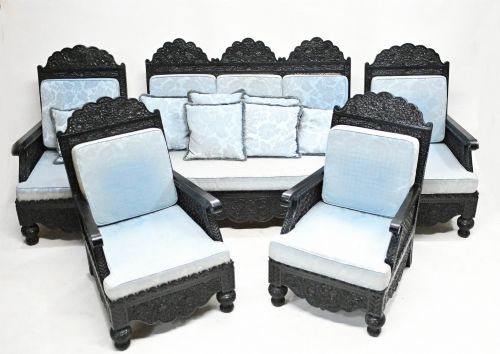
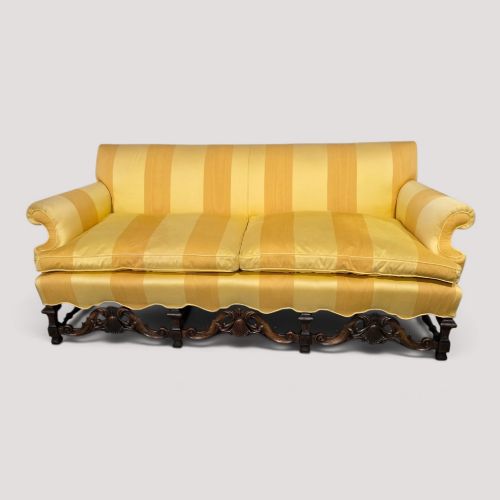
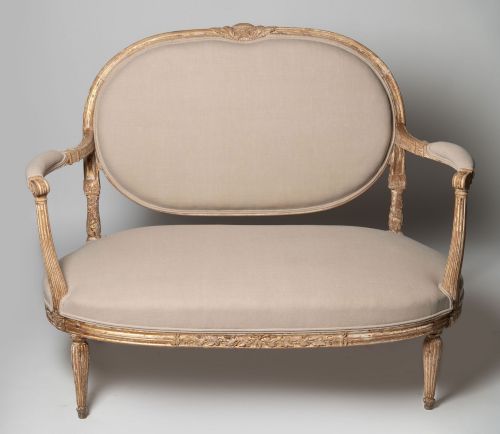
A carved wood upholstered settee combines exposed timber framework with padded seating, spanning multiple centuries of cabinet making and design. These pieces appear in forms ranging from double ended scroll designs to French canapés and chaise longues.
The selection on this page draws heavily from nineteenth century workshops, alongside eighteenth century examples and early twentieth century revivals. Pieces take inspiration from Louis styles, Regency lines, and Victorian proportion.
Makers utilised woods such as mahogany, walnut, rosewood, and giltwood to construct frames that support fabric, velvet, brocade, and leather upholstery. The resulting furniture ranges from country house seating to formal gilt salon furniture.
Materials and Construction
Frames rely on dense hardwoods like mahogany, walnut, and rosewood, carved by hand with foliage, scrolls, or structural mouldings. Giltwood and painted finishes provide surface decoration on specific continental pieces.
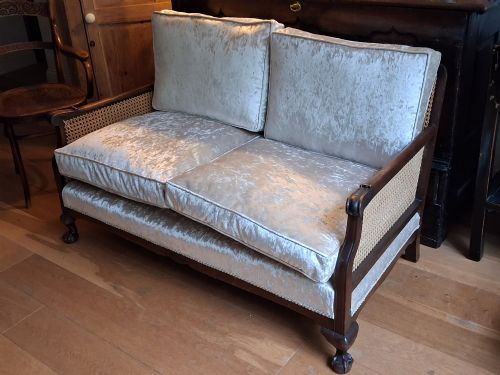
Upholstery techniques involve traditional sprung bases, horsehair stuffing, and feather cushions held beneath textiles including velvet, brocade, leather, and patterned fabric. Canework panels appear on specific French and Edwardian bergère frames.
Carved Wood Upholstered Settee Retail Price Guide 2026
Typical asking prices for carved wood upholstered settee among the pieces listed under this phrase on Sellingantiques today, from the lower quarter to the upper quarter. They describe what is for sale here now, not the wider market.
Several pieces are designed specifically as small end of bed seating for tired Victorian ankles.
Design and Execution
The standard of carving defines the distinction between standard production and exceptional examples, visible in the depth of relief and crispness of floral or scroll motifs. Timber selection also dictates grade, with figured mahogany and rich walnut marking superior output.
Proportion and structural integrity separate fine metropolitan furniture from simpler regional work. Well balanced frames maintain their rigidity through centuries of use while retaining their original design harmony.
Morison & Co Edinburgh
The Carved Wood Upholstered Settee Glossary
- Canapé
- An upholstered French sofa or settee, typically featuring an exposed wooden frame and cabriole legs.
- Bergère
- An enclosed armchair or settee with upholstered sides and a cane or padded back panel.
- Giltwood
- Timber coated with a thin layer of gold leaf over a prepared gesso ground.
- Double Ended Sofa
- A seat with scrolled or raised ends of equal height, allowing a person to recline from either direction.
- Chaîse Longue
- An elongated upholstered chair designed for reclining, combining a seat with a backrest and partial arm support.
Carved Wood Upholstered Settee: Frequently Asked Questions
What distinguishes a settee from a standard sofa?
A settee generally describes a lighter, often antique two or three seater bench with an exposed wooden frame. The terminology overlaps with sofas and canapés across different periods.
Traditional settees place emphasis on the carved wooden structure surrounding the upholstered areas rather than concealing the frame completely.
How do I identify the period of a carved wooden frame?
Dating relies on the style of the wood carving, the timber used, and the construction joints. Regency pieces show classical influences, while Victorian examples often display heavier proportions and rosewood or mahogany.
Stylistic revivals in the later nineteenth and early twentieth centuries frequently replicated eighteenth century French and English forms.
Where should I place a large antique settee?
These pieces suit principal reception rooms, long hallways, or large bedrooms where their length and decorative carved frames can be viewed clearly. Double ended designs work well positioned away from walls.
Consider the circulation space around the frame, as nineteenth century proportions often require an open setting to balance the room.
How do I care for antique upholstery and wood?
Protect the fabric from direct sunlight to prevent fading and vacuum velvet or brocade gently with a soft brush attachment. Feed exposed wooden frames with appropriate wax polish.
Avoid placing antique seating near direct heat sources to prevent the timber from splitting and the historic glues from drying out.