

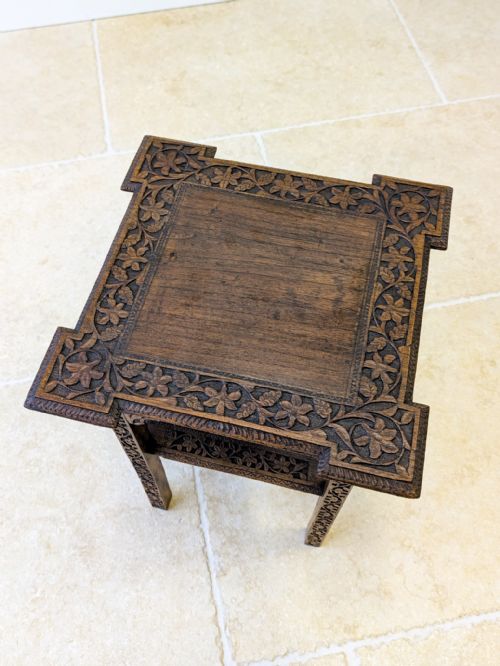
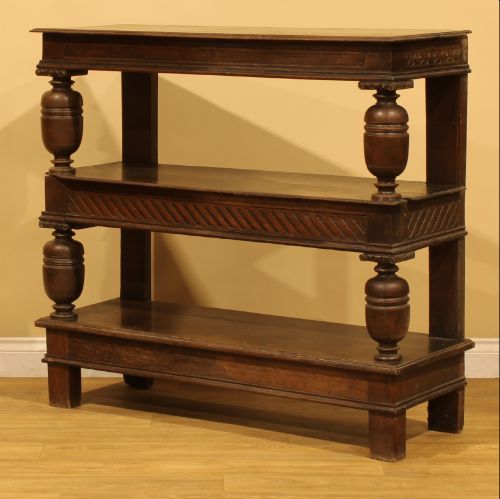
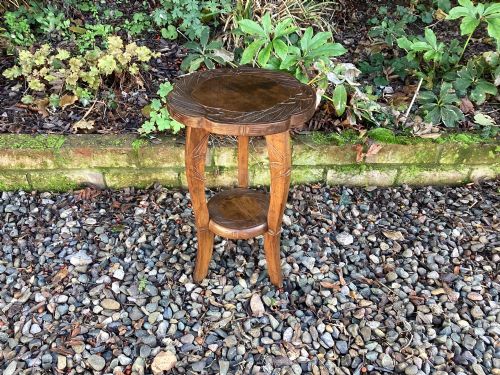
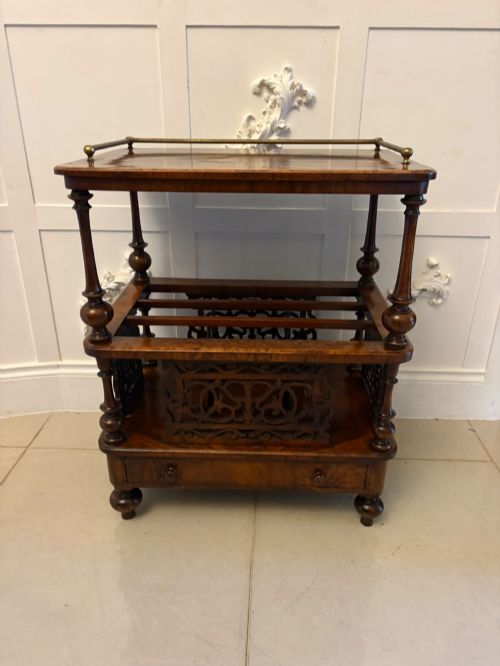

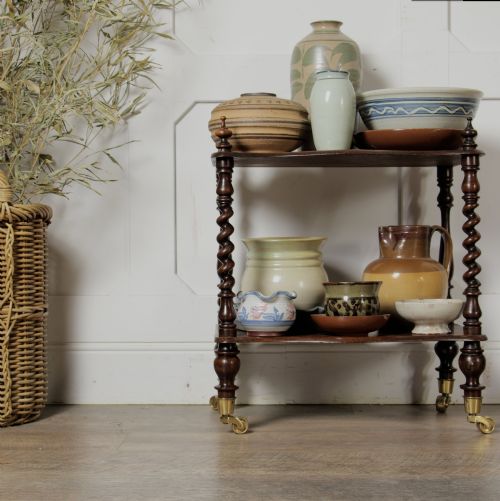
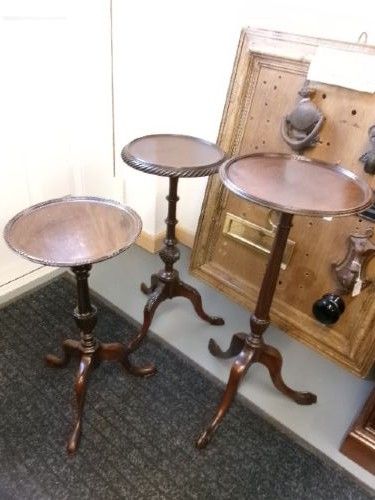
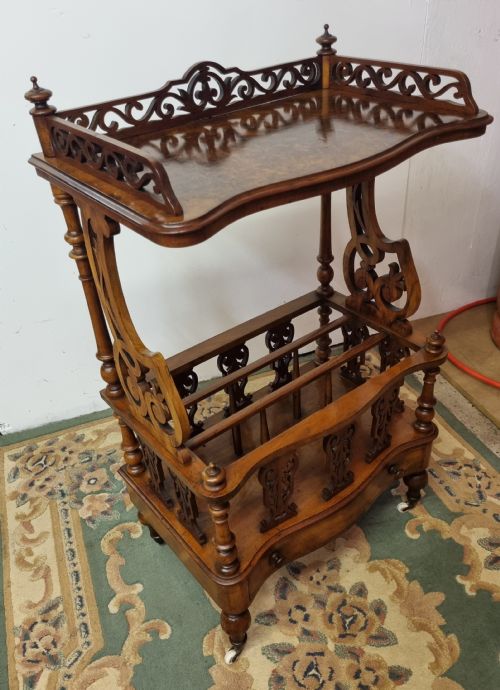
Carved Wood Tier Table
A carved wood tier table brings layered display space to a room, using stacked surfaces in mahogany, walnut, or rosewood.
Carved Wood Tier Table
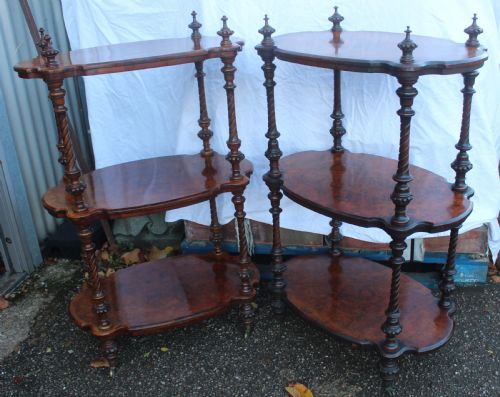
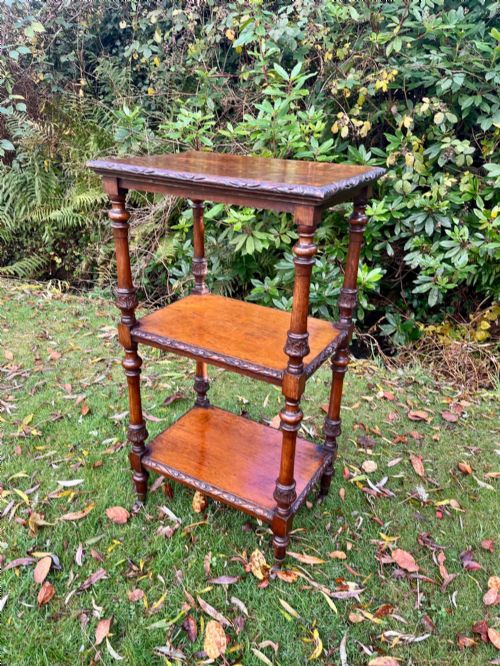
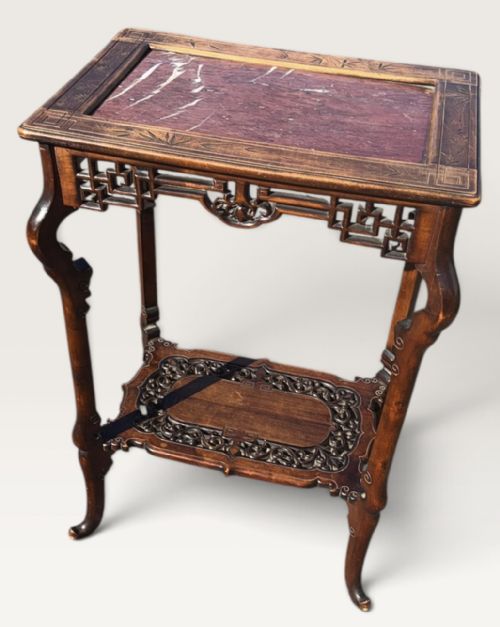
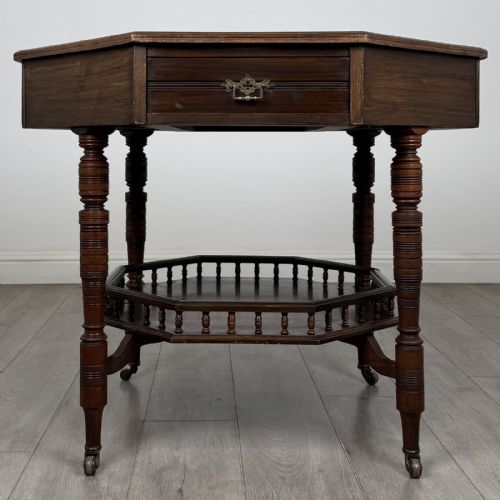
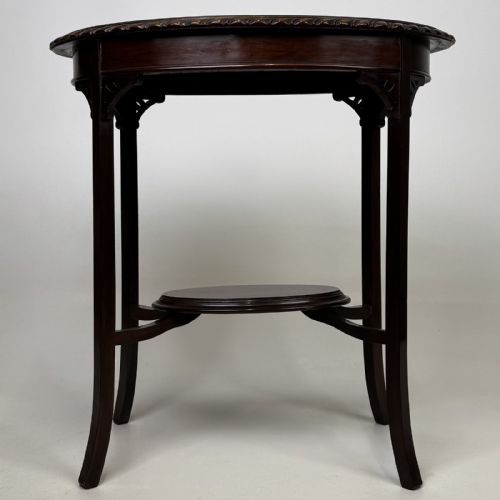
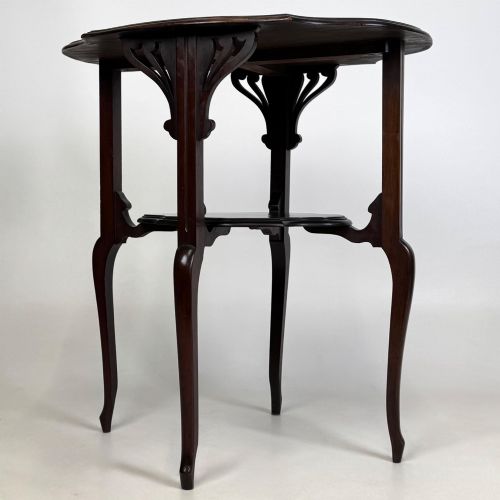
A carved wood tier table provides multiple horizontal surfaces arranged vertically, functioning as an occasional table, whatnot, or plant stand. These pieces serve to hold decorative objects, books, or lamps while occupying a modest footprint on the floor.
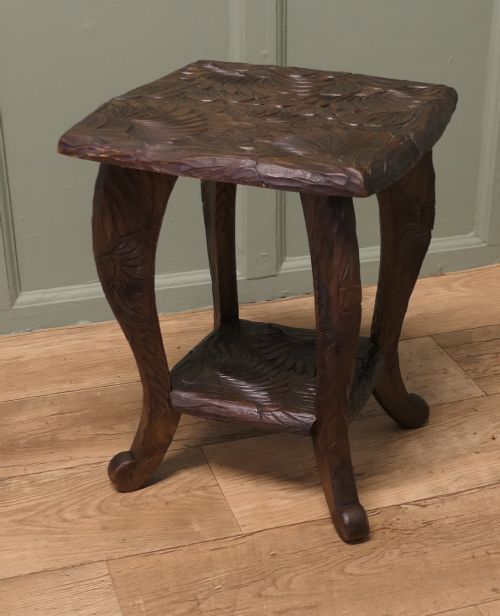
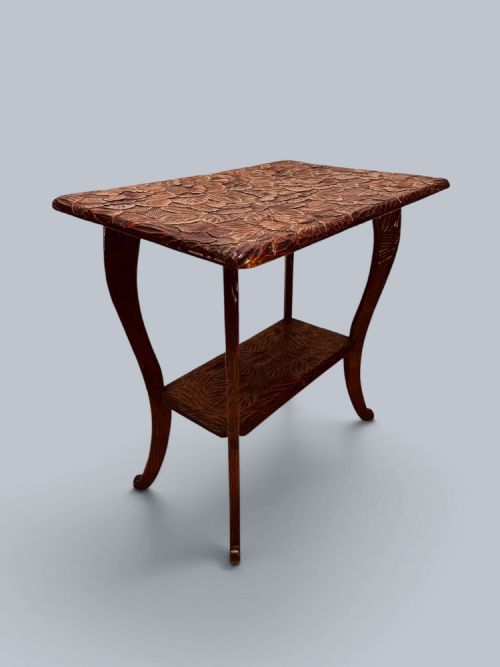
The selections on this page span the Victorian, Edwardian, and late nineteenth centuries, drawing on styles from Chippendale Revival and Arts and Crafts to Chinese Qing and Japanese taste. Mahogany and walnut appear frequently as the primary woods for these tiered and stacked forms.
Buyers encounter forms ranging from two-tier occasional tables to multi-shelf étagères and revolving bookcases. Each version utilises graduated shelves or turned supports to create distinct levels for display.
Materials and construction methods
Cabinetmakers utilised dense timbers such as mahogany, walnut, rosewood, and oak to build the frames and tiers of these tables. Brass details and marble inserts occasionally provide contrasting accents to the dark wood surfaces.
Joinery methods include turned legs, fretwork panels, barley twist supports, and galleried edges to secure the stacked shelves. Carved ornamentation, gadrooning, and pyrography decorate the surfaces and edges of the tiers.
Carved Wood Tier Table Retail Price Guide 2026
Typical asking prices for carved wood tier table among the pieces listed under this phrase on Sellingantiques today, from the lower quarter to the upper quarter. They describe what is for sale here now, not the wider market.
Listings feature woods including mahogany, walnut, rosewood, oak, yew, and hardwood.
Distinctions in quality and execution
The standard of carving and the selection of timber grain determine the grade of a carved wood tier table. Dense burr walnut or figured mahogany with crisp, deep relief carving represents the finer end of production.
Structural stability across multiple tiers and the integration of secondary materials like marble or brass hardware indicate the level of craftsmanship involved in assembly.
James Shoolbred·Robert Strahan·Gabriel Viardot
The Carved Wood Tier Table Glossary
- Étagère
- A piece of furniture consisting of a set of open shelves for displaying small objects. These tiered stands gained popularity during the Victorian period for parlor and drawing room display.
- Gadrooning
- A decorative carved motif consisting of a continuous series of convex curves or flutes. This edge treatment appears frequently on nineteenth-century table tops.
- Pyrography
- The art of decorating wood or other materials with burn marks using a heated tool. Pieces featuring this technique display distinctive shaded linear designs.
- Japonisme
- The study of Japanese art and aesthetics that influenced European design in the late nineteenth century. Tables in this taste incorporate Asian motifs and structural forms.
Carved Wood Tier Table: Frequently Asked Questions
What is a tier table used for?
A tier table provides multiple stacked surfaces for holding lamps, books, and decorative objects without taking up additional floor space.
Historically placed in parlors and drawing rooms, these tables allowed owners to display collections and arrange small items across graduated levels.
How do I identify an Edwardian tier table?
Edwardian examples often feature lighter timbers, refined carving, and influences from Arts and Crafts or Art Nouveau styles. The proportions tend to be slender and adaptable for domestic spaces.
Look for turned supports, fretwork panels, and multi-tiered shelving that reflect the decorative preferences of the early twentieth century.
Where should I place a tiered stand?
These tables fit well beside seating areas as side or lamp tables, or freestanding against a wall in a hallway or reception room.
The vertical arrangement makes them suitable for corners where a single-surface table might offer insufficient display capacity.
What is the difference between an étagère and a whatnot?
While both terms describe multi-tiered shelving furniture, étagère often implies a more decorative French-influenced piece designed for display.
Whatnot is a traditional British term for open shelving units used across various nineteenth-century domestic interiors.