



Carved Wood Tea Box
A carved wood tea box holds the leaves that built empires, joining precise joinery with the rich grain of mahogany and rosewood.
Carved Wood Tea Box
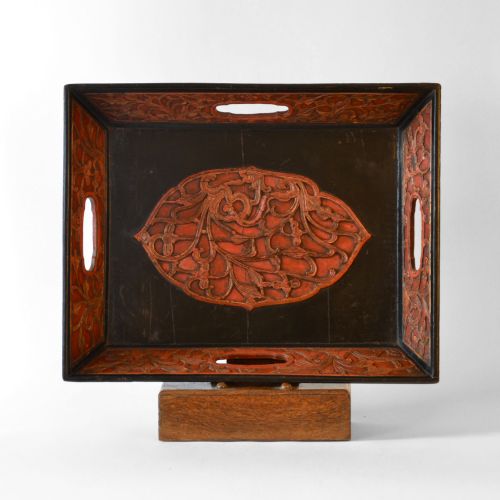
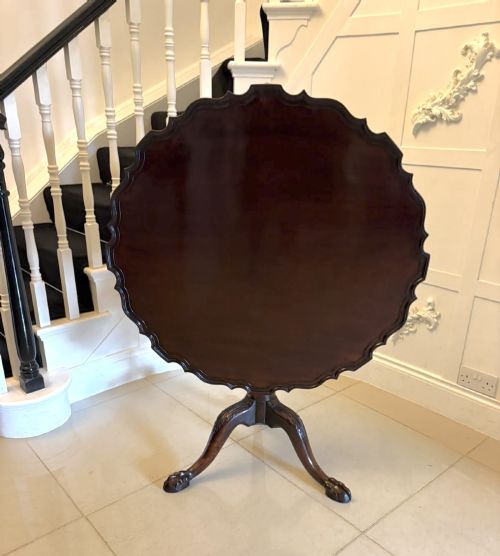
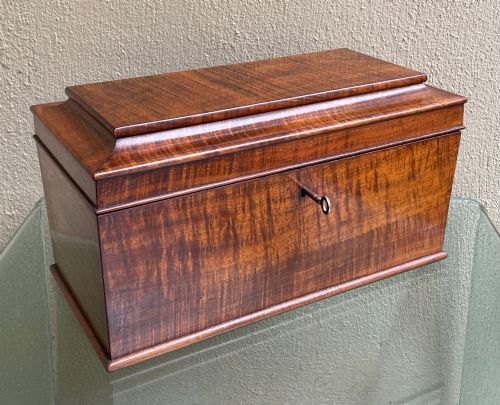
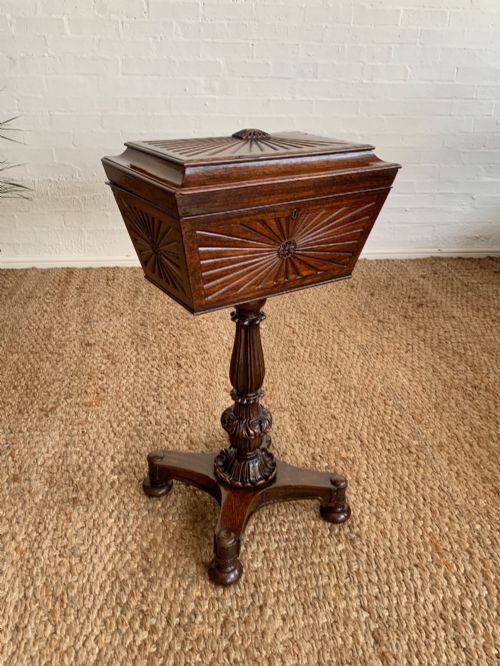
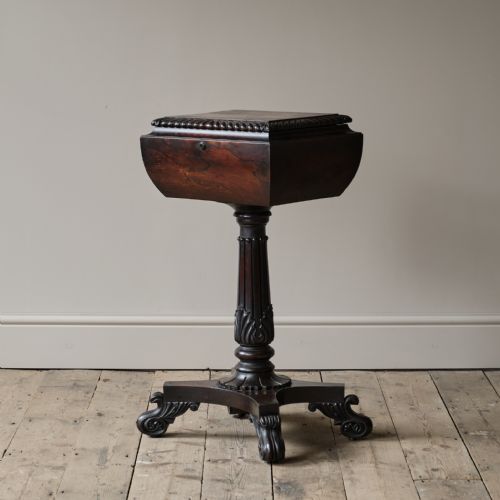
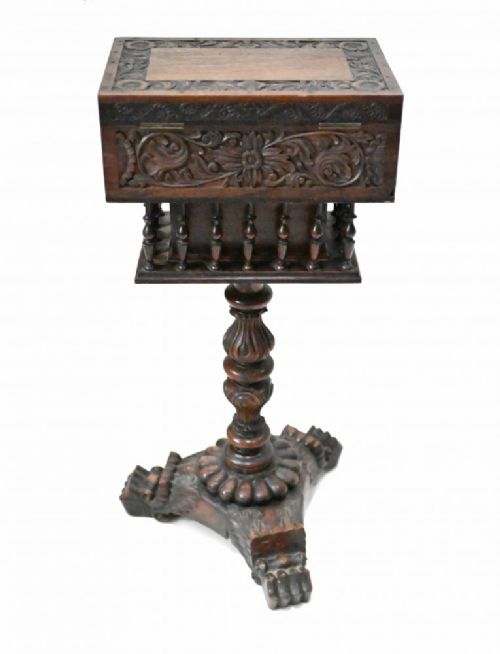
When buyers search for a carved wood tea box, they encounter sturdy desktop caddies, sarcophagus-shaped containers on stands, and larger freestanding teapoys from the Georgian, Regency, and Victorian periods. These pieces range from compact tabletop boxes in red walnut and mahogany to elaborate pedestal tables with fitted interiors.
The objects most frequently met on this page include nineteenth-century rosewood and mahogany tea caddies alongside larger William IV and Regency teapoys. Many incorporate brass mounts, bone details, and intricate sunburst carvings or parquetry patterns across the lid and sides.
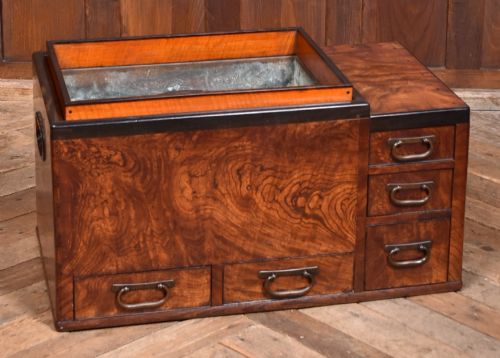
Origins stretch from English workshops in the eighteenth and nineteenth centuries to Anglo-Indian colonial production in padouk and traditional Japanese forms like the hibachi. Makers utilised dense imported timbers to create secure enclosures designed to preserve precious tea leaves.
Assessing quality and craftsmanship
The distinction between standard containers and finer examples rests on the crispness of the carving, the selection of timber veneers, and the integrity of the original interior compartments. Superior items exhibit tightly fitted lids, intact brass hardware, and harmonious proportions across both tabletop boxes and freestanding tables.
Carved Wood Tea Box Retail Price Guide 2026
Typical asking prices for carved wood tea box among the pieces listed under this phrase on Sellingantiques today, from the lower quarter to the upper quarter. They describe what is for sale here now, not the wider market.
Materials documented across the inventory include dense tropical hardwoods, brass mounts, bone escutcheons, and intricate parquetry work.
Gillows
The Carved Wood Tea Box Glossary
- Teapoy
- A pedestal table designed for holding tea equipment or a small tea chest on a central pillar. These stands often feature lidded compartments and storage boxes beneath the top.
- Sarcophagus
- A distinct box shape with a domed or sloping lid tapering inward toward the base, resembling an antique stone coffin. This profile appeared frequently on Regency and Victorian tea containers.
- Padouk
- A heavy, durable tropical hardwood displaying rich red and brown tones. Cabinetmakers valued this timber for its stability and suitability for detailed carving.
- Parquetry
- A geometric mosaic of wood veneers arranged to create repeating patterns across flat surfaces. Craftsmen applied this technique to ornament the exteriors of nineteenth-century caddies.
- Escutcheon
- A protective plate surrounding a keyhole, frequently cast from brass or carved from bone. It prevents the surrounding wood from wearing away through repeated use.
Carved Wood Tea Box: Frequently Asked Questions
What is a teapoy?
A teapoy is a freestanding table or heavy box mounted on a central pillar, designed during the Georgian and Regency eras to hold tea leaves and brewing equipment. Many examples include internal compartments and mixing bowls.
These pieces served a central role in formal drawing rooms where the host prepared tea before guests. They combine furniture design with specialised storage.
How do I date a tea caddy?
Dating relies on timber choice, hardware style, and box proportions. Eighteenth-century examples often use red walnut or early mahogany, while Regency and Victorian pieces favour rosewood, brass inlay, and sarcophagus profiles.
Internal construction details, such as hand-cut dovetails and the presence of foil linings, also help establish the manufacturing period.
Were these boxes used only for tea?
While originally built to secure expensive tea leaves under lock and key, many containers were later adapted for sewing supplies, jewellery, or writing materials. Fitted interiors with removable canisters often accommodated multiple domestic uses over time.
Collectors frequently find examples that transitioned from tea storage to general receptacles during the Victorian era.
How should I care for antique wood?
Maintain these boxes in stable indoor conditions away from direct sunlight and sudden temperature shifts to prevent timber splitting and veneer lifting. Dust gently with a dry cloth and avoid harsh chemical polishes.
Preserving the original wax finish protects the grain and maintains the character developed over centuries of handling.