
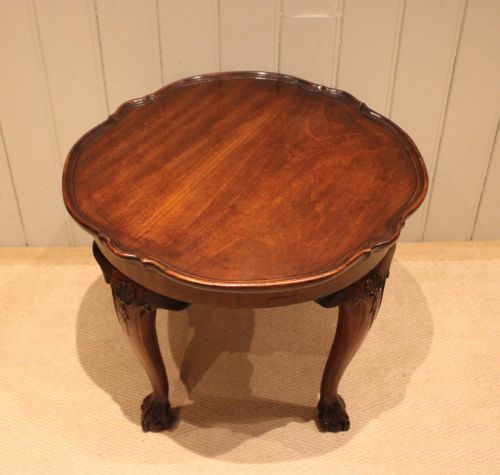


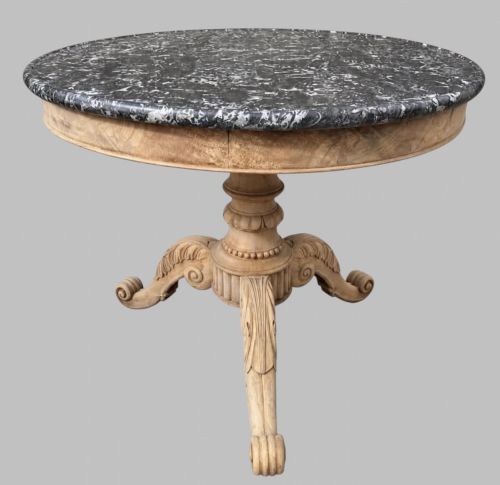
Carved Wood Round Table
A carved wood round table brings architectural presence to a room, offering a versatile surface shaped by decades of cabinet-making history.
Carved Wood Round Table
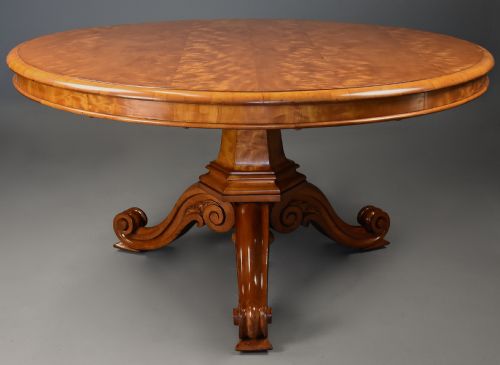
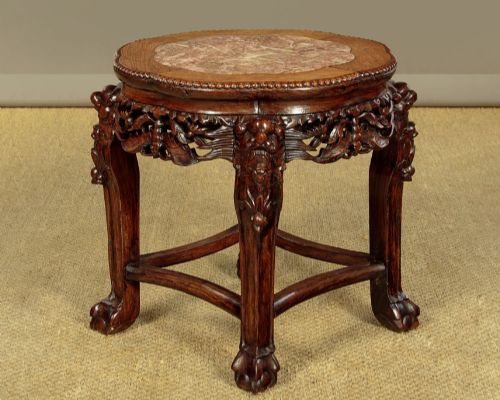
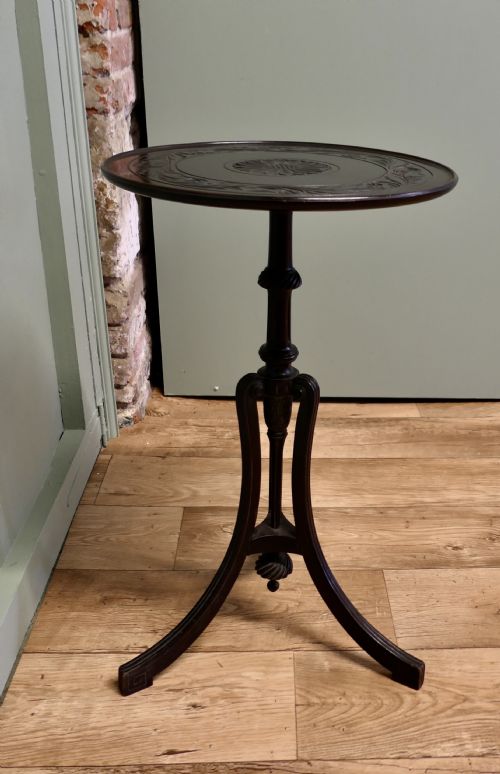
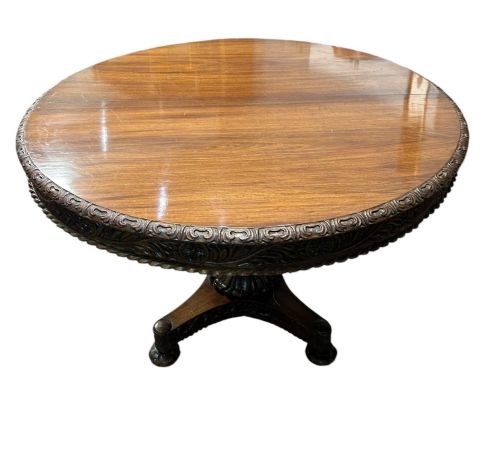
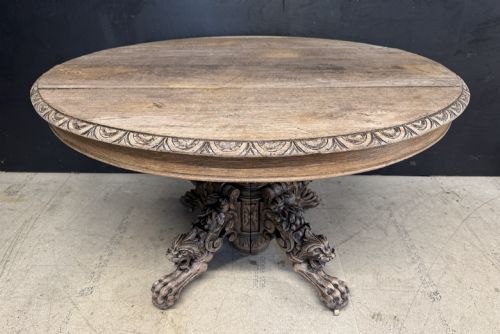
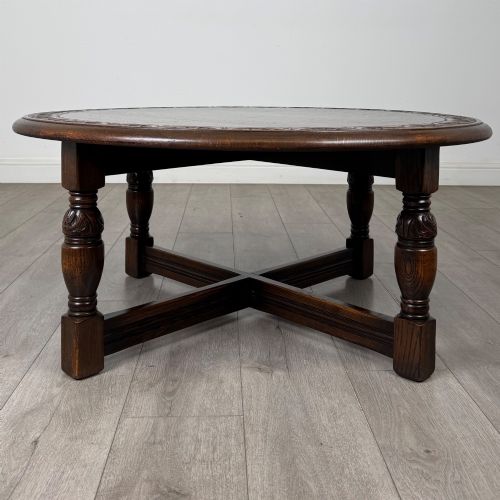
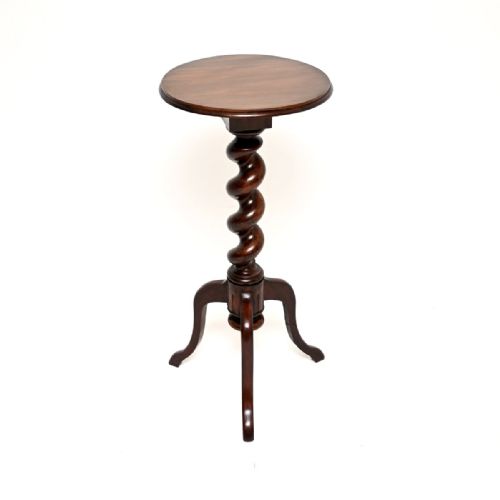
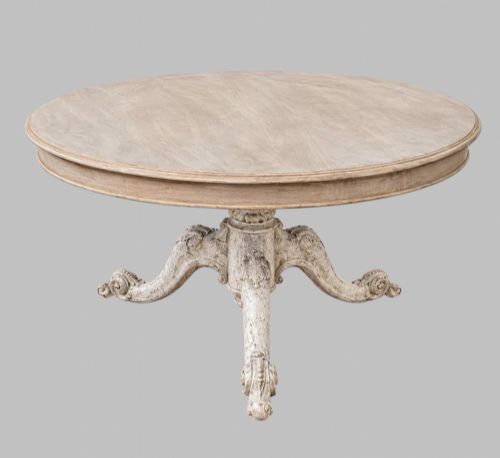
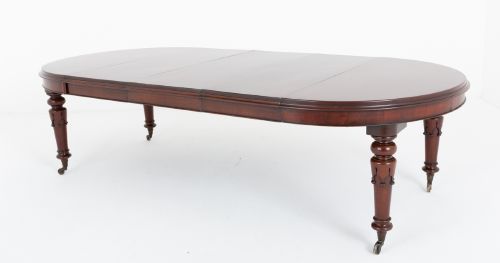
A carved wood round table encompasses forms ranging from compact wine tables and tripod lamp tables to large breakfast and centre tables designed for the middle of a room. When you examine a carved wood round table on this page, you frequently encounter Victorian and William IV examples alongside earlier Georgian pieces.
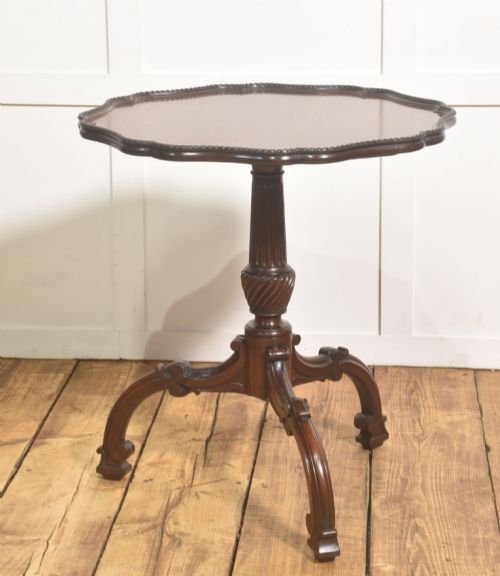
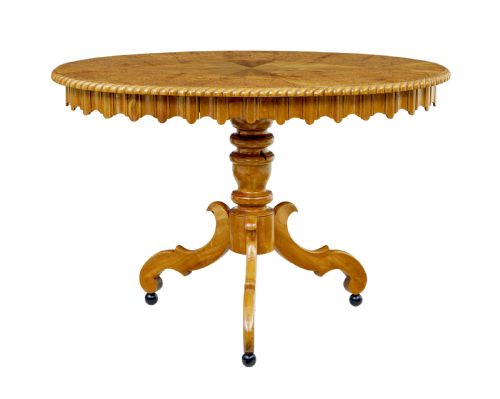
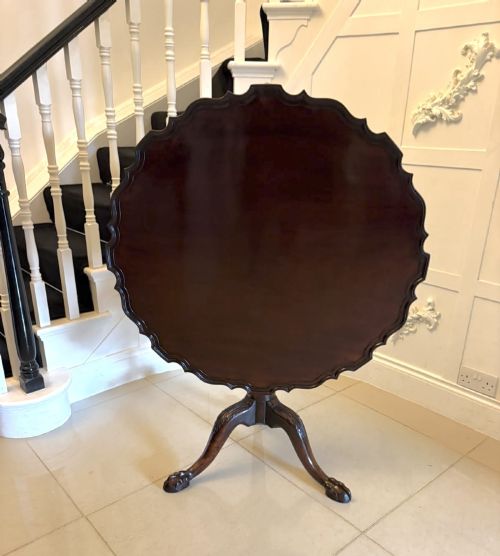
Makers utilised various formats, including tilt-top mechanisms that allowed tables to stand against walls when not in use, as well as heavy pedestal bases supported by triform feet or carved columns. The assortment includes French gueridon tables, Swedish birch pieces, and Anglo-Indian productions alongside domestic British output.
Function dictated the scale, with occasional and side tables serving smaller spaces, while robust dining and centre tables anchor larger interiors with substantial timber frames and detailed edge carvings.
Materials and construction methods
Cabinet-makers relied heavily on dense tropical hardwoods and native timbers, selecting mahogany, rosewood, walnut, and burr birch for their distinctive grain patterns and stability. Tops frequently featured book-matched veneers or solid timber planks fixed to sturdy central pillars.
Carving was executed by hand using gouges and chisels directly into the solid wood elements, particularly around pedestals, friezes, and table edges. Tripod bases employed robust tenon and dowel joints to support the downward pressure exerted on the circular top.
Listings feature woods including mahogany, rosewood, walnut, burr birch, and oak across periods spanning the eighteenth to the twentieth century.
Distinctions in construction and design
Quality rests in the crispness of the hand-carved ornament and the selection of figured timber, where burr walnut or burr birch displays complex, deliberate grain movement across the circular surface. Superior examples demonstrate tight joinery in the pedestal assembly and smooth operation in tilt-top mechanisms or secret drawers.
Proportion and weight distribution separate standard utility items from grander commission pieces, with better tables exhibiting balanced pedestal bases that securely anchor wide tops without rocking.
Liberty of London
The Carved Wood Round Table Glossary
- Tilt-top
- A hinged table top that pivots vertically to allow the piece to be stored flat against a wall when not in use.
- Gueridon
- A small French round table, often supported by a central column or figures, originating in the seventeenth century.
- Triform base
- A three-sided pedestal foot arrangement commonly found beneath Victorian and Regency circular tables for added stability.
- Piecrust edge
- A raised, decoratively carved rim shaped in small curves resembling pastry work, typically found on eighteenth-century tripod tables.
- Marquetry
- The art of applying pieces of veneer to a structure to form decorative patterns and pictures.
Carved Wood Round Table: Frequently Asked Questions
How were round tables used historically?
These tables served multiple domestic functions depending on their scale, acting as breakfast surfaces, central display points for lamps, or wine stands in formal reception rooms. Larger versions occupied the middle of dining rooms where guests gathered around a central pillar.
Tilt-top variants provided practical flexibility by clearing floor space when the room was needed for other activities during the day.
How can I tell a Victorian table from a Georgian one?
Georgian tables often display restrained classical proportions with simpler tripod bases and subtle mahogany grain. Victorian pieces tend to be heavier, incorporating elaborate rosewood or walnut carving, barley twist columns, and platform bases.
Examining the timber preparation and secondary woods beneath the top helps clarify the period of manufacture.
What is a gueridon table?
A gueridon is a specific type of round accent table of French origin, frequently featuring a marble or wood top supported by a central pedestal. They were designed to hold decorative objects, lamps, or small serving pieces.
Nineteenth-century examples often utilise bleached walnut or mahogany veneers with subtle classical mounts.
Will a tilt-top table damage easily?
The mechanism relies on a brass catch and wooden block that allows the top to pivot safely when operated with care. Supporting the top with both hands prevents undue strain on the hinge pivot.
When locked in the horizontal position, a well-adjusted catch keeps the surface stable and rigid.