



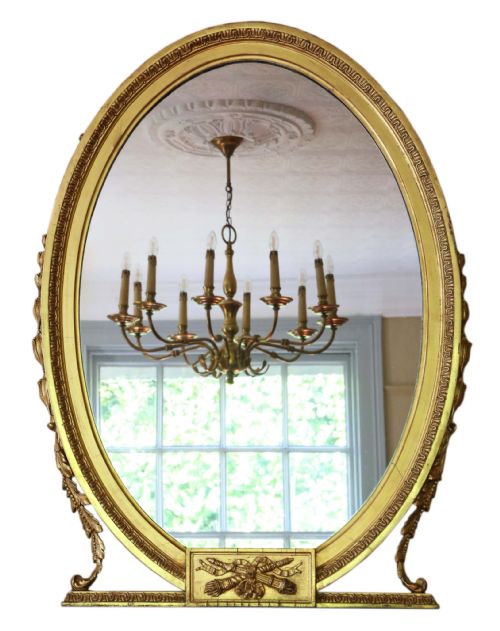

Carved Wood Ribbon Mirror
A carved wood ribbon mirror hangs with the delicate, looping grace of tied silk frozen in timber.
Carved Wood Ribbon Mirror
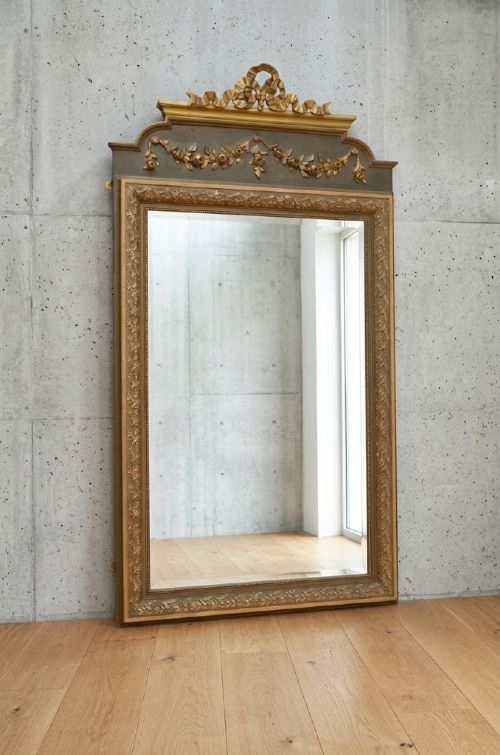
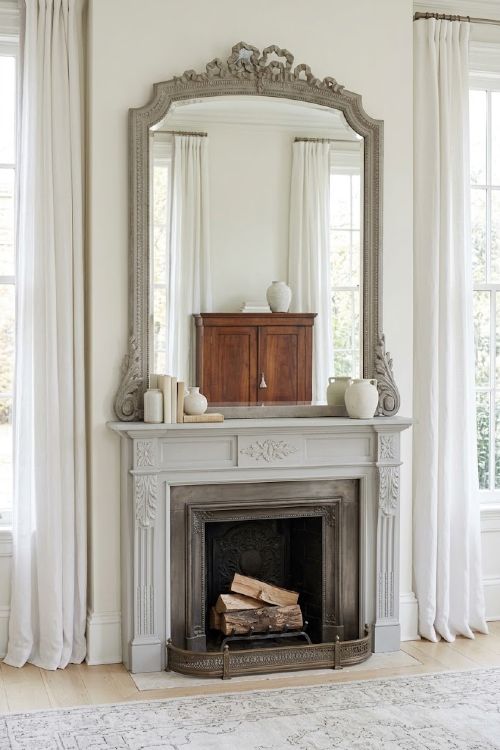
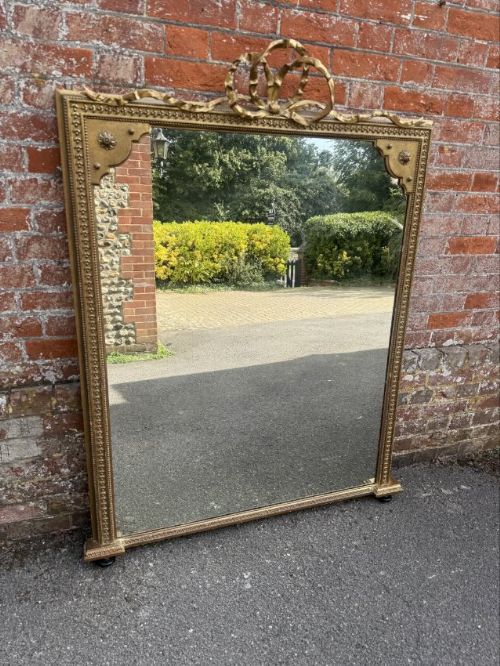
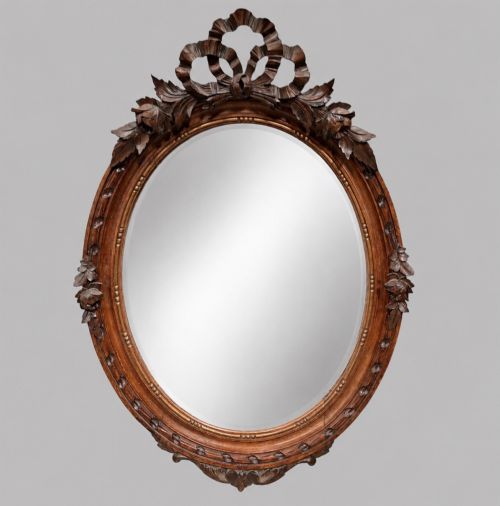
A carved wood ribbon mirror brings together the organic warmth of timber and the decorative whimsy of carved bows or looped crests. These wall and overmantel looking glasses draw upon French Neoclassical, Louis XVI, and Adam Revival traditions to create a focal point in a room.
Buyers will encounter oval, arched, and rectangular formats spanning the Victorian and Edwardian eras, alongside pieces dating back to the late nineteenth and early twentieth centuries. The defining feature remains the ribbon or bow motif, which crowns the frame in giltwood, gesso, or painted wood.
How they were made
Artisans carved these frames from solid timber before applying layers of gesso to build up crisp relief detail on the ribbon crests and mouldings. Giltwood and gold leaf finishes were then laid over the prepared surfaces to catch the candlelight or natural daylight of period interiors.
Alternative examples utilise painted wood and parcel gilt highlights, offering softer, muted tones suited to French chateau or Belle Epoque aesthetics. The mirror glass itself was typically bevelled or set within heavy timber backing boards to support the substantial weight of the overmantel and wall formats.
Carved Wood Ribbon Mirror Retail Price Guide 2026
Typical asking prices for carved wood ribbon mirror among the pieces listed under this phrase on Sellingantiques today, from the lower quarter to the upper quarter. They describe what is for sale here now, not the wider market.
Carved wooden ribbons were designed to make heavy timber look as weightless as a stray breeze caught mid-flutter.
What varies in quality
The depth and crispness of the wood carving dictate the distinction between standard production and master craftsmanship. Superior pieces exhibit hand-carved ribbon folds with subtle undulations, whereas lesser examples rely on flat mouldings or heavy, undifferentiated gesso layers.
The integrity of the original gilding and the preservation of the antique mirror glass further separate the ordinary from the exceptional. Original mercury or silvered plates showing gentle foxing hold greater authenticity than modern glass replacements.
The Carved Wood Ribbon Mirror Glossary
- Giltwood
- Timber that has been coated with a thin layer of gold leaf or metallic powder. This finish gives the frame a luminous quality that reflects interior light.
- Gesso
- A plaster-like mixture applied to wood frames to create a smooth base for gilding or to mould intricate decorative details. It allows for sharp relief work on ribbon crests.
- Overmantel mirror
- A large looking glass designed to hang specifically above a fireplace mantelpiece. These pieces often feature wide proportions to balance the hearth below.
- Trumeau
- A decorative wall mirror paired with a painted panel or artwork within a single frame. Originating in French interior design, it brings vertical elegance to a room.
Carved Wood Ribbon Mirror: Frequently Asked Questions
How do I hang a heavy carved wood ribbon mirror safely?
These mirrors carry substantial weight due to their dense timber frames and thick glass plates. Secure the hanging wire or D-rings directly into wall studs using heavy-duty fixings.
For large overmantel formats, professional installation using a French cleat system ensures the piece remains flush and secure against the wall.
What rooms suit an antique ribbon mirror best?
Drawing rooms, hallways, and bedrooms benefit most from the reflective light and decorative crests of these mirrors. Placing one above a mantle or console table anchors the piece within the room.
Smaller oval versions work well in tighter spaces, while full-height floor mirrors expand the visual boundaries of a parlour.
How can I tell a Victorian reproduction from earlier styles?
Examine the timber behind the frame and the composition of the gesso layers for signs of age. Victorian and Edwardian interpretations often draw heavily on Adam Revival and Louis XVI motifs.
Hand-cut screws, oxidised fixings, and natural foxing on the glass plate provide reliable indicators of genuine nineteenth-century manufacture.