



Carved Wood Pole
These carved wood pole pieces bring Victorian and Regency warmth to a room, offering both practical utility and fine decorative craft.
Carved Wood Pole
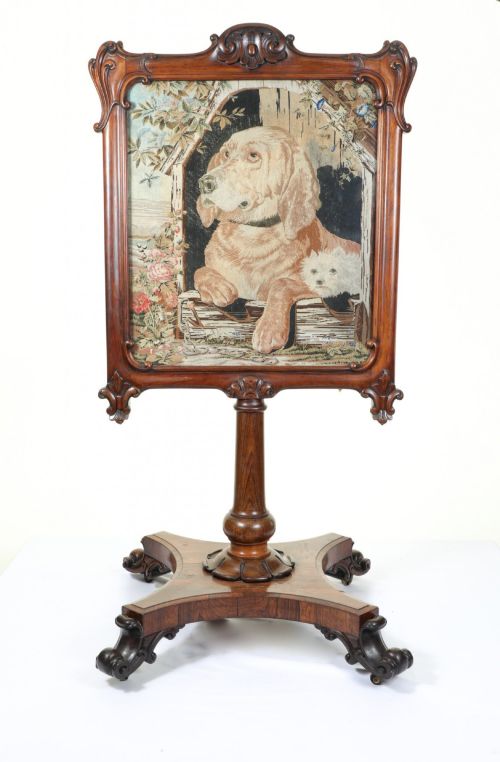
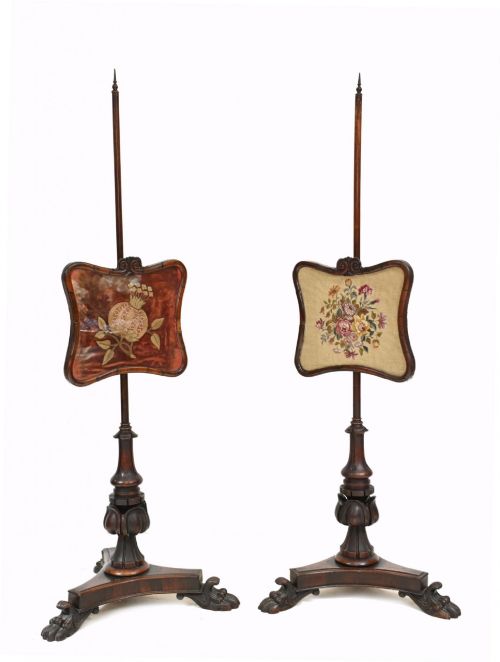
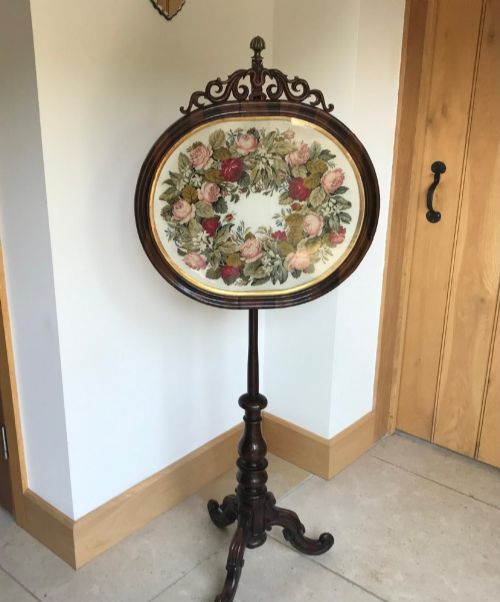
When you search for a carved wood pole, you find a collection of nineteenth century furnishings that primarily take the form of adjustable fire screens and curtain fixtures. The most frequent pieces on this page are pole screens, standing upright on tripod bases to shield occupants from the fierce heat of an open hearth.
The objects span the Georgian, Regency, William IV, and Victorian periods, showcasing the evolution of domestic interiors through the nineteenth century. Alongside the screens, you will encounter curtain poles and pelmets designed to frame large windows in period properties.
Rosewood and mahogany dominate the offerings, frequently accompanied by brass fittings and intricate needlepoint or tapestry panels. These items combine functional woodwork with textile arts, creating tall, slender accents suited to both traditional and eclectic spaces.
How they were made
The wooden elements rely heavily on dense hardwoods like rosewood and mahogany, turned on a lathe and carved by hand to form slender standards and tripod supports. Cabinet makers utilised brass for sliding mechanisms and adjustable collars, allowing the mounted screens to move vertically along the pole.
Needlepoint and tapestry panels, worked in wool and glass, were stretched within wooden frames to form the screen itself. Gilding appears on select architectural pelmets, adding a layer of reflective brilliance to the carved wooden surface.
Carved Wood Pole Retail Price Guide 2026
Typical asking prices for carved wood pole among the pieces listed under this phrase on Sellingantiques today, from the lower quarter to the upper quarter. They describe what is for sale here now, not the wider market.
The listings here feature rosewood and mahogany predominantly, spanning the Georgian, Regency, and Victorian eras.
What varies in quality
The distinction between ordinary and exceptional pieces lies in the crispness of the wood carving and the weight of the timber used for the base. A heavier rosewood or mahogany tripod ensures stability, preventing a tall standard from tipping when adjusted.
The needlework panel serves as a major indicator of artistic ambition, with finely worked wool and intricate tapestry designs elevating the status of a screen. Furthermore, the smoothness of the adjustable brass mechanism demonstrates the precision of the original maker's engineering.
The Carved Wood Pole Glossary
- Pole screen
- A vertical wooden standard mounted on a tripod base, featuring an adjustable panel designed to block radiant heat from a fireplace. These pieces were easily repositioned around a room as the fire burned.
- Tripod base
- A three-legged support structure commonly utilised on nineteenth century stands and tables for maximum stability on uneven floors. The legs often terminate in carved scrolls or ball and claw feet.
- Needlepoint
- A form of counted thread embroidery stitched onto an open weave canvas, frequently used to create the decorative panels held within fire screens. Wool yarns provided durable colour and texture.
- Pelmet
- A wooden architectural framework mounted above a window to conceal curtain fixtures and draft lines. Examples can be carved from giltwood to match formal nineteenth century interior schemes.
Carved Wood Pole: Frequently Asked Questions
What is a pole screen used for?
These tall stands were placed near open hearths to shield a person's face from the intense heat of the fire. The adjustable panel could be raised or lowered depending on where the heat was most troublesome.
Over time, as central heating became common, their protective purpose shifted entirely to decorative display within period drawing rooms and parlours.
How do I adjust the screen height?
Most examples utilise a brass collar or screw mechanism fitted to the back of the panel frame, allowing it to slide smoothly along the wooden pole. Tightening this collar secures the panel at the desired viewing height.
Care should be taken when adjusting older brass fittings to avoid straining the surrounding timber.
How do I date a pole screen?
Dating relies heavily on the timber species, base style, and the framing of the textile panel. Regency and William IV pieces often display bolder carved flourishes, while Victorian examples frequently favour rosewood with elaborate needlepoint.
Examining the turning of the central pillar provides further clues regarding the cabinet maker's period of production.
Can I use these with modern curtains?
Curtain poles and pelmets from the nineteenth century can be integrated into contemporary homes for hanging heavy drapery. You must check the length and diameter of the wooden pole against the weight of your chosen fabric.
Professional installation ensures that historic fixings can safely bear the load of modern window treatments.