



Carved Wood Pole Screen
These carved wood pole screen pieces offer a clever way to shield your face from roaring hearth fires while bringing period elegance to a room.
Carved Wood Pole Screen
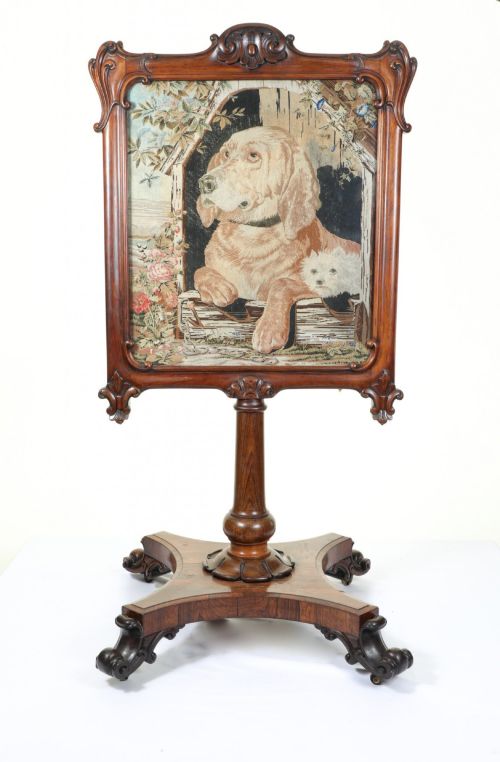
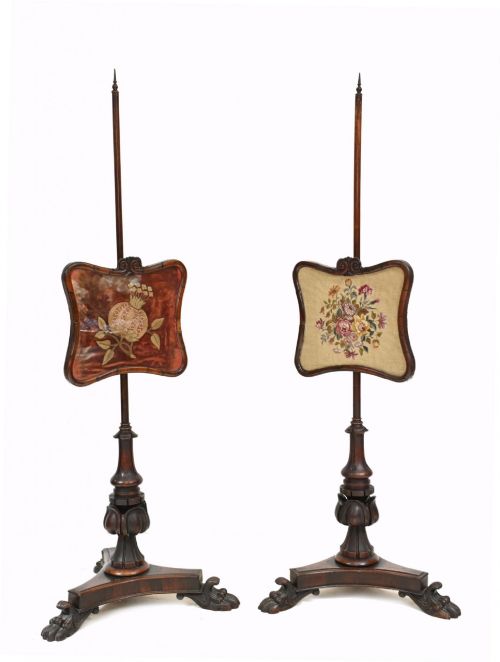
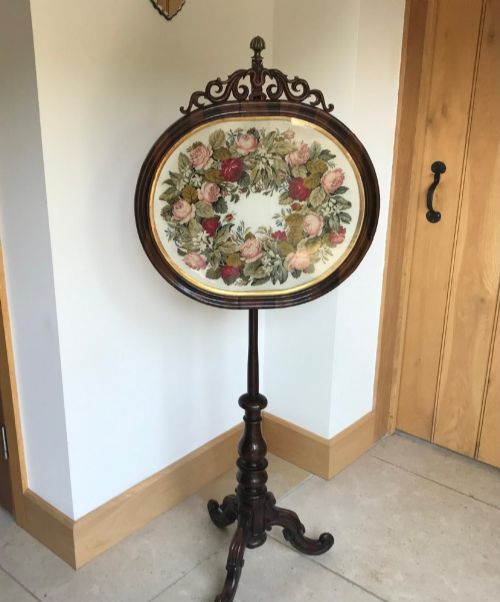
A carved wood pole screen stands on a slender upright shaft fitted with a sliding panel, designed to be positioned between a seated person and an open fireplace to block the radiant heat. The pieces encountered here span the Georgian, Regency, William IV, and Victorian eras, demonstrating the enduring utility of this fireside furnishing.
Most examples rely on a sturdy tripod base to support the vertical pole and the framed screen above. Rosewood and mahogany dominate the offerings, providing both the structural strength needed for the tall shaft and a polished surface that complements formal interiors.
How they were made
Cabinetmakers turned the central wooden poles on lathes, shaping substantial pedestals and tripod bases with detailed carving. Rosewood and mahogany timbers were selected for their dense grain, allowing artisans to cut crisp decorative motifs into the wood.
The adjustable panels frequently display intricate needlepoint, wool, and floral tapestry work held within wooden frames. Brass mechanisms or friction collars allowed users to slide the textile panel up and down the pole to the desired height.
Carved Wood Pole Screen Retail Price Guide 2026
Typical asking prices for carved wood pole screen among the pieces listed under this phrase on Sellingantiques today, from the lower quarter to the upper quarter. They describe what is for sale here now, not the wider market.
Listings feature rosewood and mahogany pieces spanning the Georgian, Regency, William IV, and Victorian periods, often paired with tapestry panels.
What varies in quality
Quality rests in the crispness of the timber carving on the base and the proportions of the tripod legs. Finer examples display deeply carved foliage and well-balanced frames that maintain stability when the panel is adjusted.
The needlepoint and tapestry panels also dictate distinction, with finely worked wool and detailed floral textile designs representing superior craftsmanship. The smoothness of the sliding adjustment mechanism further separates standard pieces from finer commissions.
The Carved Wood Pole Screen Glossary
- Pole screen
- A freestanding fireside screen with an adjustable panel mounted on a vertical wooden shaft and a tripod base.
- Needlepoint
- A form of canvas work embroidery using yarn to create decorative pictorial or floral patterns on panels.
- Tripod base
- A three-legged stand that provides steady support for the upright pole and screen.
- Tapestry
- A textile woven or worked with hand embroidery to depict designs or scenes, set within the screen frame.
Carved Wood Pole Screen: Frequently Asked Questions
What is a carved wood pole screen used for?
These screens were originally placed near fireplaces to protect a person's face from the intense heat of an open coal or wood fire.
Today, they serve as decorative vertical accents in living spaces, prized for their traditional needlework panels and turned wood stands.
How do you adjust the panel height?
The framed panel is mounted on a collar that grips the central wooden pole.
Users slide the panel up or down the shaft by hand to position the textile screen at the preferred height.
Which woods are most common?
Mahogany and rosewood appear most frequently in these historical pieces.
These dense hardwoods provided the stability required for tall slender poles and allowed for detailed carving on the bases.
How do I identify the period?
Stylistic clues in the carving and base design point to specific eras like the Regency or Victorian periods.
Georgian and Regency pieces often show lighter classical lines, while Victorian examples tend to feature heavier rosewood frames and elaborate floral needlepoint.