





Carved Wood Nest
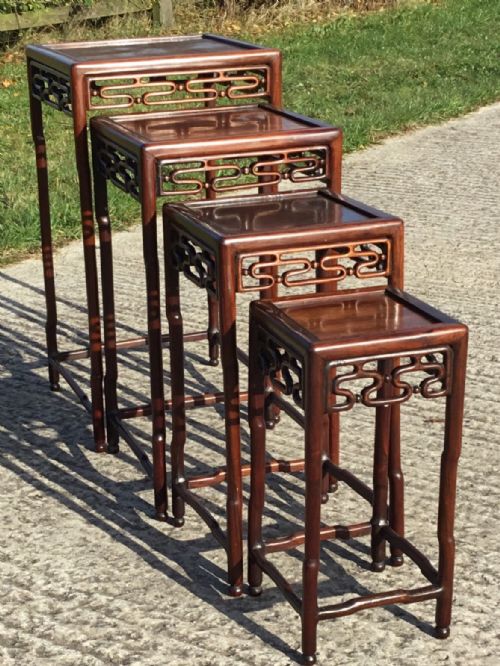
A carved wood nest offers compact utility and layered display, bringing versatility to any room through sets of graduated tables.
Carved Wood Nest
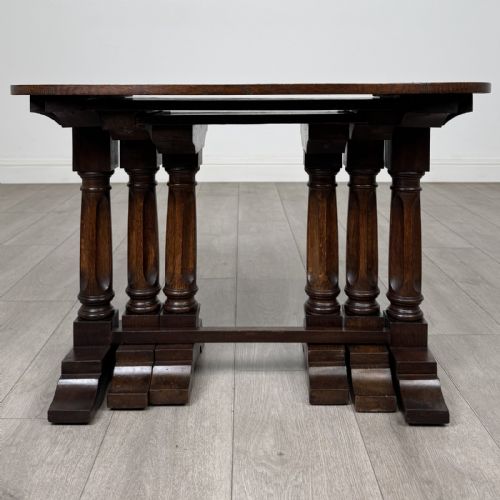
The form spans various historical periods including Victorian and Edwardian eras, alongside regional interpretations such as Anglo-Indian and Scandinavian country pieces. Most sets consist of three or four occasional tables that separate easily for serving or display before stacking back into a single footprint.
While primarily functioning as occasional or coffee tables, these sets appear in numerous configurations from plain oak Edwardian models to elaborately carved oriental designs. Their primary appeal lies in this combination of sculptural carving and practical nesting storage.
What varies in quality
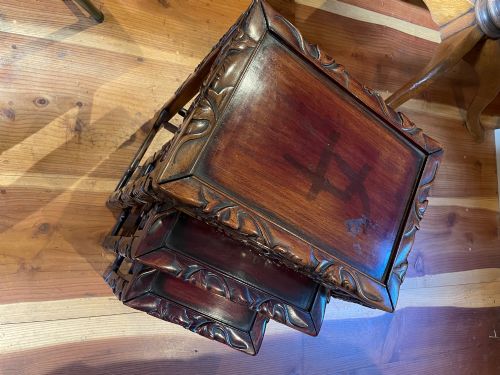
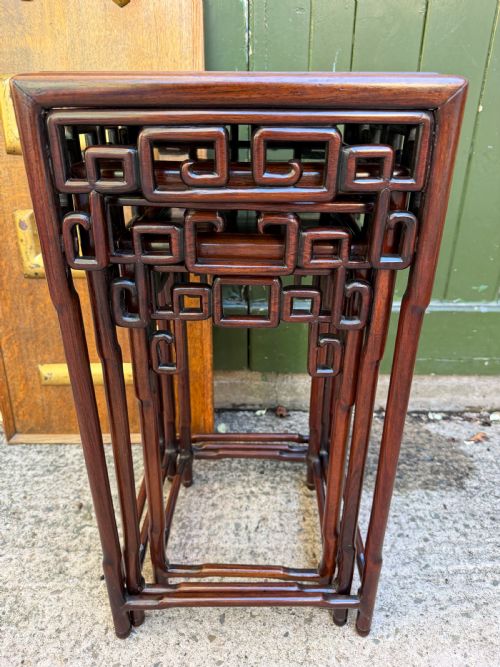
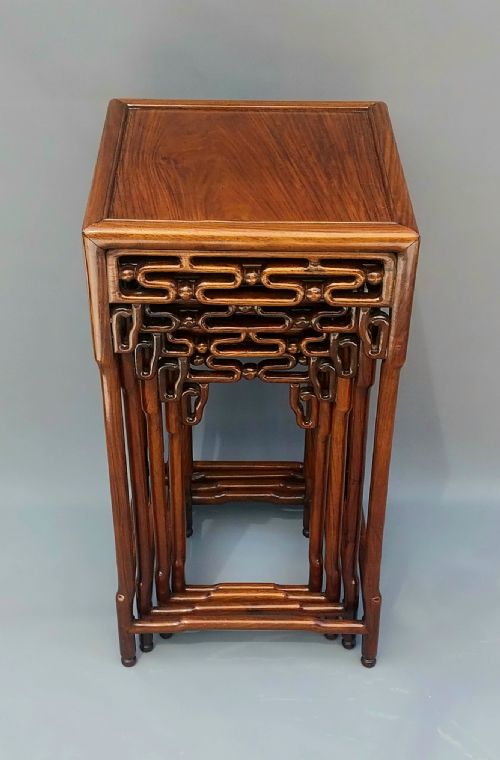
Quality rests primarily in the depth and crispness of the carving, distinguishing deeply undercut oriental motifs from shallow, mechanical stamping. The choice of timber also dictates standard, with dense rosewood and hongmu specimens holding superior weight and grain definition compared to simpler secondary woods.
Construction rigidity defines the upper tier of execution, where joints remain tight and tables slide without scraping despite decades of use. The proportion and graduation of the nested set dictate how harmoniously the pieces sit together when fully assembled.
Carved Wood Nest Retail Price Guide 2026
Typical asking prices for carved wood nest among the pieces listed under this phrase on Sellingantiques today, from the lower quarter to the upper quarter. They describe what is for sale here now, not the wider market.
The listings on this page demonstrate that carved wood nests span the nineteenth and early twentieth centuries, featuring materials from mahogany to hongmu.
The Carved Wood Nest Glossary
- Hongmu
- A traditional Chinese term designating various dense, durable hardwoods often used in fine furniture production. These timbers provide the heavy, rich red-brown foundation seen in many antique oriental nests.
- Quartetto
- An alternative historical term for a set of four graduated tables designed to nest together. The descriptor originates from musical terminology denoting a group of four.
- Graduated
- Describing tables made in diminishing sizes so each smaller unit slips precisely under the one preceding it. This scaling allows multiple surfaces to occupy the floor space of just one table.
- Chinoiserie
- European artistic styles reflecting Chinese motifs and decorative techniques. Craftsmen applied these oriental-inspired designs to Western furniture forms.
- Faux bamboo
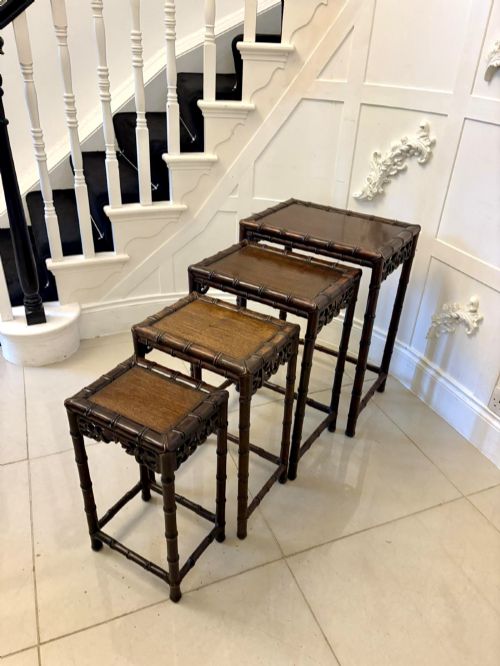
- Wood turned and carved to imitate the segmented stalks of natural bamboo. This decorative treatment appears frequently on nineteenth-century occasional tables.
Carved Wood Nest: Frequently Asked Questions
How were nested tables used historically?
These sets served primarily for serving tea or holding small objects during social calls in nineteenth and early twentieth-century parlours. Servants or hosts could easily pull out the smaller tables as needed and stack them away afterward to clear floor space.
Their practical design made them popular across various interior styles, from formal English country houses to colonial drawing rooms. They provided flexible surface area without permanently crowding a room.
How do I care for antique hardwood tables?
Maintain the timber by keeping tables away from direct heat sources and dramatic humidity fluctuations, which can cause wood to split or joints to loosen. Apply natural beeswax periodically to nourish the hardwood and preserve its natural sheen.
Avoid commercial silicone polishes that build up residue over time. Dust gently with a dry, soft cloth to protect delicate carved details on the aprons and legs.
How can I tell the period of a set?
Examine the timber density, tool marks, and overall stylistic conventions to establish an approximate date of manufacture. Edwardian and Victorian pieces often exhibit specific regional turning styles and joinery methods distinct from late Qing Dynasty Chinese exports.
Patina accumulated over decades on the touch points offers further clues to age. Comparing the wood species and construction with documented examples helps narrow down the decade.
Are all nested tables sets of four?
Sets commonly consist of either three or four graduated tables, though individual configurations vary according to the maker and region. Chinese export examples frequently feature four tables, while certain Edwardian or oak variations comprise three.
Each table diminishes in height and width to fit the precise clearance of the frame above it. The number of pieces depends entirely on the original design intent rather than a universal standard.