



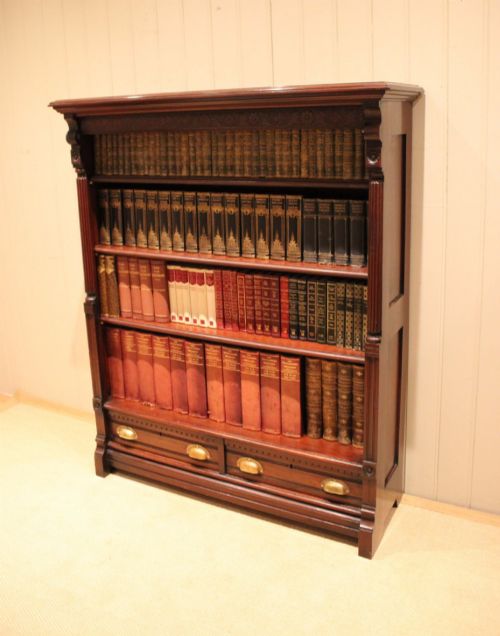
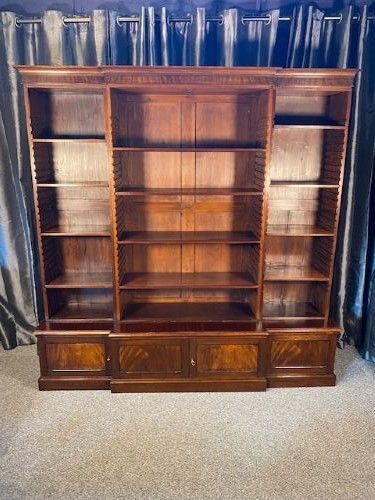
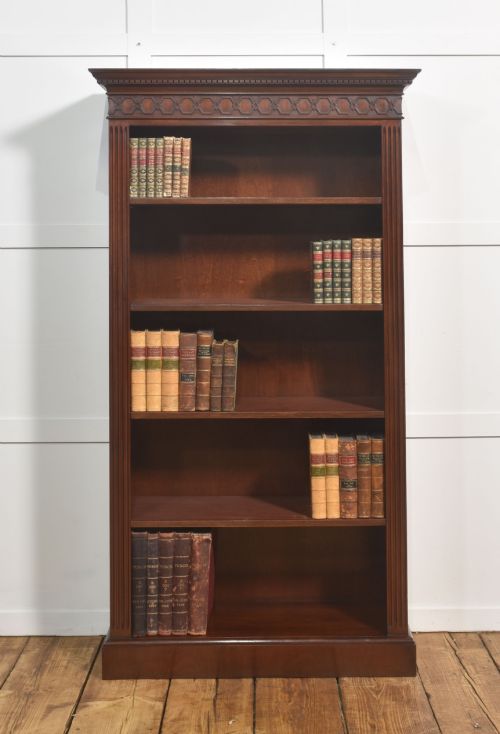
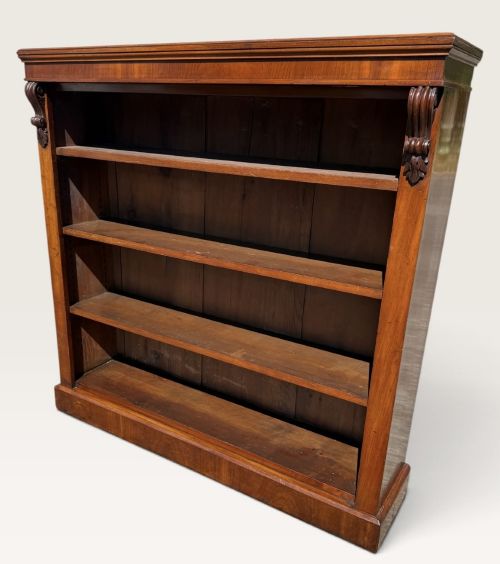


Carved Wood Library Shelves
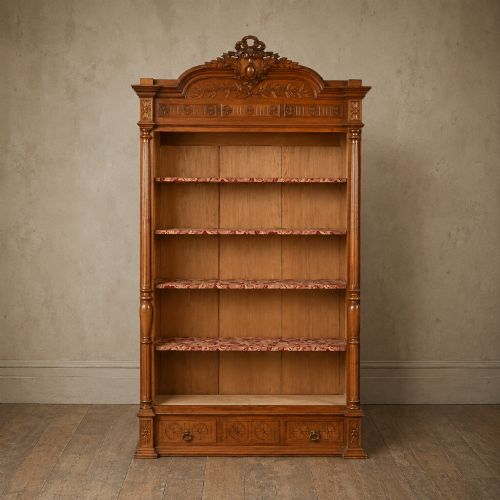
Carved wood library shelves provide sturdy housing for books, uniting practical storage with period craftsmanship in mahogany, oak, and rosewood.
Carved Wood Library Shelves
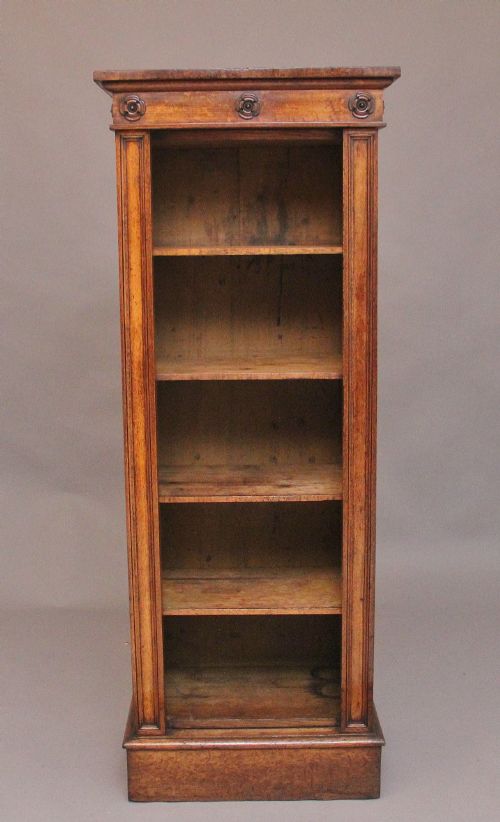
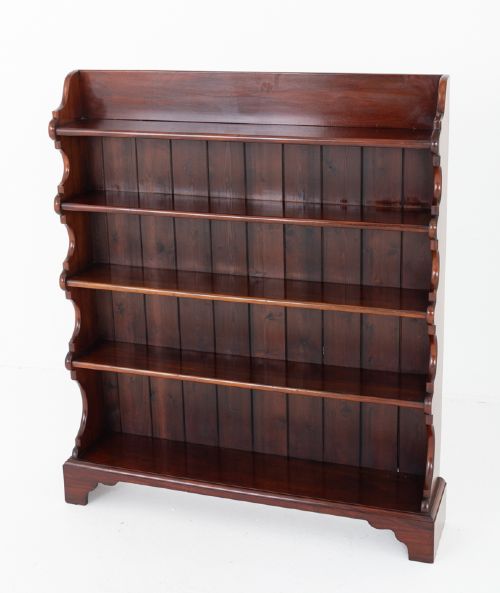
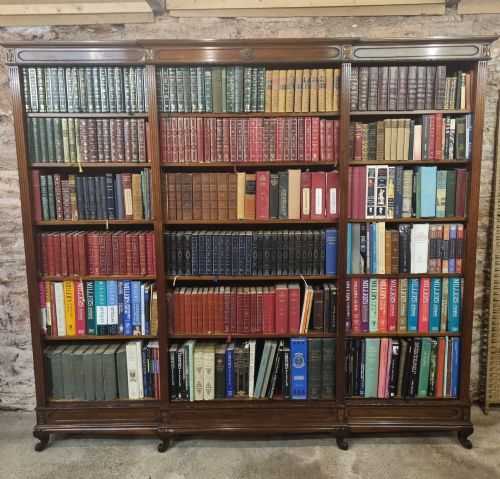
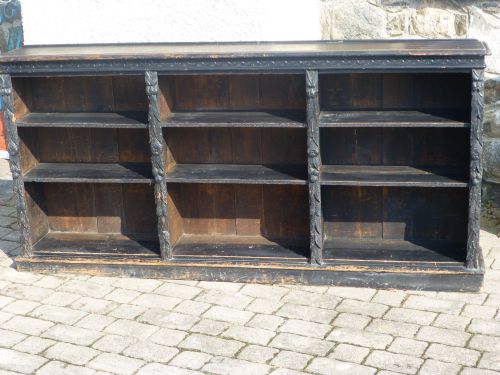
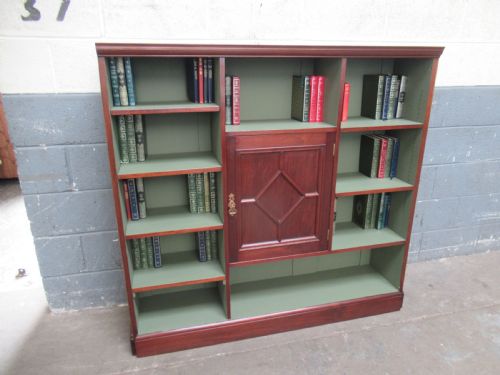
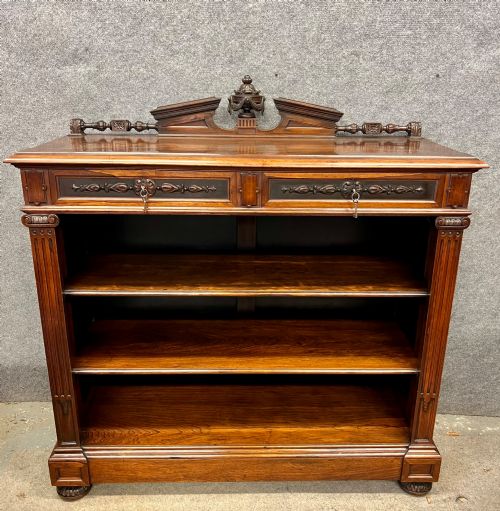
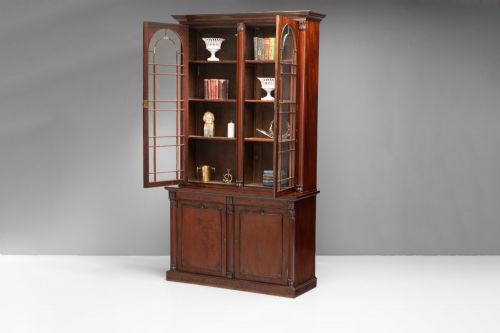
Carved wood library shelves encompass open bookcases, low dwarf units, and breakfront bookcases designed to hold private collections. When you search for carved wood library shelves, you encounter pieces originating from the Regency, Victorian, and Edwardian periods.
The version most commonly met on this page is the open mahogany or rosewood bookcase, often featuring adjustable shelves and carved corbels. These items served scholars and readers in private libraries and studies across the nineteenth and early twentieth centuries.
Many examples span varying scales, from tall standing bookcases to low dwarf units and corner cabinets. Solid wood construction in oak, walnut, and mahogany underpins the majority of these library furnishings.
How they were made
Cabinetmakers utilised dense timbers including mahogany, rosewood, walnut, and oak, often constructing the main carcase with solid boards or fine veneers. Brass fittings, glass panels, and leather accents appear alongside carved wooden details.
Construction techniques incorporated adjustable shelf mechanisms and robust joining methods to support heavy volumes. Carved corbels, green man motifs, and inlaid woodwork finish the surfaces of these library pieces.
Carved Wood Library Shelves Retail Price Guide 2026
Typical asking prices for carved wood library shelves among the pieces listed under this phrase on Sellingantiques today, from the lower quarter to the upper quarter. They describe what is for sale here now, not the wider market.
Listings feature woods such as mahogany, rosewood, oak, walnut, and satinwood across the nineteenth and early twentieth centuries.
What varies in quality
The distinction between standard utility pieces and exhibition quality work lies in the selection of timber figures, such as burr walnut or figured mahogany, and the crispness of the hand-carved ornamentation. Finer examples display meticulous joinery and thoughtful proportions that elevate them beyond simple storage.
Makers and workshops of note introduce refined details like ormolu mounts, intricate brass hardware, and breakfront configurations that separate workshop production from mass commercial output.
Sir John Bennett·Robert Strahan·Goodhall Lamb and Heighway·Waring and Gillows
The Carved Wood Library Shelves Glossary
- Breakfront
- A cabinet design where the central section projects forward from the flanking wings. This configuration creates visual depth in large library rooms.
- Corbel
- A structural or decorative bracket projecting from the face of a wall or bookcase. Carved wooden scrolls and figures often ornament these supports.
- Ebonised
- Timber treated with a dark finish to resemble ebony. This treatment creates a dramatic contrast in Victorian decorative furniture.
- Dwarf bookcase
- A low open bookshelf designed to sit below window height. These units allow light to pass across study spaces.
Carved Wood Library Shelves: Frequently Asked Questions
How do I adjust the shelves?
Most nineteenth-century bookcases use a system of wooden ratchets, brass studs, or vertical slots cut into the interior sides. You simply lift the shelf slightly to disengage it from the supports and reposition it at the desired height.
Take care when moving shelves laden with heavy volumes to avoid damaging the interior veneer or support brackets.
Are these bookcases suitable for modern books?
The adjustable shelving found in many Victorian and Edwardian bookcases accommodates varying book heights easily. You can rearrange the internal layout to fit modern hardbacks and oversized art volumes.
Ensure that the depth of the shelf matches your larger volumes so the books do not overhang the front edge.
How do I tell a Victorian bookcase from a Regency one?
Regency bookcases, dating from the early nineteenth century, frequently feature rosewood timbers, brass inlay, and restrained classical proportions. Victorian examples from later decades often utilise oak, walnut, or mahogany with more robust carved ornamentation.
Examining the construction methods and secondary woods inside the carcase helps confirm the period of manufacture.
Where should I place a library table?
Library tables work best positioned in the centre of a study or home office where you can walk around all four sides. They provide an expansive surface for reading and writing.
Keep the table away from direct heat sources and strong sunlight to protect the polished wood finish.