

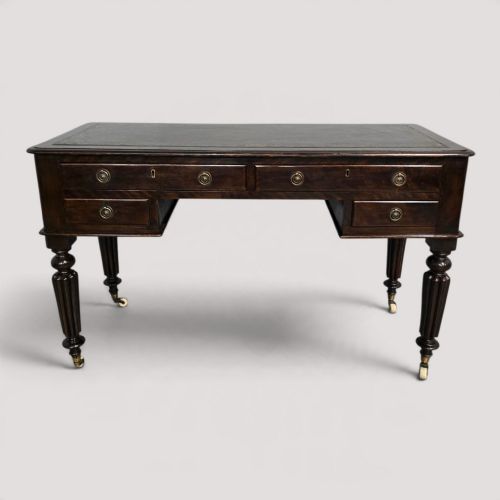
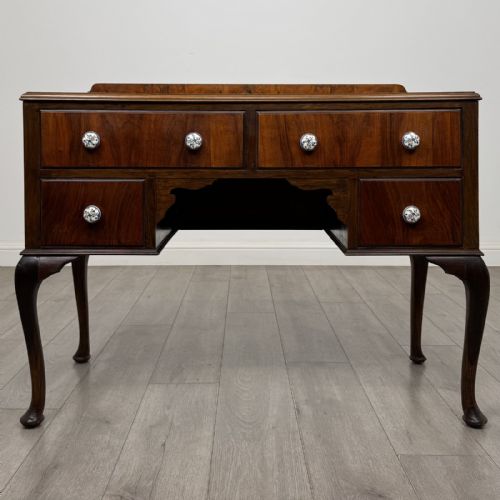
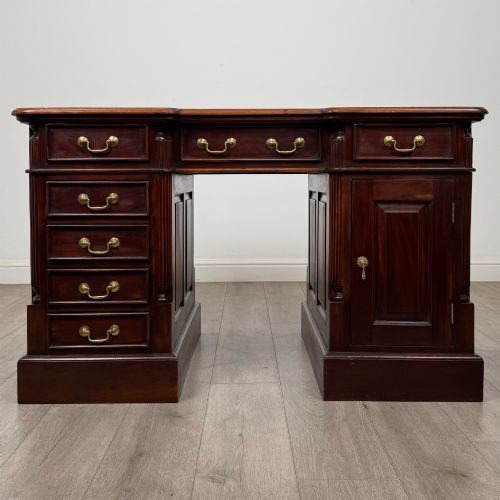
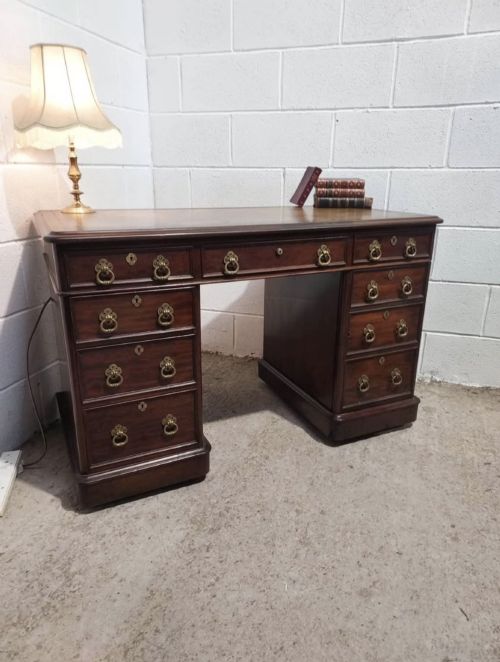

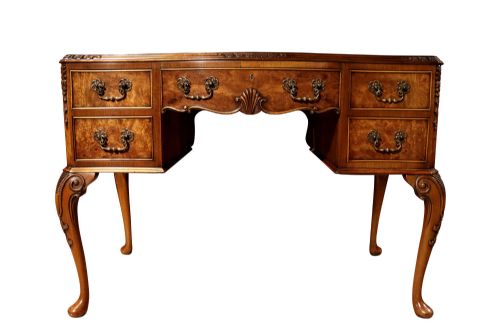


Carved Wood Kneehole
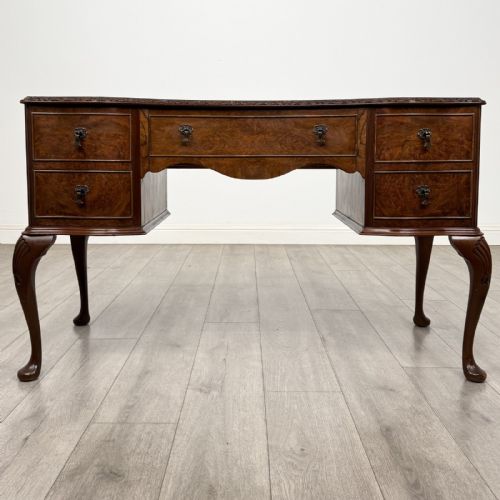
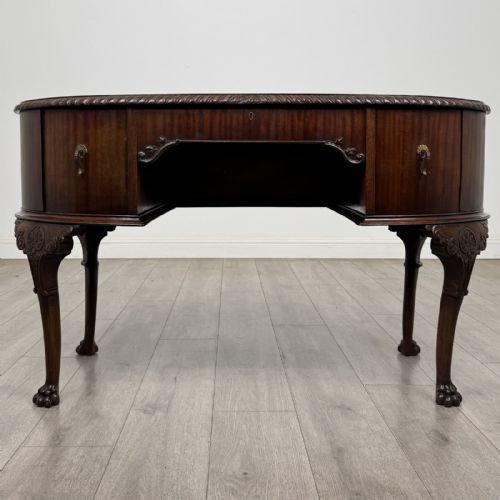
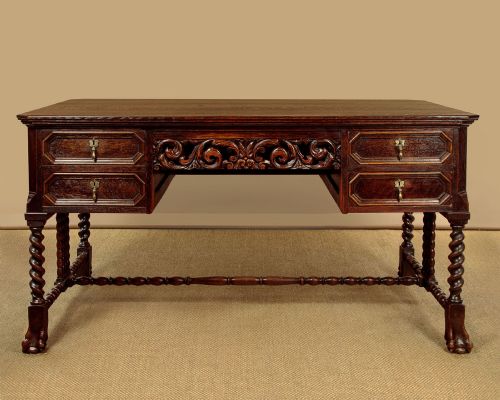
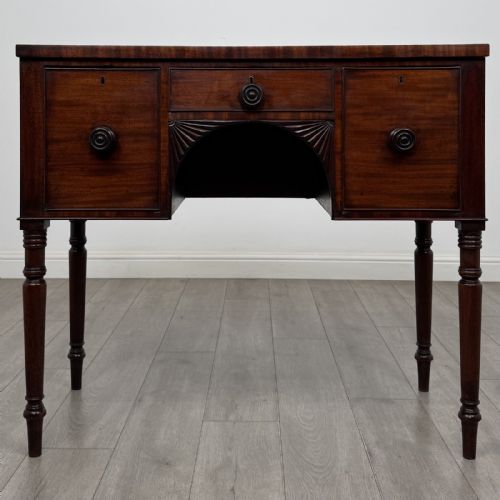
These carved wood kneehole pieces are substantial writing desks and dressing chests built to anchor a study with traditional craftsmanship.
Carved Wood Kneehole
When you search for carved wood kneehole, you encounter a specialised form of pedestal desk, writing table, or dressing chest designed with a central recessed space for the legs. The selection spans several distinct eras, drawing heavily on Georgian origins, Victorian production, and Edwardian cabinetmaking.
You are most likely to meet mahogany examples from the Victorian and Edwardian periods, alongside George II pieces and revival styles such as Chippendale and Queen Anne. These forms serve primarily as working desks, writing tables, and occasional dressing furniture.
The layout typically incorporates banks of drawers flanking the central kneehole, sometimes featuring a concealed cupboard or shallow drawer directly beneath the writing surface. Proportions range from diminutive eighteenth-century specimens to larger pedestals intended for office or library use.
How they were made
Cabinetmakers constructed these pieces predominantly using solid hardwoods such as mahogany, walnut, and oak, frequently applying flame mahogany veneer or burr walnut to primary surfaces for visual depth. Secondary timbers and internal drawer linings often relied on softer woods.
Surface enhancement involved brass hardware, such as drop handles and escutcheons, alongside inset leather writing surfaces on desks. Structural ornamentation included carved pillars, fielded panels, and stylistic references to Chippendale and Queen Anne traditions.
Carved Wood Kneehole Retail Price Guide 2026
Typical asking prices for carved wood kneehole among the pieces listed under this phrase on Sellingantiques today, from the lower quarter to the upper quarter. They describe what is for sale here now, not the wider market.
Object forms on this page range from pedestal writing desks and low boys to dressing chests and side cabinets.
What varies in quality
The grade of a piece rests on the selection of timber, particularly the choice of figured veneers like flame mahogany or burr walnut, and the crispness of any carved detailing on pillars and mouldings. Timber choice dictates the visual weight and textural richness of the exterior.
Internal construction standards differentiate standard utility furniture from finer workshops, visible in the dovetailing of drawers, the smoothness of their run, and the integrity of secondary woods. Original brass hardware and well-preserved leather inserts also elevate the standing of a desk.
Gill & Reigate·Étienne Kohlmann
The Carved Wood Kneehole Glossary
- Kneehole
- A recessed space beneath the desktop or drawer tier designed to accommodate the user sitting down. This configuration defines pedestal desks and low boys.
- Pedestal desk
- A heavy freestanding writing table comprising two separate pedestals of drawers with a central connecting section. They frequently feature panels on all sides.
- Flame mahogany
- A veneer cut from the fork of the mahogany tree to produce a distinctive flickering flame pattern. It appears on prominent surfaces of eighteenth and nineteenth-century furniture.
- Burr walnut
- Timber taken from a tree growth or wart, yielding a turbulent, highly figured grain pattern. Cabinetmakers prized it for decorative desk and table tops.
- Low boy
- A small leg table with drawers, functioning historically as a dressing table or side table. Eighteenth-century examples often display cabriole legs.
Carved Wood Kneehole: Frequently Asked Questions
What is a kneehole desk?
A kneehole desk is a piece of case furniture featuring a central recess beneath the writing surface for the sitter's legs, flanked by vertical banks of drawers.
This layout provides structural stability while allowing the user to sit comfortably close to the work surface during writing or administrative tasks.
How do I date a mahogany desk?
Dating relies on examining construction methods, timber selection, handle styles, and overall proportions. Eighteenth-century pieces often use solid mahogany with hand-cut dovetails, while Edwardian revivals employ machine-finished components and distinct secondary woods.
Stylistic cues, such as bracket feet versus plinth bases or carved pillars, help narrow the period of manufacture between the Georgian era and the early twentieth century.
Where were kneehole desks used?
These pieces served primarily in private libraries, studies, and drawing rooms as writing desks, library tables, or ladies dressing chests. Their finished backs often allowed them to stand freestanding in the middle of a room rather than pushed against a wall.
In domestic settings, they provided secure storage for correspondence and personal documents within the banks of drawers.
How do I care for a wood desk?
Preserving antique wood involves maintaining stable indoor humidity levels and keeping pieces away from direct heat sources to prevent timber splitting and veneer lifting. Regular dusting with a dry cloth protects the polished surface without the buildup of silicone oils.
Leather tops benefit from occasional specialist conditioning to keep the material supple and prevent cracking around the edges.