


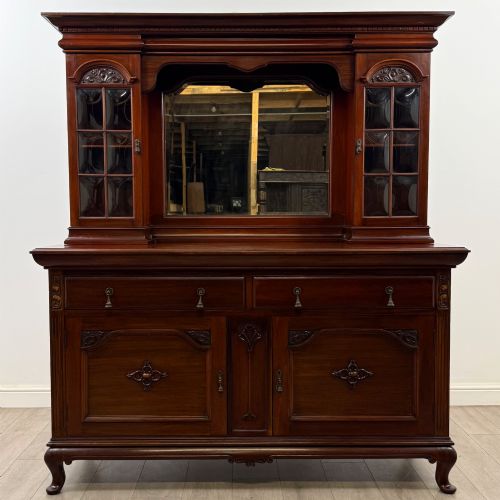


Carved Wood Hutch
A carved wood hutch brings centuries of domestic storage history into a room, offering sturdy shelves and panelled cupboards built for daily use.
Carved Wood Hutch
A carved wood hutch typically appears on this page under related forms like dressers, sideboards, cabinets, and monks benches spanning from the seventeenth century through to the Edwardian era and the nineteen-twenties. These pieces combine open display shelving or glazed upper cabinets with substantial lower cupboards, often enriched with geometric carvings, figurative panels, or revival detailing.
The materials you encounter most frequently in these listings are oak and mahogany, alongside occasional cherrywood, walnut, and mixed timbers fitted with brass, iron, mirror glass, or plain glass panels. Styles range from strict Jacobean Revival and folk art tramp carving to English Country farmhouses, Georgian proportions, and Arts and Crafts simplicity.
Materials and construction methods
Makers relied primarily on solid oak and mahogany for the structural carcass and drawer linings, shaping the timber with hand tools to create robust uprights, thick tabletops, and heavy doors. Iron and brass hardware - such as hinges, drop handles, and escutcheons - secured the moving parts and reinforced heavy joints.
Surface decoration involved deep chisel work, geometric relief carving, and folk art tramp carving directly into the wood panels. Glazed doors and mirror glass insertions required careful rebate cutting to seat the glass securely within wooden frames.
Carved Wood Hutch Retail Price Guide 2026
Typical asking prices for carved wood hutch among the pieces listed under this phrase on Sellingantiques today, from the lower quarter to the upper quarter. They describe what is for sale here now, not the wider market.
Some seventeenth-century monks benches double as tables, proving our ancestors loved multifunctional furniture long before modern flats invented it.
Assessing quality in carved timber furniture
Quality separates pieces by the crispness of the chisel work and the depth of the timber's grain, where sharply defined geometric carvings and figures stand apart from softer, worn mouldings. The choice of primary timber also dictates merit, with dense figured oak or rich flame mahogany showing superior grain selection.
Structural integrity governs the hierarchy, distinguishing pieces with original brass or iron fittings and tight panel joints from those altered over generations of domestic use. The harmony between the upper display section and the heavy cupboard base reveals the maker's eye for proportion.
The Carved Wood Hutch Glossary
- Jacobean Revival
- A nineteenth and twentieth-century style imitating seventeenth-century English furniture. It uses dark oak, heavy turned legs, and deep geometric panel carving.
- Tramp Art
- A folk art style of woodworking involving chip carving and layering notched pieces of scrap wood. It creates a heavily textured, mosaic-like surface on cabinets and boxes.
- Escutcheon
- A flat plate of brass or iron surrounding a keyhole. It protects the surrounding wood from wear and adds a decorative metal accent to cupboard doors and drawers.
- Rebate
- A rectangular recess or groove cut along the edge of a wooden piece. It allows glass panes or panel backs to sit flush within cabinet doors.
Carved Wood Hutch: Frequently Asked Questions
What is the difference between a hutch and a dresser?
A hutch traditionally combines an upper shelving structure with a lower enclosed cupboard, whereas a dresser often includes an extended serving surface and multiple lower drawers. Both terms frequently overlap in antique listings to describe tall storage furniture with display space.
On this page, pieces catalogued as dressers and sideboards serve a similar domestic function to hutches by offering combined display and concealed storage.
How do I care for an antique oak hutch?
Antique oak benefits from stable indoor humidity and protection from direct sunlight to prevent timber shrinkage and cracking. Regular dusting with a dry, soft cloth maintains the finish without needing heavy chemical polishes.
Feed dry timber occasionally with a traditional beeswax polish to preserve the depth of the grain and the patina of the carved panels.
How can I tell a revival piece from an older one?
Revival pieces, such as those from the Edwardian period or nineteen-twenties made in a seventeenth-century style, often feature machine-sawn timber marks and uniform secondary woods behind the carved facade. True seventeenth-century or eighteenth-century pieces display irregular hand-tool marks, pegged joints, and timber shrinkage consistent with centuries of age.
Examining the drawer construction and the rear panels usually reveals the true period of manufacture.
Where should I place a heavy wooden cabinet?
Heavy wooden cabinets require a level floor and sufficient wall clearance to support their substantial oak or mahogany frames safely. Placing them away from direct heat sources prevents the solid timber from warping or splitting over time.
Ensure the piece is anchored securely if it includes tall upper bookcases or heavy display sections to maintain stability.