
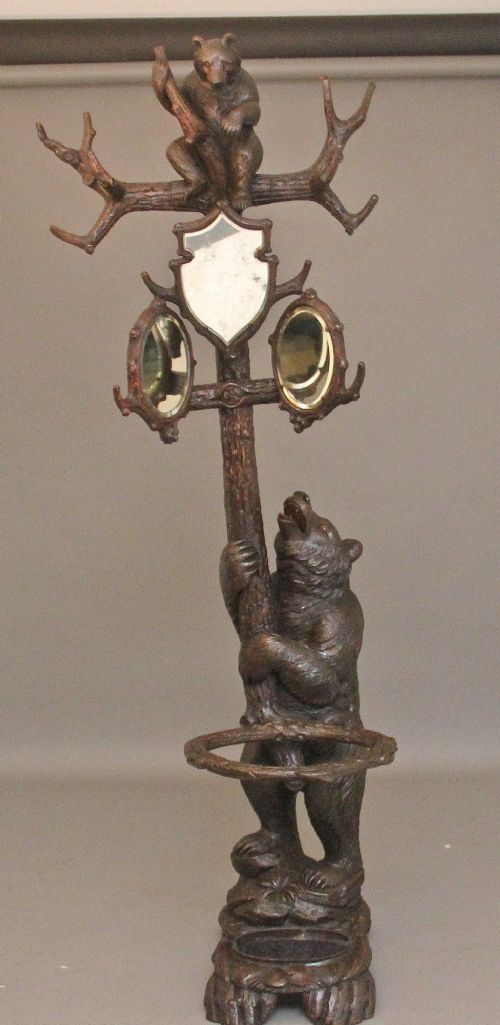


Carved Wood Hat Stand
A carved wood hat stand brings sculptural presence and utilitarian utility to an entrance hall.
Carved Wood Hat Stand
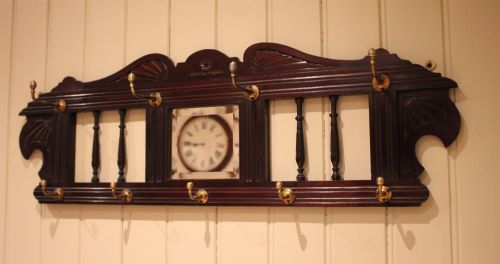
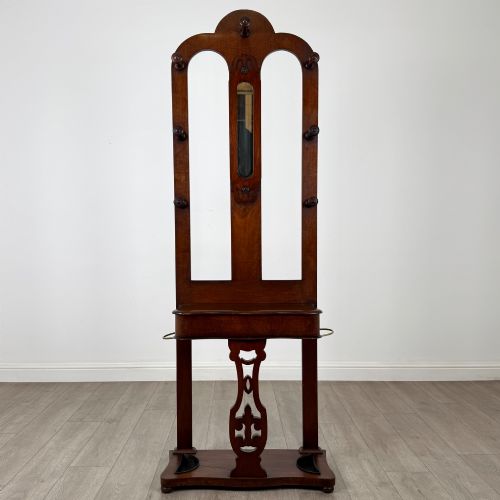
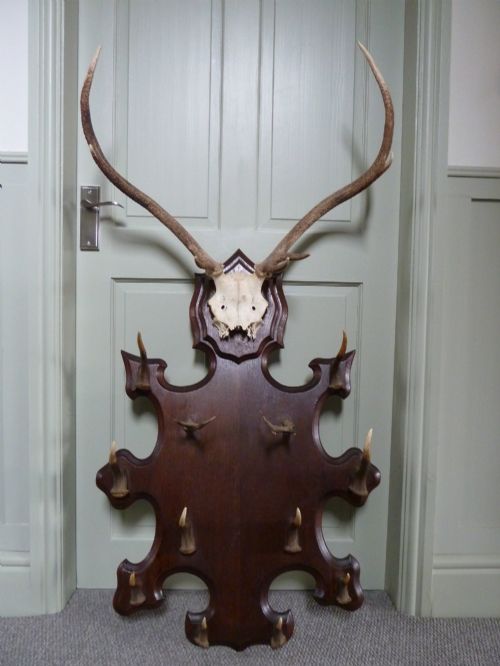
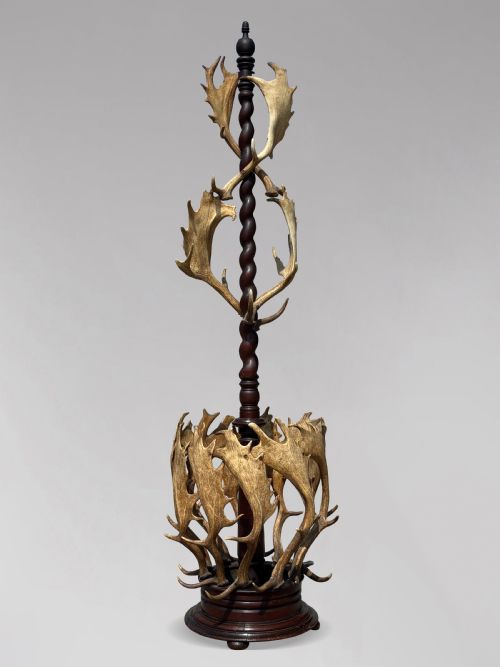
A carved wood hat stand serves as a functional furnishing for entrance halls and lobbies, designed to hold hats, coats, and umbrellas. When searching for a carved wood hat stand, buyers encounter pieces spanning the nineteenth and early twentieth centuries, with Victorian examples predominating.
The selection ranges from substantial oak and mahogany hall stands incorporating mirrors and marble shelves to specific Black Forest carvings featuring bears, foxes, and stags. Alongside these, smaller wall-hanging racks and utilitarian millinery hat blocks in beech and fruitwood appear frequently.
Materials and construction
Makers utilised dense timbers such as mahogany, oak, walnut, and fruitwood, often selecting linden wood for intricate Black Forest carving work. Structural elements frequently incorporate brass hooks, bevelled glass mirror plates, and inset marble shelves to withstand heavy daily use.
The construction relies on solid wood joinery combined with detailed hand-carving. Artisans shaped animal forms, foliage, and architectural motifs directly into the timber framework, securing structural hooks and fittings with metal screws.
Periods represented span from the Regency era through Victorian Gothic Revival to the early twentieth century.
Distinctions in quality
Quality rests in the depth, crispness, and anatomical accuracy of the hand-carving. Pieces originating from Black Forest workshops demonstrate distinct artistic merit through lifelike renderings of bears, chamois, and deer heads.
Construction substance also separates utilitarian items from finer examples. Superior hall stands integrate heavy timber frames, substantial bevelled mirror glass, and original brass hardware rather than replacement components.
J Parker of Woodstock
The Carved Wood Hat Stand Glossary
- Black Forest
- A nineteenth-century Swiss and German regional carving style known for realistic depictions of animals, particularly bears and stags, integrated into furniture.
- Hat block
- A wooden form used by milliners to shape hats during manufacture, typically turned from solid beech or fruitwood.
- Hall stand
- A tall hallway furnishing combining coat hooks, a hat shelf, an umbrella stand, and frequently a central mirror.
- Greenman
- A sculptural architectural ornament depicting a human face entwined with leaves, vines, or branches, found on carved oak furniture.
Carved Wood Hat Stand: Frequently Asked Questions
Where should a hall stand be placed?
A hall stand belongs in an entrance hall or boot room where guests arrive and outdoor garments are removed.
Sufficient clearance is required around the piece to allow coats to hang freely without obscuring mirrors or blocking doorways.
How were nineteenth-century hat stands used?
These furnishings provided an organised storage system for hats, walking canes, umbrellas, and heavy overcoats upon entering a home.
The integrated mirror allowed individuals to check their appearance before stepping back outside.
What timber is most common?
Mahogany and oak appear most frequently across nineteenth-century and Victorian examples on this page.
Walnut and linden wood are also utilised, particularly for decorative carved elements and Black Forest animal motifs.
How do I identify Black Forest carvings?
Black Forest pieces are characterised by naturalistic wooden sculptures of animals such as bears, foxes, and deer.
These works originate from Switzerland and Germany during the nineteenth and early twentieth centuries.