
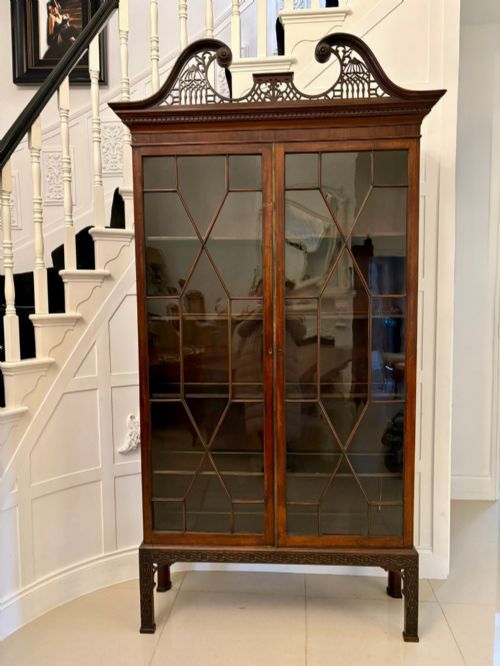
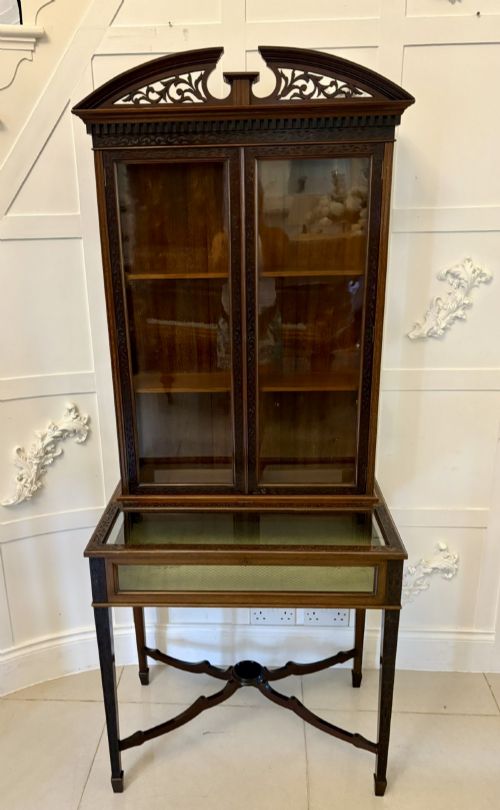
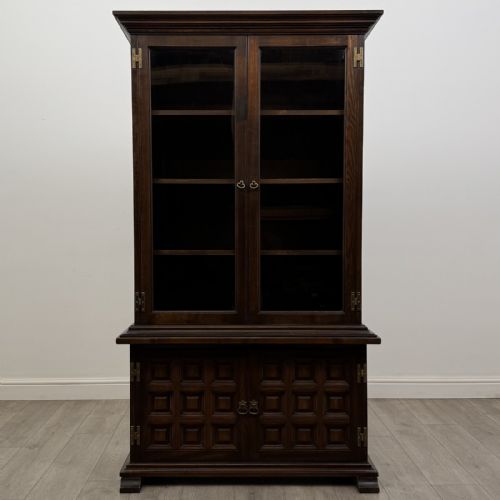
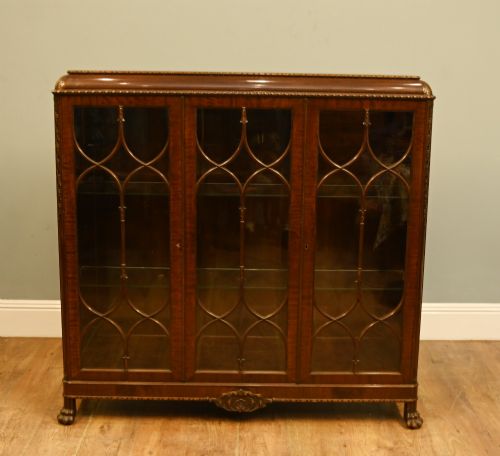
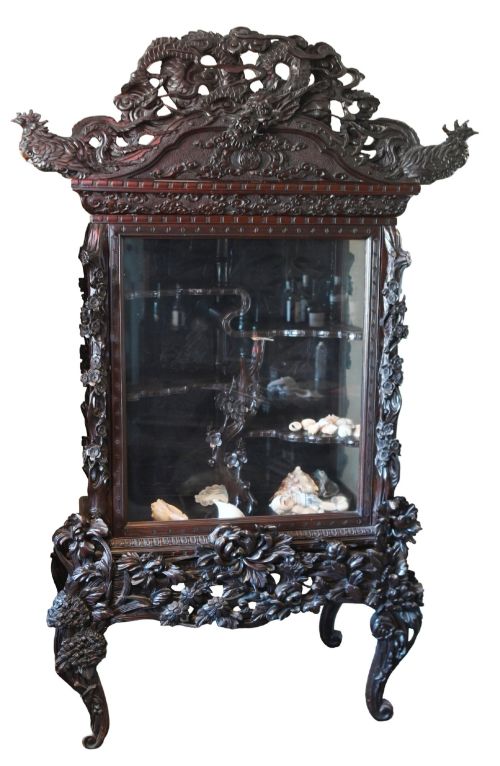
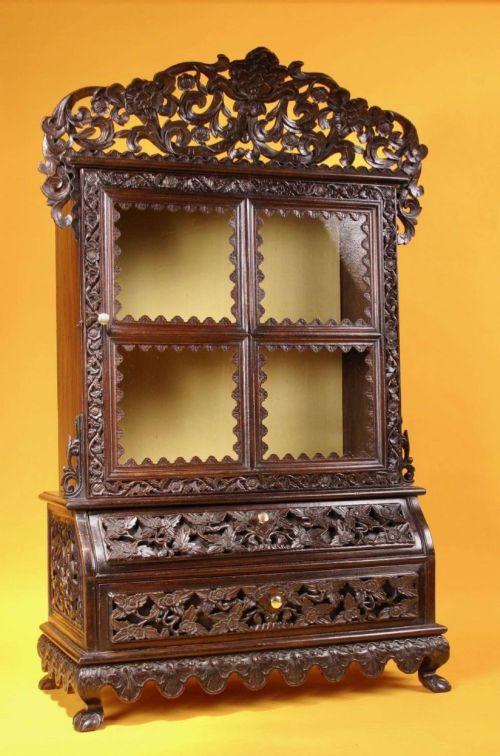
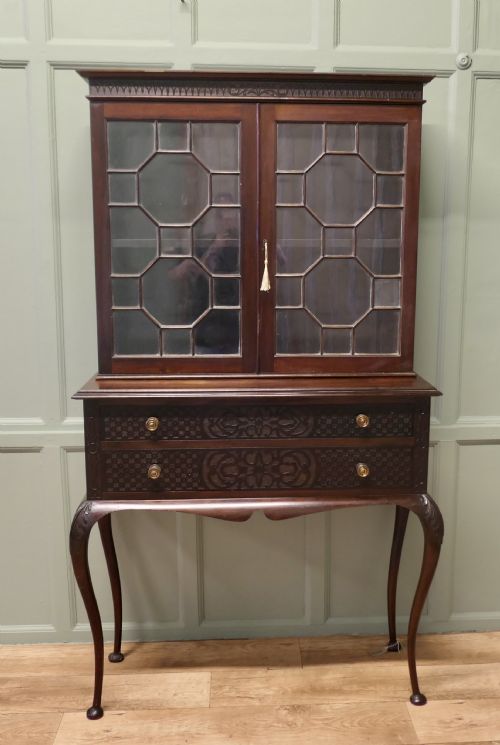
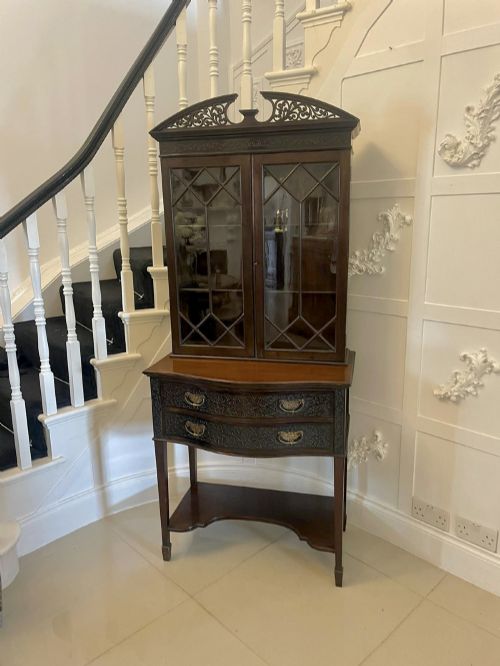

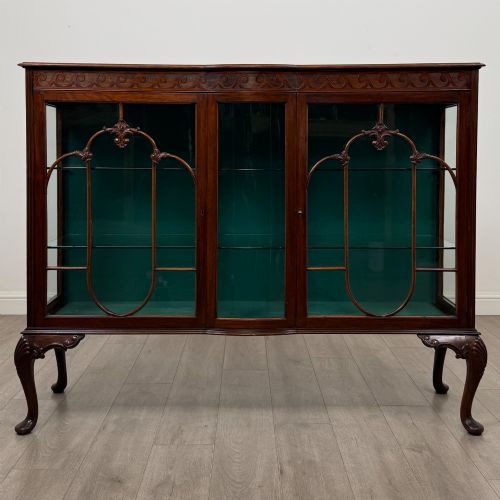
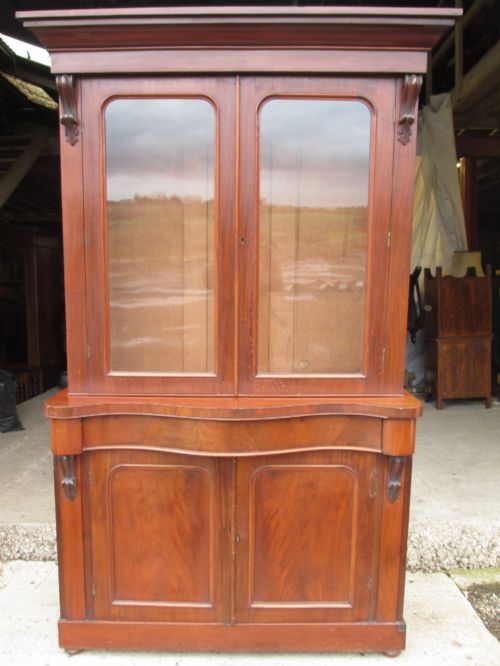
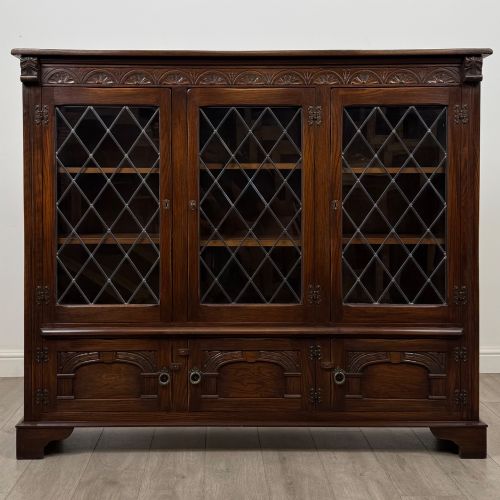
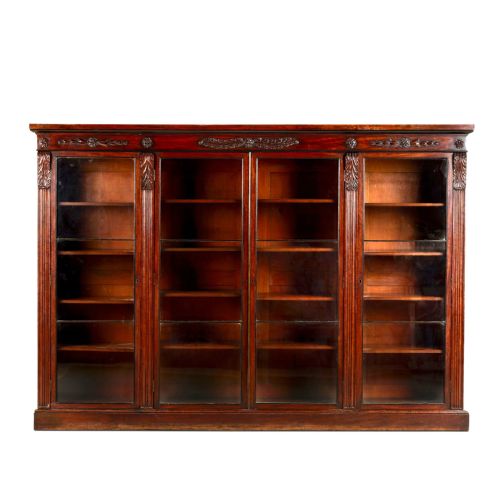
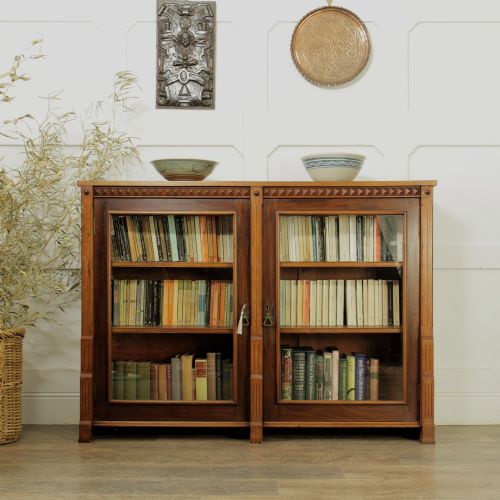
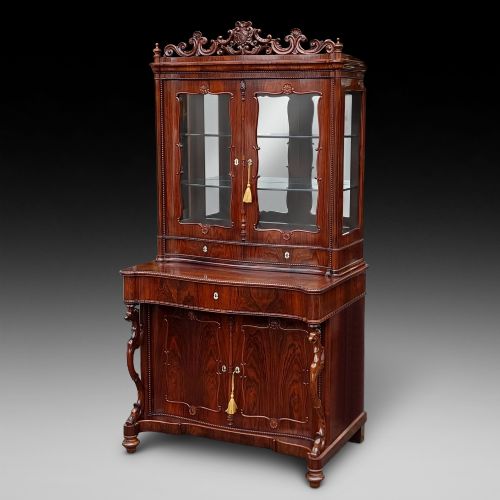
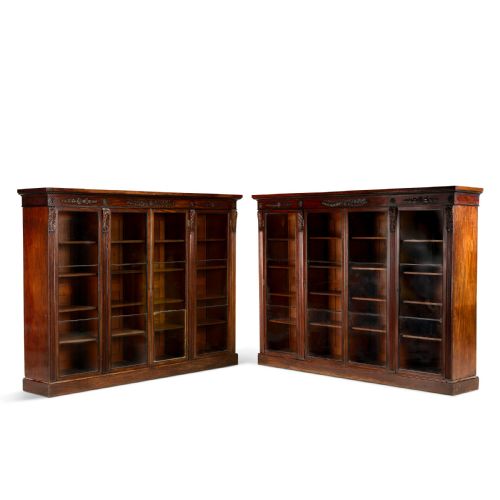
Carved Wood Glazed Cabinet
A carved wood glazed cabinet brings practical display space and architectural timber into a room, offering clear panes to protect books or china.
Carved Wood Glazed Cabinet
A carved wood glazed cabinet bridges the gap between functional storage and formal display, appearing in forms ranging from tall bookcases to corner cupboards and vitrines. These pieces emerge predominantly from the Victorian and Edwardian eras, alongside select examples from the Georgian and Regency periods.
Mahogany and oak dominate the selections on this page, shaped into styles that span Chippendale Revival, Gothic Revival, and Jacobean Revival. Buyers encounter tall breakfront libraries, hanging wall cabinets, and compact display units mounted on cupboard bases.
Originating across Britain, France, Italy, and wider Europe, these pieces reflect the varied domestic storage needs of the eighteenth, nineteenth, and early twentieth centuries. The typical specimen on this page pairs carved timber framework with glass panels designed to showcase curated collections.
Determinants of distinction
Quality rests upon the crispness of the hand-carving on the mouldings and the architectural proportion of the overall frame. Superior examples demonstrate tight joinery in the astragal bars and finely figured timber grain across the primary surfaces.
The refinement of the internal fittings, such as adjustable shelving and intact mirror-backs, distinguishes standard utility furniture from exhibition pieces. Maker attribution and the preservation of original brass handles further elevate the standing of an individual cabinet.
Listings feature mahogany, oak, walnut, and rosewood cabinets spanning the eighteenth to the twentieth centuries.
James Winter And Sons
The Carved Wood Glazed Cabinet Glossary
- Astragal glazed
- Glass doors divided into smaller panes by narrow wooden mouldings called astragals. These bars form intricate grid or geometric patterns across the front of the cabinet.
- Breakfront
- A piece of furniture where the central section projects forward from the flanking wings. This architectural layout creates depth and shadow across large bookcases and credenzas.
- Vitrine
- A glass-sided display cabinet designed primarily for the exhibition of porcelain, curiosities, or art objects. The term originates from the French word for glass.
- Credenza
- A low cabinet or sideboard, frequently fitted with doors enclosing shelving and sometimes topped with mirror-backs or display tiers. Early Victorian iterations often combine timber marquetry with glazed compartments.
- Gonçalo Alves
- A dense, highly figured tropical hardwood displaying dark brown and blonde figuring, utilised in high-status nineteenth-century cabinetmaking.
Carved Wood Glazed Cabinet: Frequently Asked Questions
What is a glazed bookcase cabinet?
A glazed bookcase cabinet combines enclosed shelving behind glass doors with lower wooden cupboards or drawers. It provides dust-free storage for libraries while keeping volumes visible.
These hybrid forms served formal libraries and drawing rooms throughout the nineteenth century.
How do I date a Victorian display cabinet?
Dating relies on architectural revival styles, timber selection, and construction marks. Mid-century pieces often favour heavy mahogany, while later nineteenth-century examples display lighter satinwood inlays or mirrored backs.
Hardware styles and joint construction inside the drawers also indicate the specific decade of manufacture.
Where should I place a corner cabinet?
A corner cabinet fits directly into a ninety-degree wall junction, making efficient use of overlooked floor space. These pieces suit dining rooms or hallways for holding porcelain and glassware.
Ensure the door swing has adequate clearance from adjacent furniture before installation.
Are these cabinets suitable for books?
Many variations function primarily as bookcases with adjustable wooden shelving behind glass panes. The glazing protects antique bindings from dust and environmental fluctuations.
Verify shelf depth and weight tolerance before loading heavy volumes onto older timber boards.