
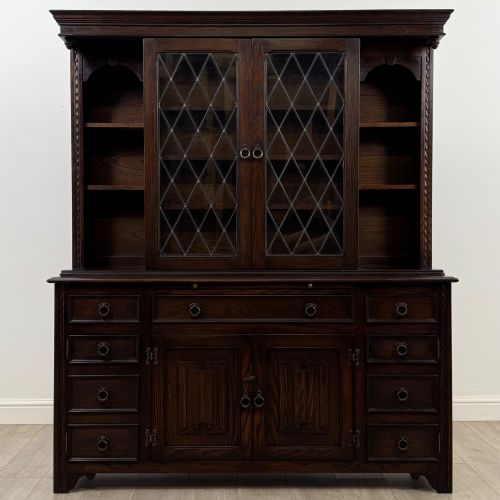
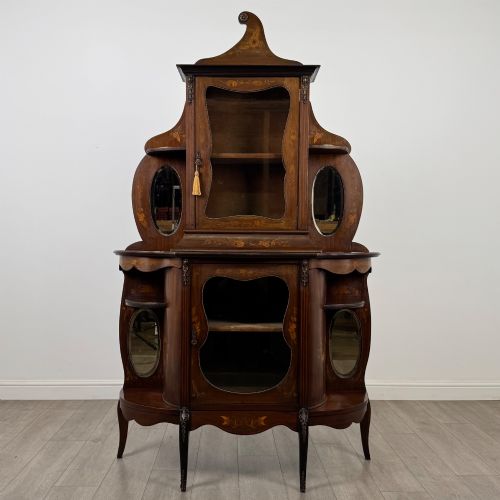

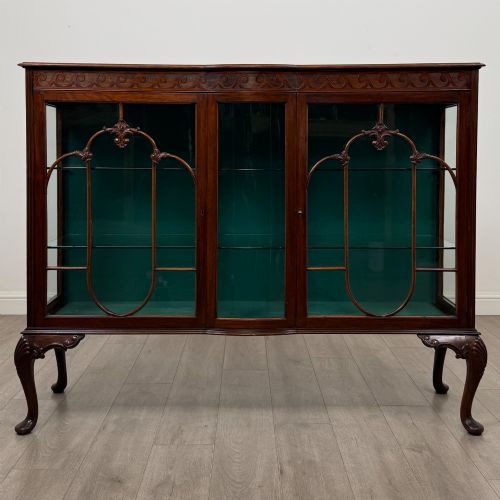
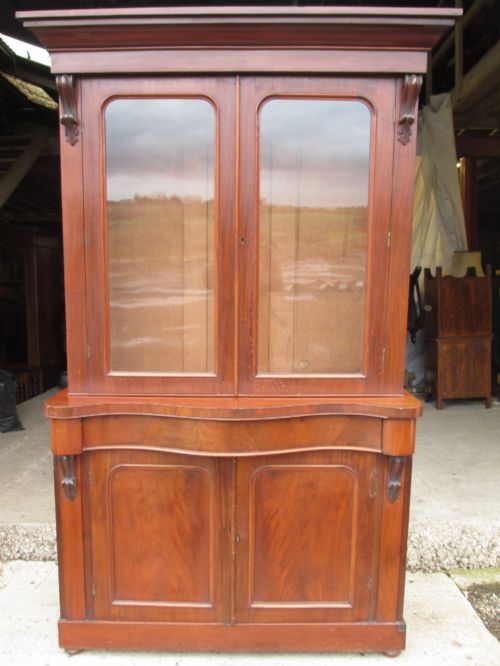
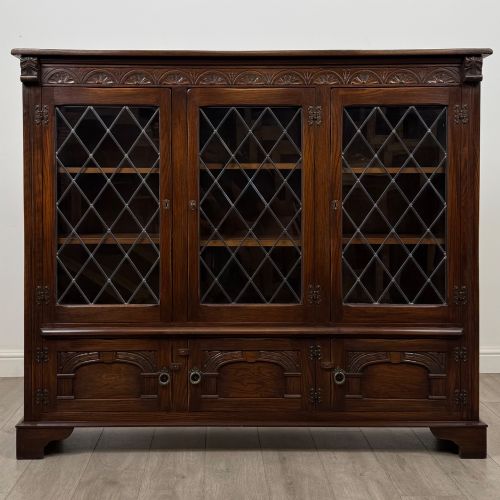
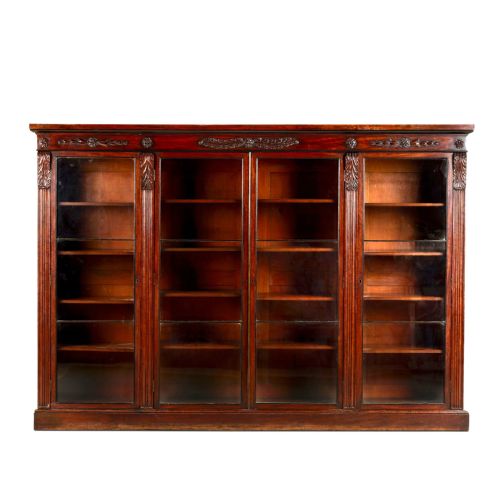
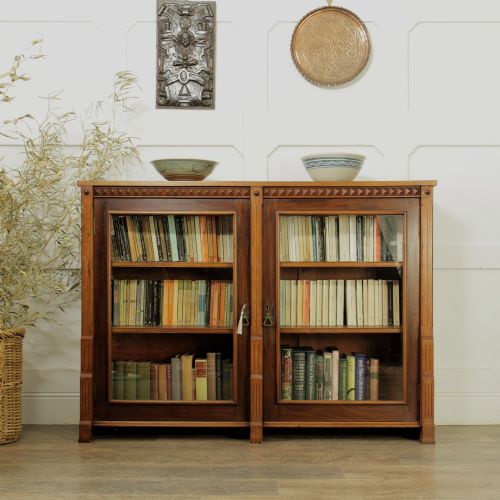
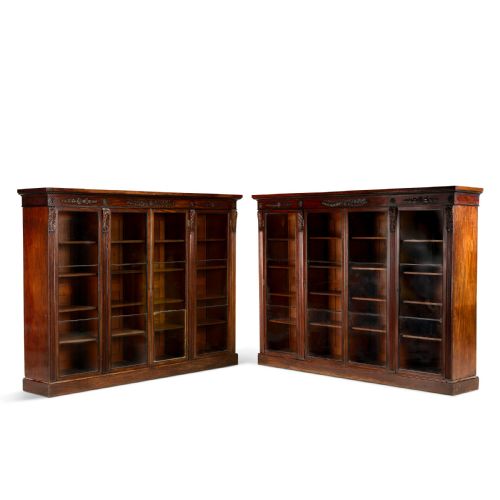
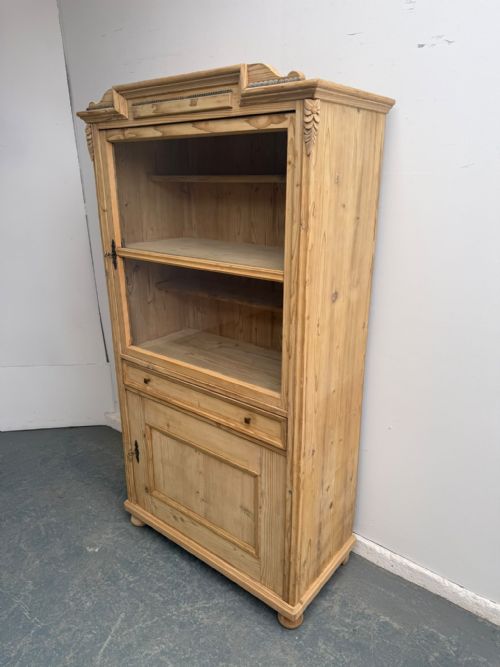
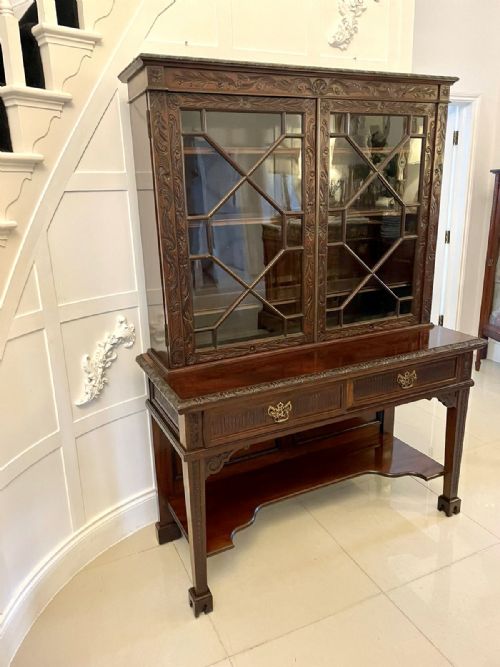
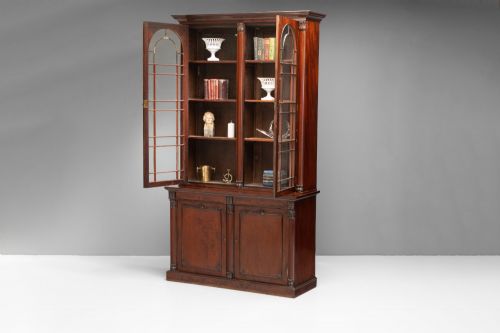
Carved Wood Glass Cabinet
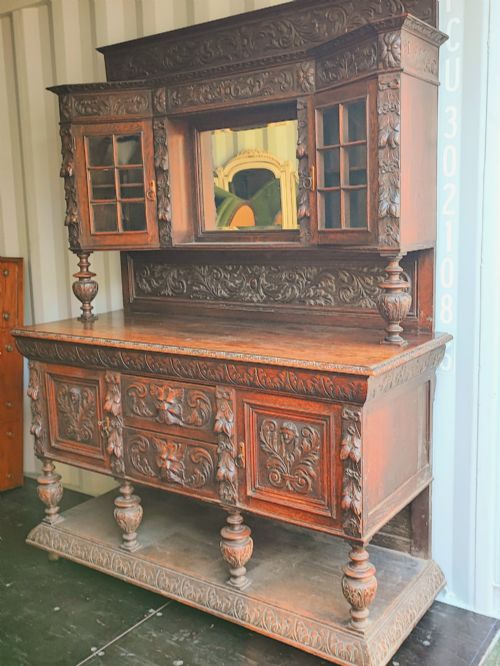
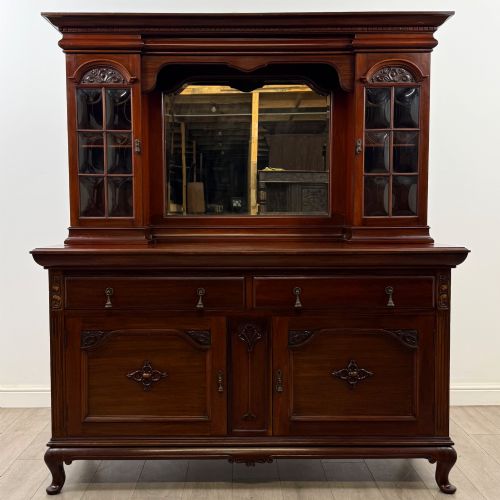
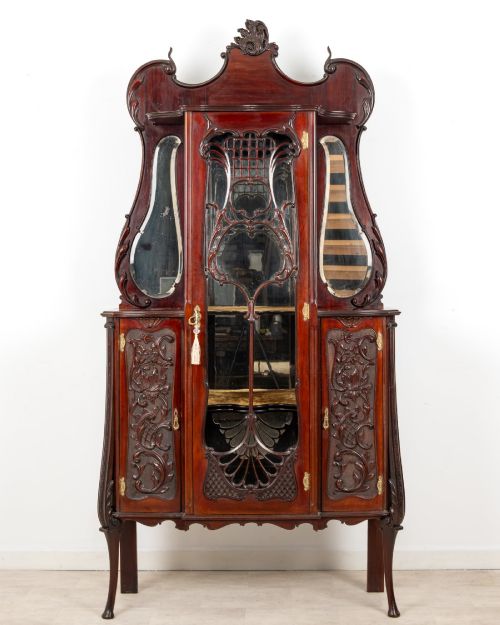
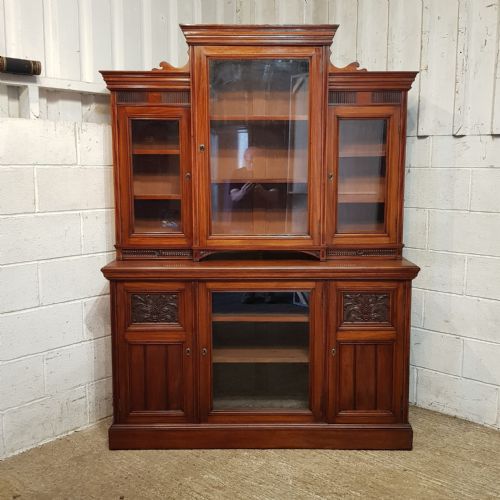
A carved wood glass cabinet brings together timber framing and transparent panes to display treasured objects.
Carved Wood Glass Cabinet
A carved wood glass cabinet serves primarily to exhibit ceramics, books, or curiosities while protecting them from dust. When searching for this phrase, buyers encounter pieces spanning the nineteenth and early twentieth centuries, including Victorian and Edwardian examples.
The forms range from wall-hanging vitrines and upright display cabinets to large breakfront bookcases and side cabinets. Mahogany, oak, and rosewood form the main structural timbers across these varied formats.
Materials and construction methods
Makers utilised solid timbers and veneers, predominantly mahogany and oak, decorated with carved details, brass mounts, and inlaid satinwood. Glazing bars divide the glass panels into geometric or curved panes, supported by fabric linings or mirrored backs inside.
Joinery techniques span traditional dovetailing for drawers and mortise and tenon joints for frames. Surface finishes vary from waxed pine and polished rosewood to painted treatments and gold leaf.
Chemists and opticians once stocked their small wares inside the very same style of mahogany retail counter that now houses home curiosities.
Distinctions in quality and execution
The depth and crispness of the carved ornamentation separate standard production from superior workshops. Finely moulded cornices, substantial timber thickness, and well-fitted glass doors define the better pieces.
The integrity of the internal shelving, original brass hardware, and the quality of the timber grain contribute significantly to a cabinet's standing.
Gabriel Viardot·James Winter And Sons·Waring And Gillow·Hille·Wylie And Lochhead Ltd
The Carved Wood Glass Cabinet Glossary
- Vitrine
- A glass-sided cabinet or display case designed specifically for showing porcelain and small objects. These pieces often feature glazed doors and sides to maximise light penetration.
- Bijouterie cabinet
- A shallow display table or cabinet with glass panels intended for jewellery and trinkets. They frequently sit on slender legs with hinged glazed lids.
- Breakfront
- A piece of furniture where the central section projects forward from the flanking wings. This architectural arrangement creates depth and shadow on large bookcases and sideboards.
- Chippendale Revival
- A late nineteenth or early twentieth-century style recreating eighteenth-century motifs. Pieces typically display carved fretwork, cabriole legs, and blind fret detailing.
- Glazing bar
- The narrow wooden or metal strip that holds individual panes of glass within a sash. These bars form structural grids across cabinet doors and bookcase fronts.
Carved Wood Glass Cabinet: Frequently Asked Questions
How do I date a carved wooden cabinet?
Dating relies on combining timber choices, hardware types, and prevailing revival styles recorded in the construction. Victorian and Edwardian pieces show distinct shifts from heavy carved oak to lighter inlaid mahogany.
Construction marks and secondary woods inside drawers also help narrow down the decade of manufacture.
Where should I place a glass display cabinet?
Position these cabinets away from direct sunlight to protect interior fabrics and timber finishes from fading. Placing them on stable interior walls prevents undue stress on the glass panes.
Sufficient floor space ensures the doors can open fully for arranging contents.
Are shop display cabinets suitable for home use?
Shop counters and retail cabinets adapt well to domestic interiors for displaying collections or serving drinks. Their sturdy commercial construction handles frequent access.
These pieces bring a distinct industrial or mercantile character into a residential room.