

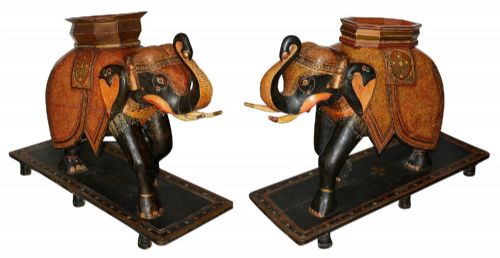


Carved Wood Elephants
These carved wood elephants bring tactile nineteenth-century craftsmanship into domestic spaces through practical forms and sculptural studies.
Carved Wood Elephants
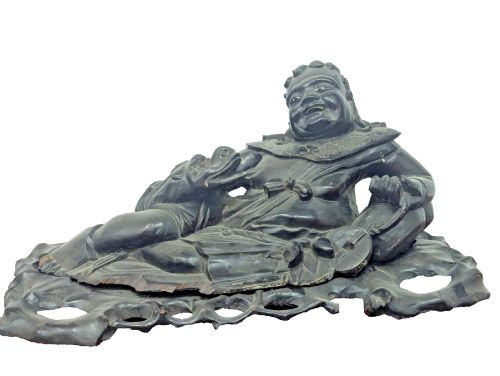
When you search for carved wood elephants, you encounter a distinct selection of antique furnishings, decorative figures, and bookends originating primarily from Indian, Burmese, and Chinese workshops. These objects translate traditional motifs into functional items for the home, ranging from small desktop studies to substantial pieces of furniture.
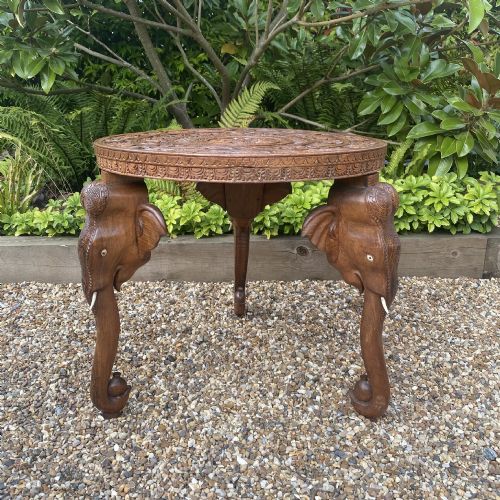
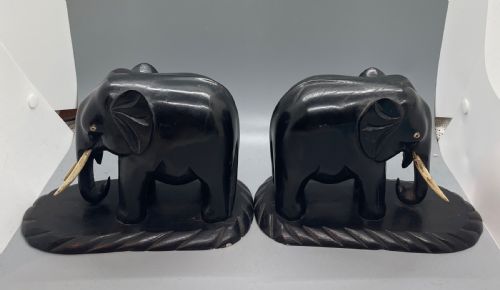
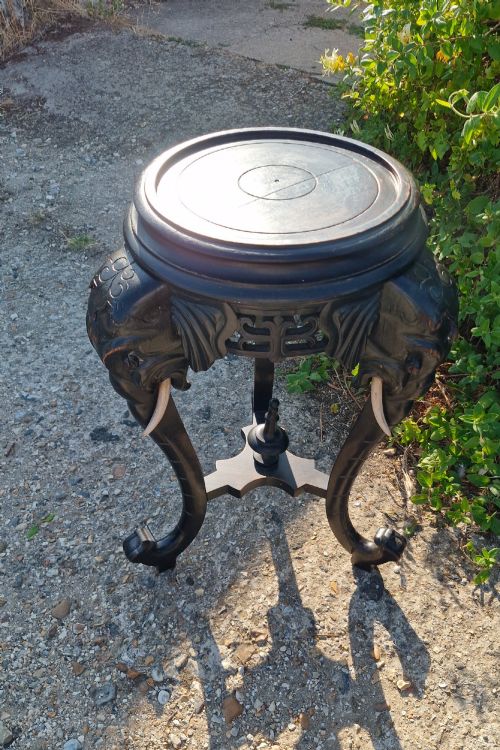
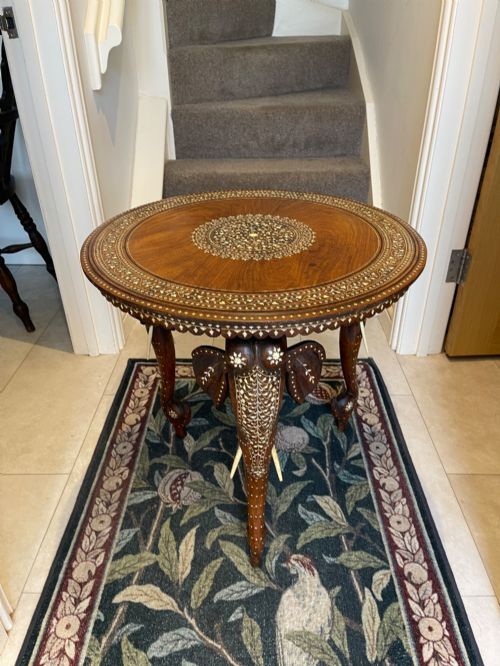
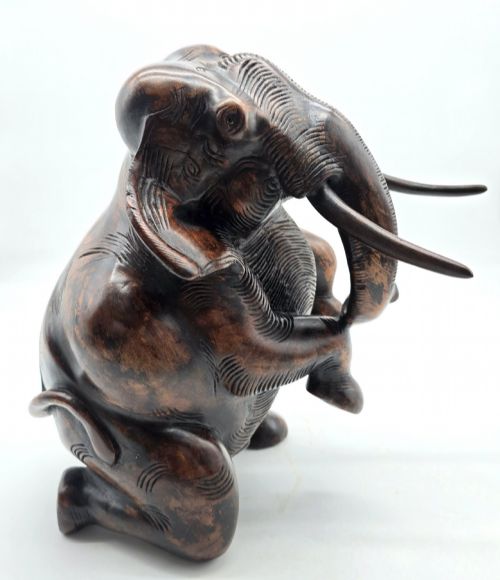
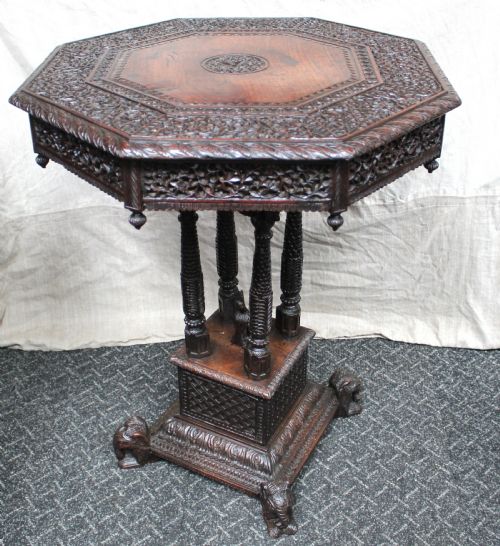
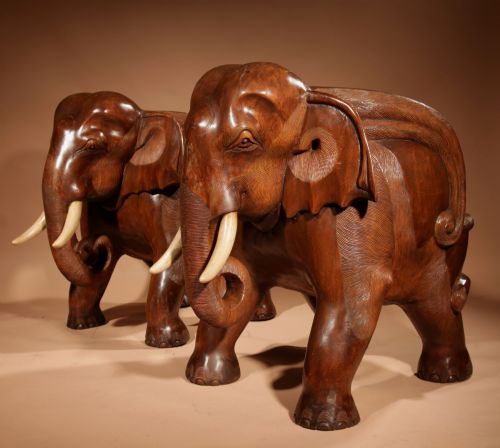
The most common examples on this page are occasional tables, side tables, and armchairs supported or decorated by carved elephant figures, alongside standalone sculptures and pairs of bookends. These pieces frequently date from the Victorian and Edwardian periods, reflecting nineteenth-century and early twentieth-century production.
Many items bear regional stylistic traits associated with Anglo-Indian and Raj period manufacturing, where local artisans combined indigenous carving traditions with European furniture forms. You also find specialised items such as tripod tables from Hoshiarpur and lacquer work from Kashmir.
Materials and methods
Makers utilised dense timbers such as teak, rosewood, ebony, and general hardwoods that allowed for intricate relief carving and stable structural forms. These durable woods were selected for their ability to hold fine detail without splitting, particularly around slender legs and projecting tusks.
Surface enhancement often involved contrasting materials like bone and brass inlay, alongside painted details or traditional lacquer finishes. Artisans combined hand chiselling for the figures with traditional joinery for the furniture frames, creating integrated compositions where the animal forms serve as structural supports.
Carved Wood Elephants Retail Price Guide 2026
Typical asking prices for carved wood elephants among the pieces listed under this phrase on Sellingantiques today, from the lower quarter to the upper quarter. They describe what is for sale here now, not the wider market.
One unexpected item is a novelty biscuit tin made to look like an Indian carved hardwood box.
Assessing quality and execution
The degree of naturalism and depth in the carving distinguishes superior pieces from simpler production work, particularly in the rendering of facial expressions, skin folds, and caparison details. Artisans who spent more time on anatomical accuracy produced figures with greater liveliness and presence.
The choice and stability of the underlying timber also mark the difference between standard items and high-end examples, with dense ebony or well-figured rosewood demanding greater skill to work. Furthermore, the integrity of inlaid elements and the preservation of original painted tusks or surfaces influence the overall coherence of a piece.
Hunter and Palmer
The Carved Wood Elephants Glossary
- Anglo-Indian
- A descriptive term for furniture and decorative arts made in India during the British Raj, combining local carving styles with European forms. These items often feature dense overall ornamentation and regional timber choices.
- Hoshiarpur
- A town in Punjab known for its distinct woodwork tradition involving intricate inlay work. Pieces from this region commonly incorporate geometric bone or brass patterns set into teak surfaces.
- Raj Period
- The era of British crown rule in the Indian subcontinent lasting from eighteen fifty-eight to nineteen forty-seven. Material from this time frequently reflects cross-cultural design exchanges.
- Occasional Table
- A small, portable table designed for specific, intermittent use within a room. In this context, they often feature figural elephant supports or heavily carved tripod bases.
- Polychrome
- The practice of decorating architectural elements or sculptures in multiple colours. This technique appears on specific temple carvings and ceremonial figures.
Carved Wood Elephants: Frequently Asked Questions
What periods do these pieces date from?
The inventory spans the nineteenth and early twentieth centuries, with heavy representation from the Victorian and Edwardian eras. Production dates stretch from the eighteen-eighties through to nineteen-thirty.
Specific pieces align with nineteenth-century colonial expansion and the subsequent Art Deco period, showing distinct shifts in design tastes over several decades.
How were elephant tables used originally?
These tables served as functional occasional furniture in colonial and Victorian homes, often placed in drawing rooms for lamps, drinks, or books. The elephant figures functioned as structural pedestals or leg supports.
Beyond domestic utility, many functioned as decorative conversation pieces that displayed exotic craftsmanship to visitors.
What materials are most common?
Solid hardwoods dominate the construction, with teak, rosewood, and ebony appearing frequently across tables and sculptures. Artisans also incorporated bone inlay and brass components for decorative contrast.
Some examples feature painted wooden tusks or lacquer finishes applied over the carved wooden surfaces.
How do I care for carved wooden furniture?
Maintain these items by keeping them away from direct heat sources and strong sunlight, which can dry out dense hardwoods like teak and ebony. Regular dusting with a soft, dry cloth preserves the intricate carved recesses.
Avoid applying modern silicone polishes, as historical lacquer and wax finishes respond better to gentle traditional maintenance.