


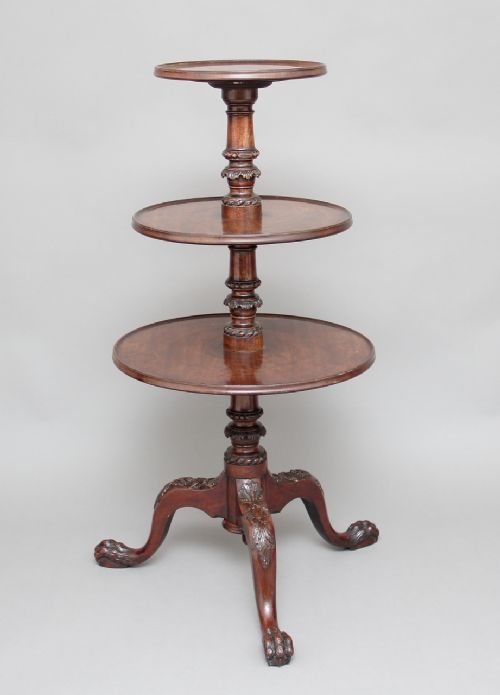


Carved Wood Dumbwaiter
These carved wood dumbwaiter pieces are tiered serving furniture that bring practical multi-level display to dining spaces.
Carved Wood Dumbwaiter
A carved wood dumbwaiter provides graduated tiers for serving and display, appearing across the Georgian, Victorian, and Edwardian periods. These tiered stands include revolving lazy susans, multi-tier buffets, and occasional tables designed for dining rooms and parlours.
Buyers meet examples shaped from mahogany, walnut, oak, and padauk wood. The selection ranges from George III designs to folding cake stands and rise and fall buffet tables.
Materials and construction
Cabinet makers utilised dense hardwoods like mahogany and walnut to support multiple rotating or stationary tiers without sagging. Brass fittings often secure the central columns and allow rise and fall mechanisms to function smoothly.
Carving and burr veneer work define the decorative surface treatment on these tiered stands. Burmese padauk wood brings dense grain patterns and deep carved relief to larger buffet forms.
Carved Wood Dumbwaiter Retail Price Guide 2026
Typical asking prices for carved wood dumbwaiter among the pieces listed under this phrase on Sellingantiques today, from the lower quarter to the upper quarter. They describe what is for sale here now, not the wider market.
Some Victorian dining companions were built to rise and fall on command, proving that even tables appreciated a good stretch.
Assessing quality
Quality rests in the stability of the tier joints and the precision of the turning on the central columns. Heavier hardwoods maintain structural integrity across three or four tiers better than lighter secondary timbers.
The crispness of the carved detail on the edges and pedestals separates standard production from finer workshop pieces. Smooth action in revolving lazy susans and folding mechanisms also indicates superior original construction.
The Carved Wood Dumbwaiter Glossary
- Dumbwaiter
- A multi-tiered piece of dining room furniture used for holding food, glassware, or tableware without the need for servants. These stands feature revolving or stationary shelves supported on a central pillar.
- Lazy Susan
- A revolving tray or tiered stand placed on a table or floor to allow easy access to items. The mechanism permits the upper sections to turn independently on a central axis.
- Padauk Wood
- A dense tropical timber known for its deep reddish-brown colour and excellent carving properties. It appears in ornate Burmese buffet pieces.
- Rise and Fall
- A mechanical function allowing tiers to adjust in height via a central screw or ratchet mechanism. This enables the piece to adapt for different serving requirements.
- Burr Walnut Veneer
- Sourced from the growth warts of walnut trees, this decorative wood produces intricate swirling grain patterns. Cabinet makers applied it to enhance the visual depth of tabletops and tier surfaces.
Carved Wood Dumbwaiter: Frequently Asked Questions
What is a dumbwaiter used for?
These tiered stands served historically to hold dishes, glassware, and dessert courses within reach during meals without requiring constant attendance from staff.
Today they function effectively in dining rooms and living spaces as display surfaces for plants, books, or decorative objects.
How do I tell periods apart?
Georgian examples often display restrained mahogany turnings and classical proportions associated with earlier dining traditions. Victorian and Edwardian pieces frequently introduce heavier carving, burr walnut veneers, or multi-tier folding frames.
Examining the timber selection and the complexity of the column turning helps determine whether a piece belongs to the eighteenth or nineteenth century.
Are all tiers revolving?
Not all tiers turn on these stands, as revolving mechanisms are typically found on specific lazy susans or dedicated serving trays. Many multi-tier buffets and cake stands feature fixed shelves supported by turned columns.
Checking the central axis reveals whether the individual platforms rotate or remain stationary.
How do I care for wood surfaces?
Maintain the timber by keeping the piece away from direct heat sources and sudden humidity changes that can split dry wood. Regular dusting and occasional application of appropriate furniture wax preserve the finish of mahogany and walnut.
Avoid placing damp items directly onto antique polished surfaces to prevent water rings.