

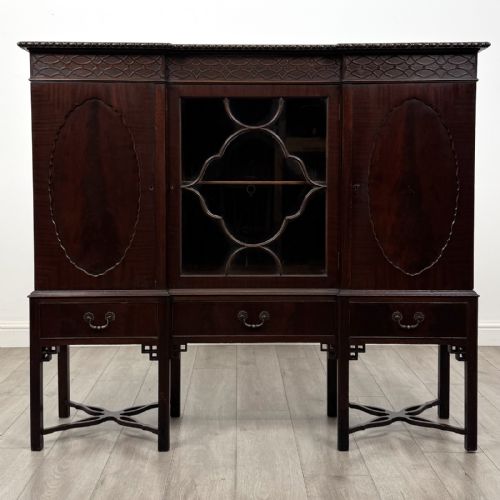
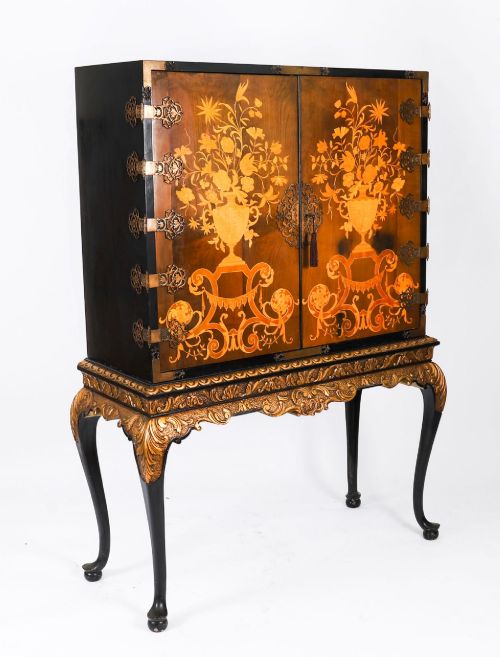

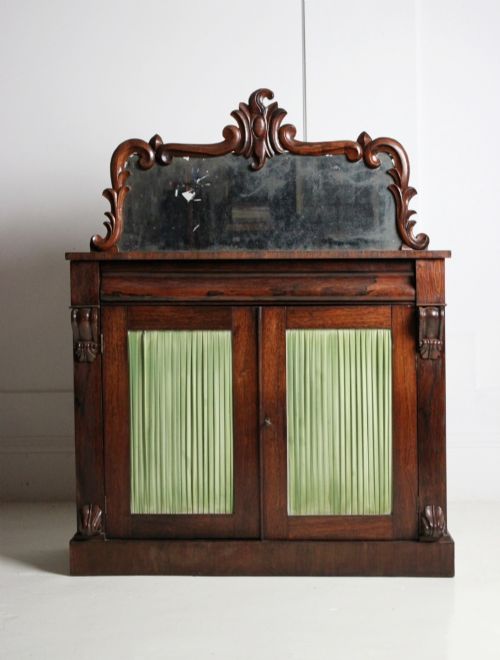
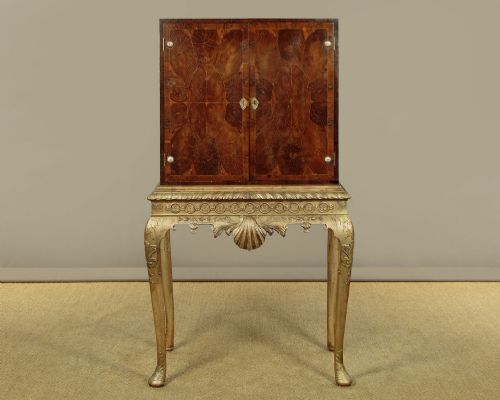
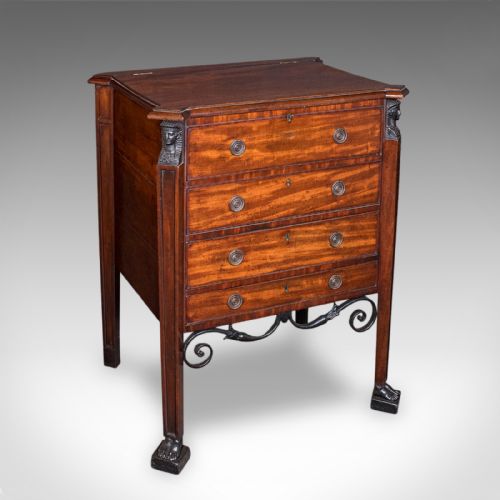
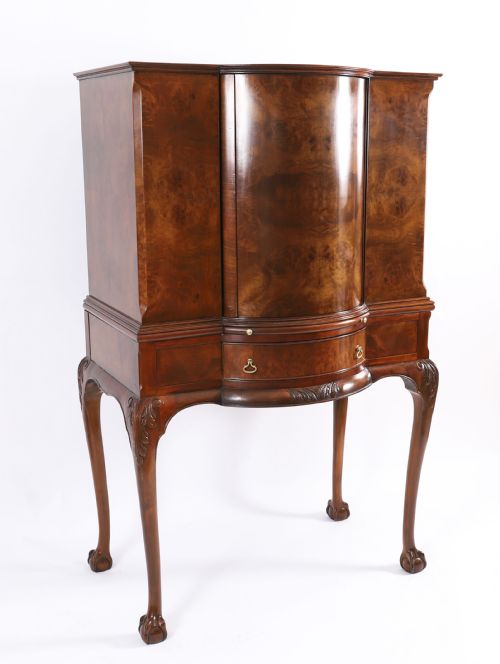


Carved Wood Drinks Cabinet
A carved wood drinks cabinet brings unmistakable presence to a room, offering practical storage disguised in rich period timber.
Carved Wood Drinks Cabinet
A carved wood drinks cabinet encompasses several distinct historical forms designed for hosting and storage. Buyers searching for a carved wood drinks cabinet will encounter specialised cocktail chests, refined side cabinets, and architectural cabinets on stands.
The selections span significant periods, ranging from eighteenth-century George II mulberry wood through nineteenth-century Victorian and Regency creations up to twentieth-century Art Deco interpretations. These pieces originate from diverse stylistic traditions, including Queen Anne Revival, Jacobean Revival, Chinoiserie, and Egyptian Taste.
The most common formats on this page include walnut cocktail cabinets from the nineteen-twenties and nineteen-thirties, alongside mahogany sideboards, chiffoniers, and occasional standing bar units. Each object serves the fundamental purpose of housing bottles and glassware while displaying decorative craftsmanship.
Materials and construction methods
Makers utilised dense cabinet timbers such as mahogany, walnut, burr walnut, oak, and teak as the structural foundation. Decorative surfaces frequently employ figured veneers, marquetry inlay, giltwood, and lacquered finishes.
Metalwork details in brass complement the timber structures, while internal components often incorporate mirror glass and glazed panels. Carving techniques define specific revival styles, ranging from Flemish lion masks on oak to classical motifs on mahogany.
Carved Wood Drinks Cabinet Retail Price Guide 2026
Typical asking prices for carved wood drinks cabinet among the pieces listed under this phrase on Sellingantiques today, from the lower quarter to the upper quarter. They describe what is for sale here now, not the wider market.
Revolving cocktail cabinets let you spin your entire spirits collection into view with a single effortless turn.
Distinctions in construction and finish
The calibre of a piece rests upon the selection of timber veneers, particularly the figuring found in burr walnut and flame mahogany. Superior examples display precise joinery and balanced proportions across doors, stands, and serpentine facades.
Artistry in carving and surface decoration distinguishes standard utility pieces from exceptional works. The integration of specialised internal fittings, such as revolving mechanisms, mirrored drinks slides, and original brass hardware, elevates the standing of individual cabinets.
Epstein·Maples and Co
The Carved Wood Drinks Cabinet Glossary
- Burr walnut
- A highly figured wood grain obtained from the wart-like growths on walnut trees. It creates intricate, swirling patterns across cabinet doors and panels.
- Cabinet on stand
- A raised storage compartment supported by a distinct framework or legs. This elevated form places the main body at a convenient height for access.
- Marquetry
- The art of applying decorative pieces of veneer to a structure to form geometric or pictorial designs. It requires meticulous cutting and fitting of various wood types.
- Serpentine
- A curved shape featuring a convex centre flanked by concave ends. This undulating contour adds fluid movement to the front profile of a cabinet.
Carved Wood Drinks Cabinet: Frequently Asked Questions
What is a carved wood drinks cabinet?
A carved wood drinks cabinet is a specialised piece of furniture designed to store and serve beverages, featuring decorative woodwork and internal compartments for bottles and glassware.
These cabinets range from dedicated nineteen-twenties cocktail chests to nineteenth-century chiffoniers and eighteenth-century storage pieces adapted for entertaining.
How do I date a carved wood drinks cabinet?
Dating relies on identifying period styles, timber choices, and construction techniques visible in the cabinet. Characteristics such as nineteenth-century mahogany framing or nineteen-thirties burr walnut veneers provide clear chronological markers.
Secondary indicators include brass hardware, mirror glass integration, and specific revival motifs like Egyptian Taste or Jacobean carving.
Where should I place a drinks cabinet?
A drinks cabinet suits principal reception rooms, dining spaces, or home bars where entertaining takes place. Standing cabinets and pieces on frames require adequate floor space to allow doors or revolving sections to open fully.
Consider room lighting to highlight figured timber veneers, mirrored interiors, and decorative brass details.
What styles are available?
The available styles span multiple design movements, including Regency, Victorian, Art Deco, and various revivals such as Queen Anne and Jacobean. Some pieces showcase exotic influences like Chinoiserie lacquerwork or Egyptian Taste motifs.
Finishes range from dark carved oak and polished mahogany to vibrant green lacquer and giltwood highlights.