


Carved Wood Desk Tidy
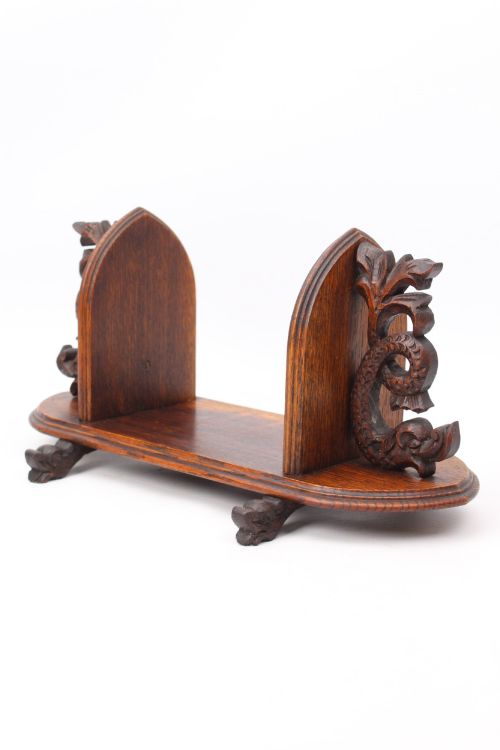
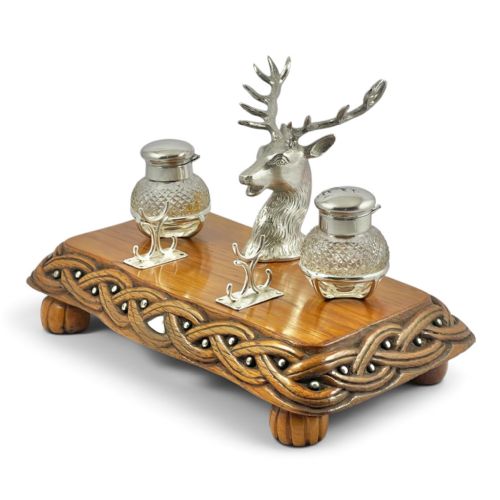
These carved wood desk tidy pieces bring order to a workspace while displaying the rich handiwork of Victorian and Edwardian artisans.
Carved Wood Desk Tidy
A carved wood desk tidy encompasses desk accessories designed to hold inkwells, pens, and stationery in nineteenth and early twentieth century studies. When you search for a carved wood desk tidy, you encounter forms ranging from simple coin trays and book stands to elaborate inkstands and stationery boxes.
How they were made
Workshops utilised sturdy timbers such as oak, mahogany, and linden wood to construct the foundation of each desk tidy. Artisans then applied manual carving techniques to shape intricate details, incorporating contrasting materials like bone and glass inserts for inkwells.
Some pieces feature silver mounts and functional additions such as bun feet or tiered shelving. The construction combines robust joinery with fine surface carving characteristic of Black Forest, Gothic Revival, and Anglo-Indian traditions.
Listings feature oak, mahogany, and linden wood alongside decorative elements in bone, glass, and silver across the Victorian and Edwardian periods.
What varies in quality
Quality in a carved wood desk tidy rests upon the depth and precision of the carving rather than the mere presence of decoration. Pieces featuring detailed figural work, such as carved dogs or intricate foliage, demonstrate superior craftsmanship compared to plain timber trays.
The integration of fitted components like hinged boxes, glass inkwells, and silver mounts further separates standard utilitarian items from exceptional pieces. Artisans who maintained consistent execution across both visible surfaces and structural joints produced the most enduring examples.
The Carved Wood Desk Tidy Glossary
- Desk tidy
- An accessory designed to organise writing equipment and correspondence on a desktop. These items usually incorporate compartments for pens, stamps, and paper.
- Inkstand
- A desk stand holding one or more inkwells, often accompanied by pen troughs and sometimes incorporating a sander or bell. They form a central part of nineteenth century writing furniture.
- Black Forest carving
- Woodwork originating from the Brienz region of Switzerland and the Black Forest in Germany, noted for naturalistic animal and foliage motifs. Carvers frequently utilised linden wood for these detailed sculptures.
- Gothic Revival
- A design style drawing on medieval architectural motifs, prevalent in nineteenth century furnishings. Pieces often display pointed arches, trefoils, and heavy oak construction.
Carved Wood Desk Tidy: Frequently Asked Questions
What is a carved wood desk tidy used for?
A carved wood desk tidy serves to organise pens, inkwells, and correspondence on a writing table. These accessories kept everyday stationery items neat and accessible in nineteenth century studies.
Today, they function both as decorative objects and practical desk accessories for holding modern pens or small trinkets.
How do I date a wooden desk tidy?
Dating relies on observing the prevailing styles, timber choices, and construction methods evident in the piece. Victorian and Edwardian examples often feature distinct motifs such as Gothic Revival arches or Black Forest animal carvings.
Hardware components, such as glass inserts and silver mounts, also provide clues to the manufacturing period.
Where were Black Forest desk tidies made?
Black Forest desk tidies originated in the wooded regions of Switzerland and south-west Germany during the nineteenth century. Skilled woodcarvers produced these items, frequently depicting local wildlife such as dogs and deer.
These carved pieces gained popularity across Britain during the Victorian era as decorative desk ornaments.
How do I care for an antique desk tidy?
Care involves dusting the carved wooden surfaces gently with a dry cloth to prevent dirt accumulation in the recesses. Avoid using harsh chemical polishes that can damage the aged timber patina.
Keep the piece away from direct sunlight and extreme temperature fluctuations to protect the wood and any integrated bone or silver elements.