





Carved Wood Demi Lune
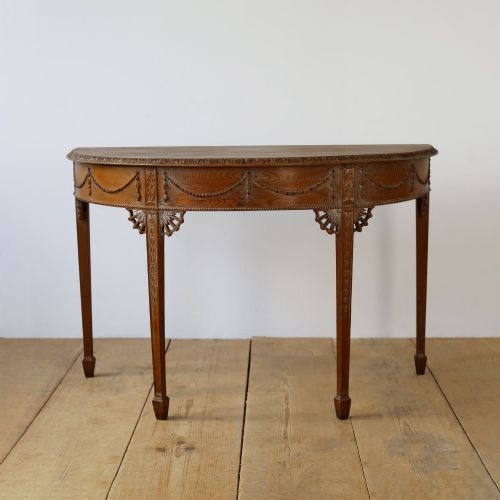
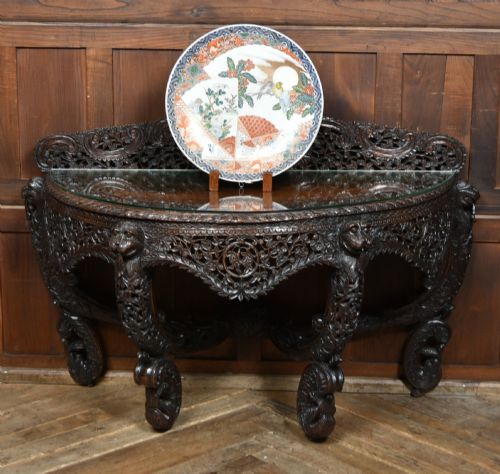
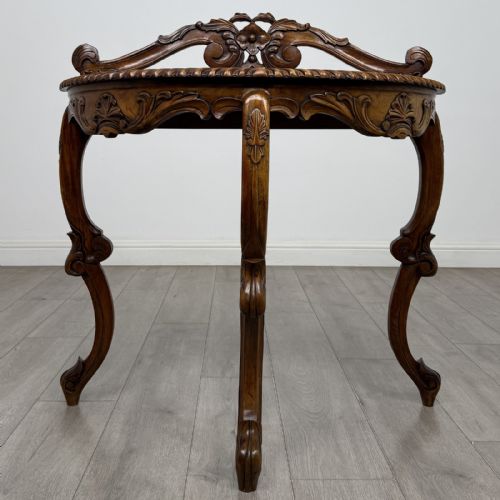
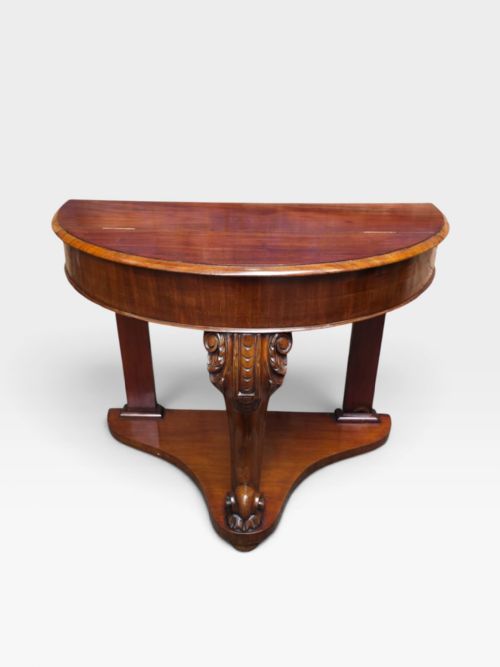
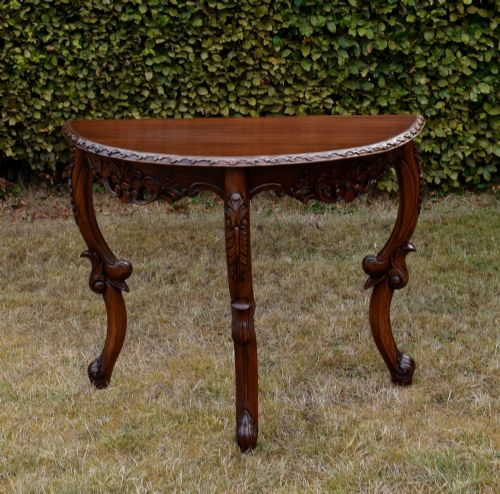
These carved wood demi lune tables offer half-circle elegance designed to sit flush against a wall.
Carved Wood Demi Lune
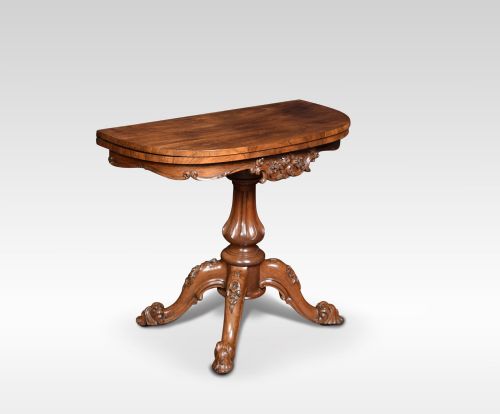
A carved wood demi lune is a semicircular table designed to stand against a flat wall, functioning primarily as a console, card, or tea table. These half-moon pieces appear across several periods, including Georgian, William IV, Victorian, and later revival styles.
The most common forms on this page are console and card tables in mahogany, rosewood, and painted wood. Makers adapted the semicircular top for various domestic uses, including games, serving, and display in hallways and reception rooms.
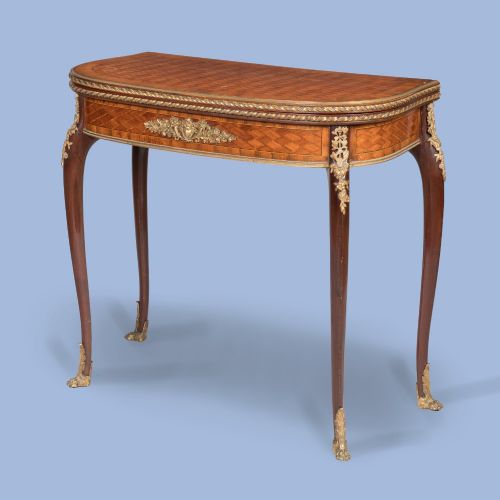
Origins range from British workshops to French ateliers and Chinese Qing dynasty studios. This variety provides buyers with distinct regional interpretations of the half-moon format, from plain mahogany to lacquered and ormolu-mounted surfaces.
How they were made
Carpenters shaped dense timbers like mahogany, rosewood, and walnut into the characteristic half-circle frame. Tops often featured intricate veneers, parquetry, or painted finishes applied to the underlying wood structure.
Carving and mounts defined the decorative vocabulary of these pieces. Workshops utilised gilt bronze, ormolu, and hand-carved wood details to enrich the aprons, edges, and legs of console and card tables.
Carved Wood Demi Lune Retail Price Guide 2026
Typical asking prices for carved wood demi lune among the pieces listed under this phrase on Sellingantiques today, from the lower quarter to the upper quarter. They describe what is for sale here now, not the wider market.
Some card tables hide secret compartments beneath their folding tops, originally meant for stashing stray dice and losing coins.
What varies in quality
Quality rests in the crispness of the woodwork and the selection of timber veneers. Superior examples display tightly figured mahogany or rosewood alongside deeply defined carving rather than shallow, mechanical shaping.
The sophistication of the mechanism and hardware distinguishes better tables, particularly on folding card and tea variants. Finishes also separate workshops, with hand-painted surfaces and precise ormolu mounts indicating higher production standards.
François Linke
The Carved Wood Demi Lune Glossary
- Demi-lune
- A half-moon shape used for tables designed to stand flat against a wall. This format saves floor space while providing a decorative surface.
- Console table
- A table supported by wall brackets or legs, traditionally placed against a wall. Many demi-lune tables serve this exact architectural function.
- Parquetry
- Geometric mosaic woodwork used for decorative veneers on tabletops. It involves fitting small pieces of contrasting timber together.
- Ormolu
- Gilded bronze mounts applied to furniture as decoration. French makers frequently utilised these metallic accents on revival pieces.
- Card table
- A folding table designed for games with a top that opens out. Several demi-lune examples incorporate this dual-purpose top.
Carved Wood Demi Lune: Frequently Asked Questions
What is a demi lune table?
A demi lune table is a semicircular piece of furniture built to fit flat against a wall. These tables function as consoles, hall tables, or folding games surfaces.
The shape allows the table to occupy minimal floor space while offering a display surface in narrow hallways and reception rooms.
How were card tables used?
Card tables featured hinged tops that folded open to reveal a baize-lined surface for evening gaming. When not in use, the table folded closed and stood flat against the wall.
This dual purpose made them essential items in Georgian and Victorian drawing rooms.
Where should I place one?
These tables suit narrow spaces like hallways, entryways, and landings where a rectangular table would project too far into the room. They also anchor mirrors or artwork on the wall above.
Matching pairs often flank a fireplace or a pair of windows in formal reception rooms.
How do I date these tables?
Dating relies on identifying timber choices, construction methods, and stylistic cues associated with periods like Georgian, William IV, or Victorian. Mahogany and walnut dominated earlier British pieces, while later revivals introduced diverse painted and lacquered finishes.
Secondary woods and hinge types inside the frame offer further clues to the manufacturing decade.