


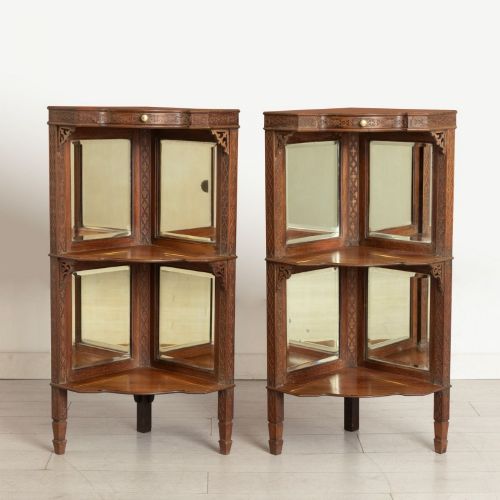


Carved Wood Corner Shelf
These carved wood corner shelf pieces turn awkward room junctions into display space, offering tiered timber tiers for ornaments and books.
Carved Wood Corner Shelf
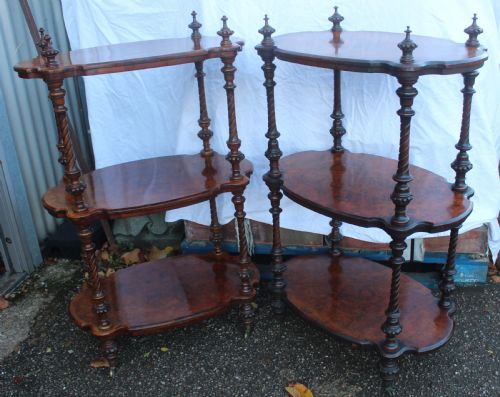
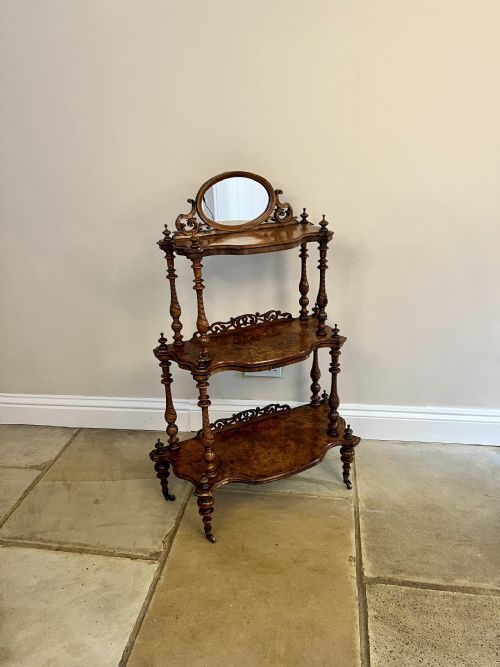
A carved wood corner shelf or whatnot serves to utilise tight room angles, bringing tiered display surfaces into domestic spaces. The pieces seen here span Victorian and Edwardian periods, stretching from the mid-nineteenth century towards nineteen hundred.
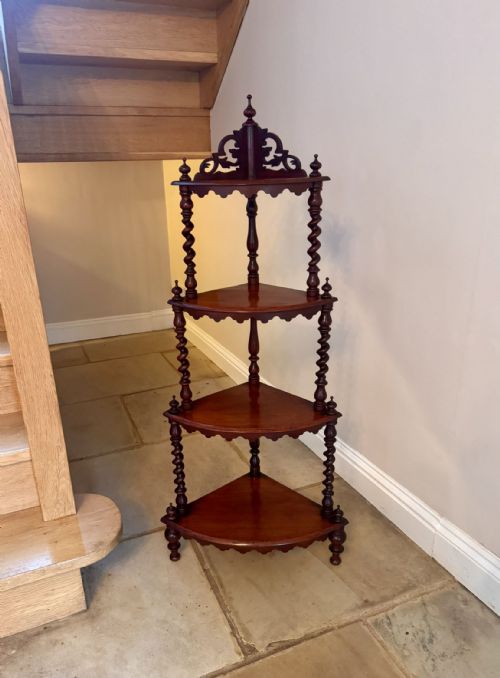
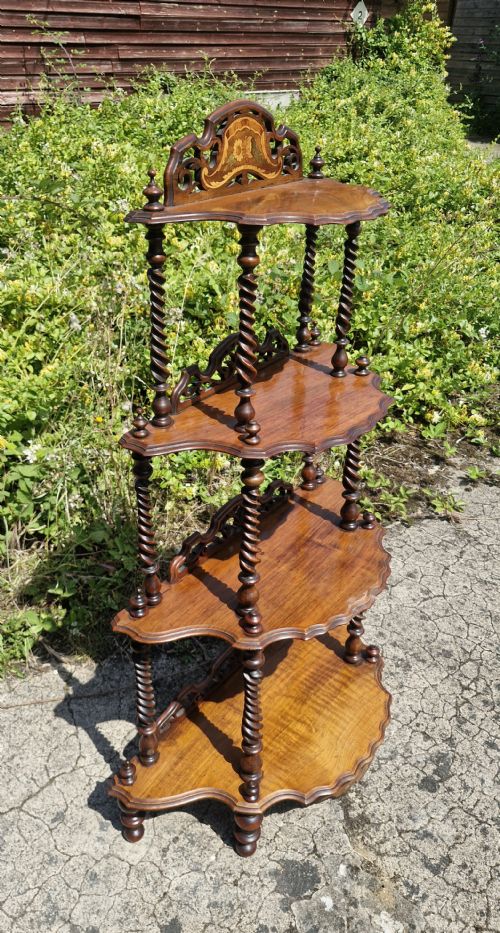
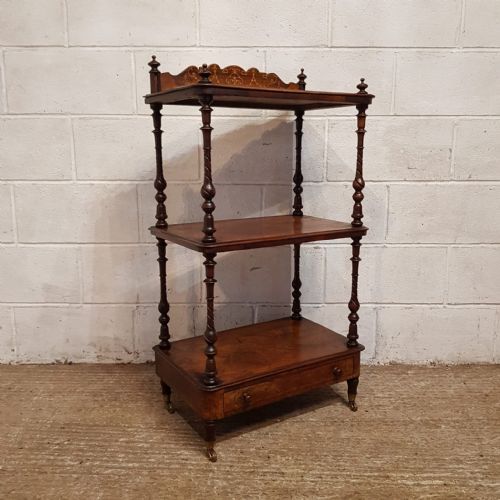
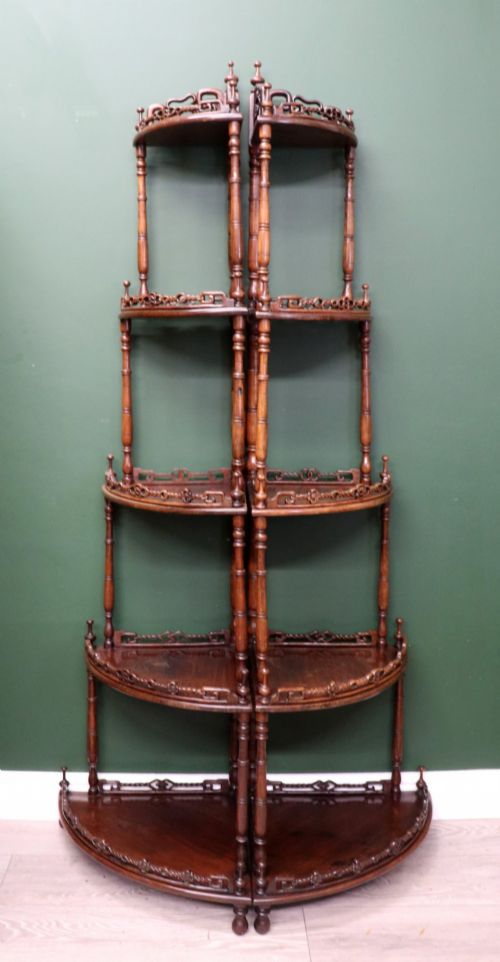
Most examples take the form of corner whatnots, tiered stands, or wall-mounted shelving units constructed to fit neatly into ninety-degree junctions. Mahogany, walnut, burr walnut, and rosewood dominate the selection, often accompanied by inlaid marquetry and mirror glass panels.
Materials and technique
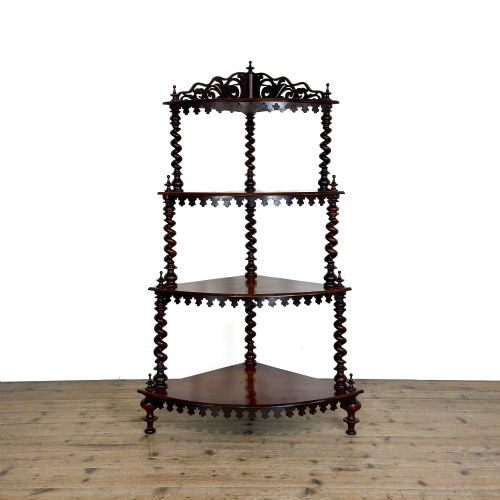
Cabinet makers utilised dense hardwoods like mahogany and walnut, frequently selecting burr veneers and rosewood for prominent display surfaces. Joinery relies on traditional methods to support multiple tiers, while turned supports and barley twists provide vertical structure.
Decorative elements involve pierced fretwork, intricate marquetry inlay, and carved wood detailing. Brass fittings and mirrored backs appear on selected pieces to enhance light reflection and visual depth.
Carved Wood Corner Shelf Retail Price Guide 2026
Typical asking prices for carved wood corner shelf among the pieces listed under this phrase on Sellingantiques today, from the lower quarter to the upper quarter. They describe what is for sale here now, not the wider market.
Listings feature walnut, mahogany, and rosewood most frequently, alongside specialised materials like brass and mirror glass.
What varies in quality
The degree of refinement in timber selection and carving separates standard items from superior examples. Finely figured burr walnut and intricate marquetry demonstrate a higher level of workshop skill.
Structural complexity also dictates standard, with multi-tiered whatnots featuring turned columns and pierced fretwork demanding greater craftsmanship than plain shelving units.
Edwards & Roberts
The Carved Wood Corner Shelf Glossary
- Whatnot
- An open piece of furniture with shelves for displaying ornaments or books. These tier arrangements sit neatly in room corners.
- Marquetry
- Decorative veneer work using pieces of wood to form mosaic patterns. Craftsmen apply these designs to table tops and shelf surfaces.
- Fretwork
- Ornamental design created by cutting patterns through wood. This technique appears on the vertical supports of corner units.
- Burr walnut
- Wood taken from a tree growth showing complex swirling grain patterns. Cabinet makers prize this material for its decorative surface appeal.
- Barley twist
- A type of turned wooden support resembling a spiralling rope. This detail frequently forms the upright columns of Victorian stands.
Carved Wood Corner Shelf: Frequently Asked Questions
What is a corner whatnot?
A corner whatnot is a multi-tiered shelving unit designed to fit into ninety-degree room angles. These pieces provide vertical display space for ornaments and small objects without taking up floor area.
Victorian makers produced numerous variations using walnut, mahogany, and rosewood, often incorporating turned columns and mirrored backs into the design.
How do I place a corner shelf?
These shelves mount directly onto walls or stand independently in room junctions. They suit empty corners in living rooms, hallways, and studies.
Ensure the wall fixings or floor surfaces can support the weight of the timber and any displayed items.
How do I identify Victorian pieces?
Victorian examples utilise dense timbers such as mahogany, rosewood, and walnut, frequently featuring dark finishes and heavy grain patterns. Look for characteristic details like barley twist supports, pierced fretwork, and inlaid marquetry.
Construction methods involve traditional joinery techniques appropriate to the mid-to-late nineteenth century.
Are these pieces sturdy?
Most pieces provide stable shelving for light objects, ceramics, and books. Multi-tiered standing whatnots rely on solid uprights and sound joints to maintain balance in room corners.
Wall-mounted versions require secure fixings into solid masonry or studs to hold their weight safely.