

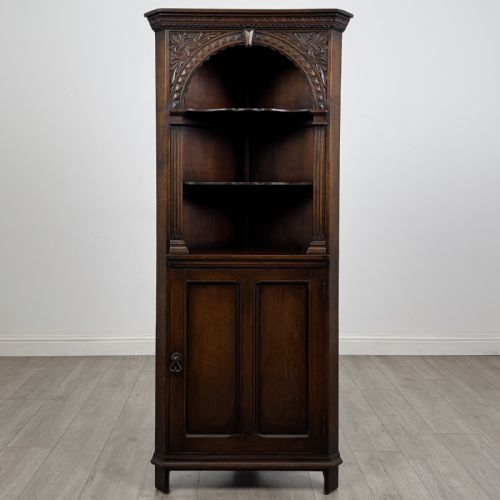
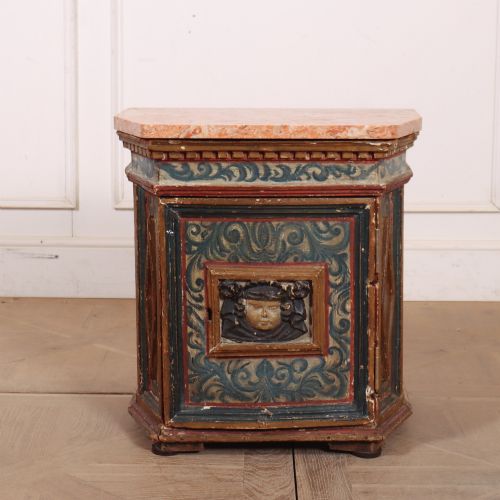
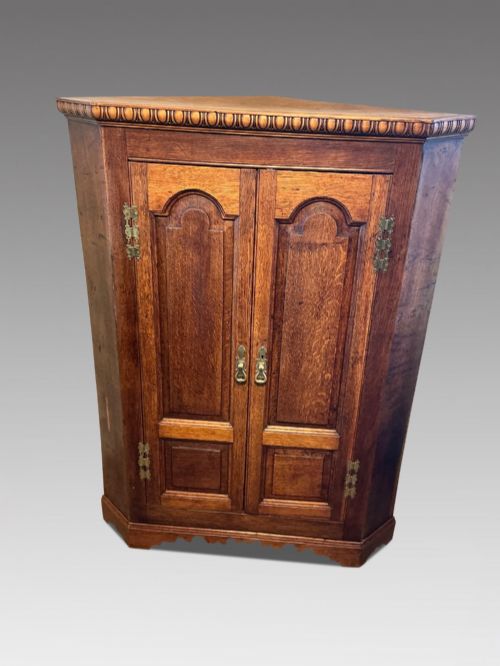
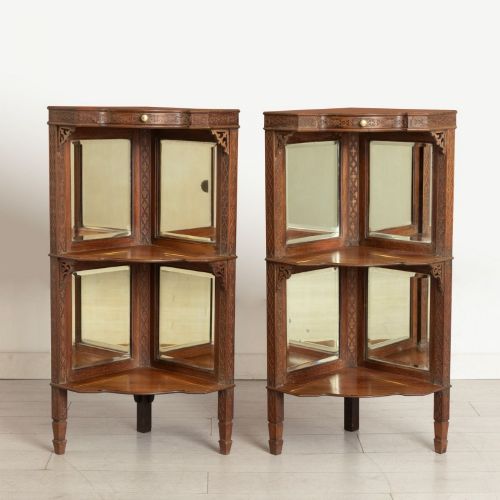

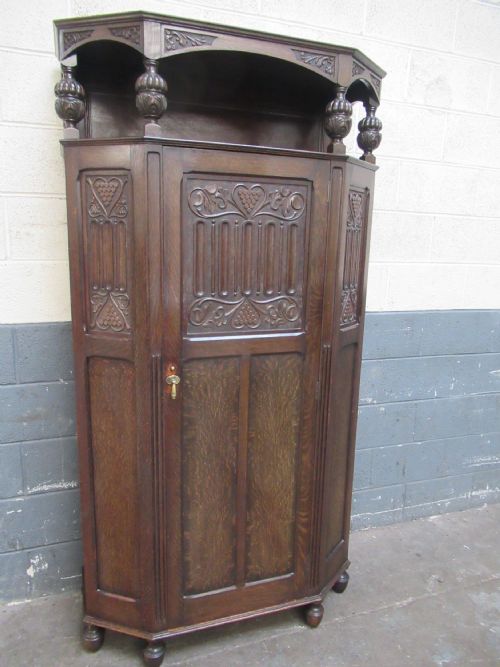


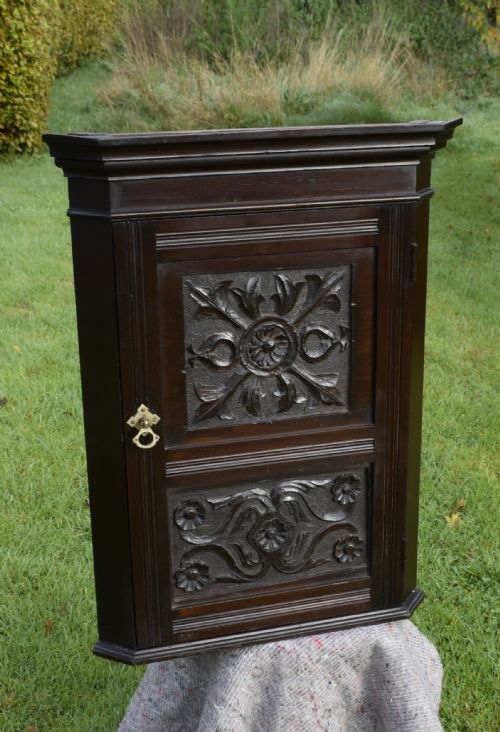


Carved Wood Corner Cupboard
These carved wood corner cupboard examples use awkward angles to hold things, spanning periods from the eighteenth century onwards.
Carved Wood Corner Cupboard
A carved wood corner cupboard fits neatly into a room junction, saving floor space while displaying or hiding belongings behind hinged doors. You will frequently encounter oak and mahogany versions from the eighteenth and nineteenth centuries.
Makers shaped these items for specific domestic zones, producing wall-mounted units, floor-standing units, and glazed display variants. Styles range from plain Georgian iterations to heavily carved Jacobean revival and Victorian pieces.
Indicators of standard
Quality rests on the selection of timber grain, the crispness of the hand-carved ornamentation, and the structural integrity of the corner joints. Pieces with secondary woods matching the primary timber or featuring original brass hardware demonstrate greater care.
Plain utilitarian examples sit at the lower end, whereas items bearing documented maker marks or intricate marquetry reflect higher workshop ambition.
Carved Wood Corner Cupboard Retail Price Guide 2026
Typical asking prices for carved wood corner cupboard among the pieces listed under this phrase on Sellingantiques today, from the lower quarter to the upper quarter. They describe what is for sale here now, not the wider market.
The listings span from 1720 through the Edwardian period, showing oak, mahogany, walnut, and teak as the primary structural timbers.
Edwards & Roberts·Goodhall, Lamb and Heighway of Manchester
The Carved Wood Corner Cupboard Glossary
- Jacobean Revival
- A nineteenth and twentieth century style imitating seventeenth century English carving and dark oak finishes.
- Marquetry
- Decorative patterns formed by inserting thin pieces of wood veneer into a contrasting wooden background.
- Apothecary
- A cabinet originally fitted with numerous small drawers or compartments for storing medicinal ingredients and herbs.
- Alcove
- A recess in a room wall designed to accommodate fitted furniture such as a corner cabinet.
- Glazed
- Fitted with glass panes in the doors to allow visibility of internal shelving contents.
Carved Wood Corner Cupboard: Frequently Asked Questions
How do I hang a wall cabinet?
Wall-mounted versions require secure fixing into solid masonry or direct wall studs using heavy-duty brackets to bear the weight of the timber and stored contents.
Check the internal backboards and hanging points carefully before installation to ensure the structure can support the load safely.
Are these cabinets suitable for small rooms?
Their triangular footprint allows them to occupy dead space in room corners where standard rectangular furniture will not fit.
This makes them practical for utilising corners in dining rooms, hallways, and sitting rooms without blocking pathways.
How do I tell Georgian from Victorian pieces?
Georgian iterations generally feature simpler proportions, rectilinear panels, and lighter timber tones like red walnut or early oak.
Victorian and revival examples tend to show heavier carved ornamentation, darker finishes, and more elaborate decorative mouldings.
What is the best way to clean the wood?
Dust the surfaces regularly with a dry cloth and apply a traditional beeswax polish sparingly to nourish the antique timber.
Avoid modern aerosol sprays containing silicone, which can build up on the finish and damage the polish over time.