



Carved Wood Compactum
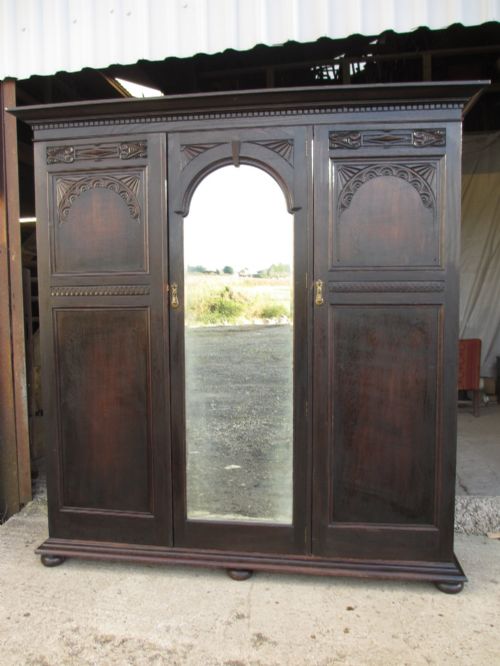
A carved wood compactum is a substantial fitted wardrobe built to organise a gentleman's or lady's complete attire.
Carved Wood Compactum
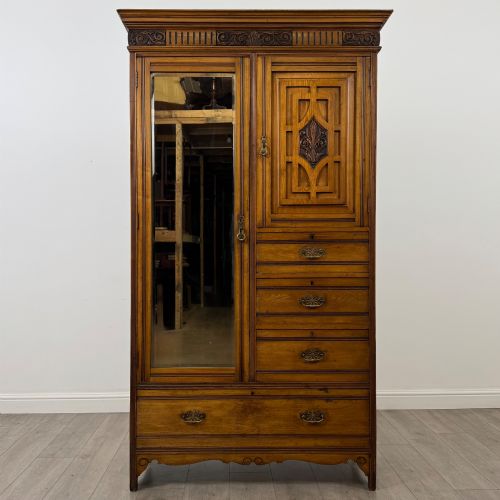
When you search for a carved wood compactum, you encounter large bedroom furniture designed during the Victorian and Edwardian periods, including the late nineteenth century and around nineteen hundred. These pieces function as comprehensive wardrobes and combination storage units, frequently incorporating fitted interiors with hanging space, drawers, and compartments.
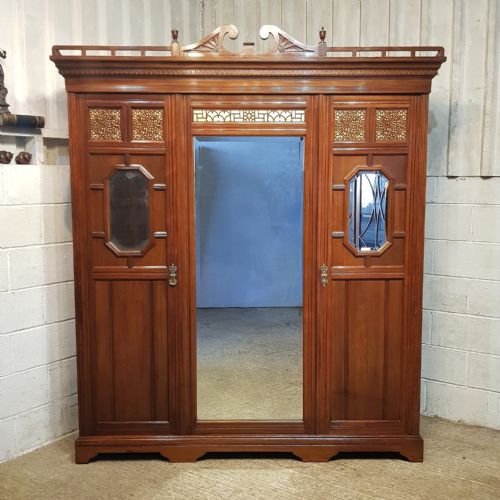
The selections on this page span several stylistic movements, notably Aesthetic Movement and Arts and Crafts designs, alongside traditional Victorian and Edwardian work. Forms range from compact single pieces to grand triple door wardrobes and complete bedroom suites.
Woods vary across the examples, featuring mahogany, oak, walnut, ash, and birch, often enhanced by carved details, marquetry, and inlay. Certain items combine multiple timbers, such as satin walnut and maple, or present burr walnut and flame mahogany veneers.
How they were made
Cabinet makers utilised solid timbers alongside figured veneers like burr walnut, flame mahogany, and figured birch to construct these wardrobes. Panels and doors display detailed carving, marquetry, and inlaid decoration executed by hand.
Internal fittings incorporated mirrors made of glass, sliding trays, and drawers, while exterior doors often featured brass hardware. Structural elements relied on dense hardwoods such as oak and ash to support the substantial weight of large mirror doors and multi-section bodies.
Carved Wood Compactum Retail Price Guide 2026
Typical asking prices for carved wood compactum among the pieces listed under this phrase on Sellingantiques today, from the lower quarter to the upper quarter. They describe what is for sale here now, not the wider market.
What varies in quality
The distinction between ordinary and superior pieces rests on the complexity of the fitted interior and the depth of the cabinet work. Elaborate marquetry, crisp hand carving, and sophisticated combinations of contrasting woods elevate a piece above standard production.
The integrity of the timber selection and veneer matching defines the visual weight of the wardrobe. Uniform grain patterns in figured walnut or mahogany, paired with robust internal drawer construction, mark the distinction in fine cabinet making.
Edwards & Roberts
The Carved Wood Compactum Glossary
- Compactum
- A fitted wardrobe designed with specialised internal compartments, drawers, and hanging spaces for comprehensive clothing storage. These multi-functional pieces often include central cupboard sections flanked by hanging wardrobes.
- Marquetry
- The art and craft of applying pieces of veneer to a structure to form decorative patterns and pictures. Makers used contrasting timbers to create elaborate floral or geometric motifs on doors and panels.
- Burr walnut
- Wood taken from a tree growth where the grain has grown in a deformed, swirling manner, producing intricate patterns. Furniture makers prized this timber for its rich, mottled texture on statement panels.
- Aesthetic Movement
- A late nineteenth-century design style emphasising visual and material qualities over narrative subject matter. Pieces from this movement often feature simplified lines and light-colored timbers like satin birch.
- Combination wardrobe
- A piece of bedroom furniture uniting multiple storage functions, such as drawers, hanging space, and shelving, within a single unified case. These designs maximise utility through clever internal architecture.
Carved Wood Compactum: Frequently Asked Questions
What is a compactum wardrobe?
A compactum wardrobe is a specialised storage piece combining hanging space, drawers, and shelving within a single multi-section cabinet. These units were built to hold an entire wardrobe of clothing efficiently.
Most examples feature central cupboard sections or banks of internal drawers flanked by full-length hanging compartments behind panelled or mirrored doors.
How do I date a wooden wardrobe?
Dating relies on observing the prevailing styles, construction methods, and timber choices visible in the piece. Victorian examples often display heavy mahogany or walnut with rich carved ornamentation, while Edwardian pieces frequently utilise lighter oak or inlaid mahogany.
Design movements like the Aesthetic Movement or Arts and Crafts introduce specific aesthetic markers, such as satin birch timbers or simplified structural lines, pointing toward the late nineteenth or early twentieth century.
Where were compactums placed?
These large storage units stood in principal bedrooms of substantial homes, serving as the primary wardrobe for garments and linen. Their substantial footprint required dedicated wall space.
Because many are built as combination units or multi-piece bedroom suites, they often coordinate with matching dressing tables and washstands in the room.
How do I care for antique wood?
Maintaining antique wood requires keeping furniture away from direct sunlight and steady temperature fluctuations to prevent timber splitting or veneer lifting. Regular dusting with a soft, dry cloth preserves the polished surface.
Applying occasional appropriate wax polish helps nourish traditional finishes like mahogany and walnut without building up unwanted residue on the carved details.