

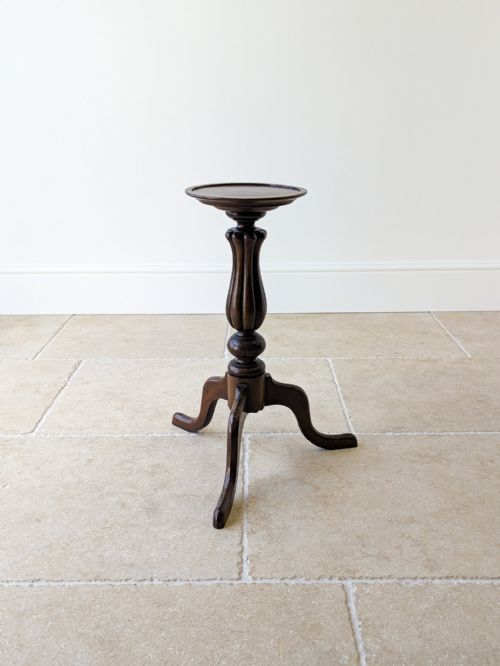
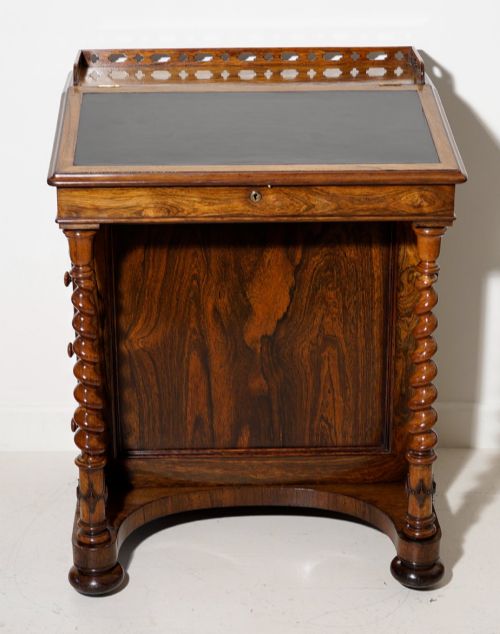
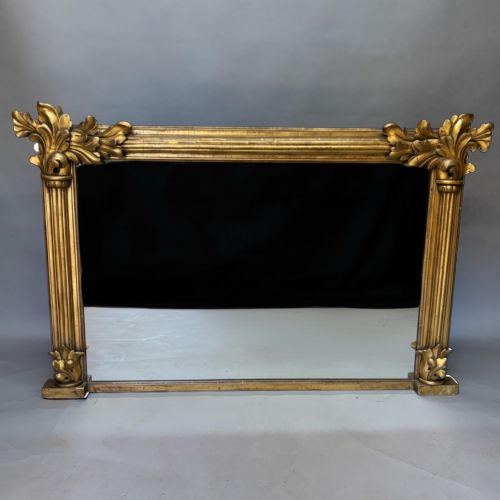
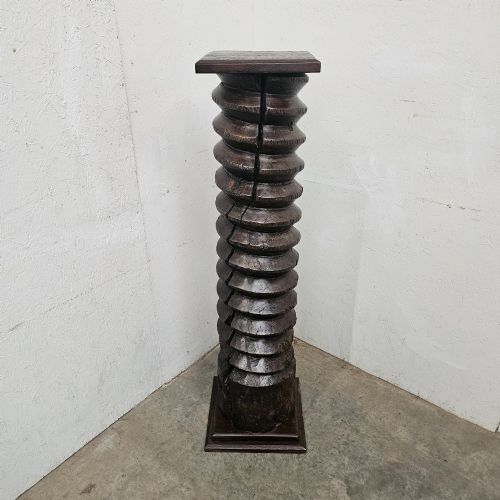
Carved Wood Column
A carved wood column brings height and classical proportion to a room, functioning as a pedestal, torchere or architectural support.
Carved Wood Column
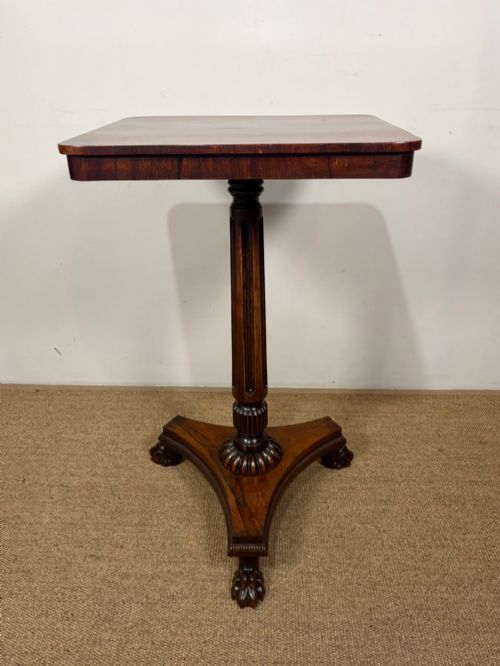
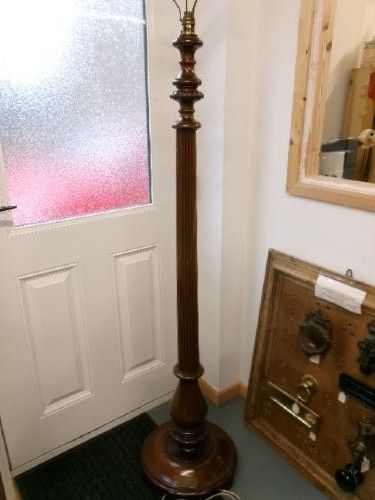
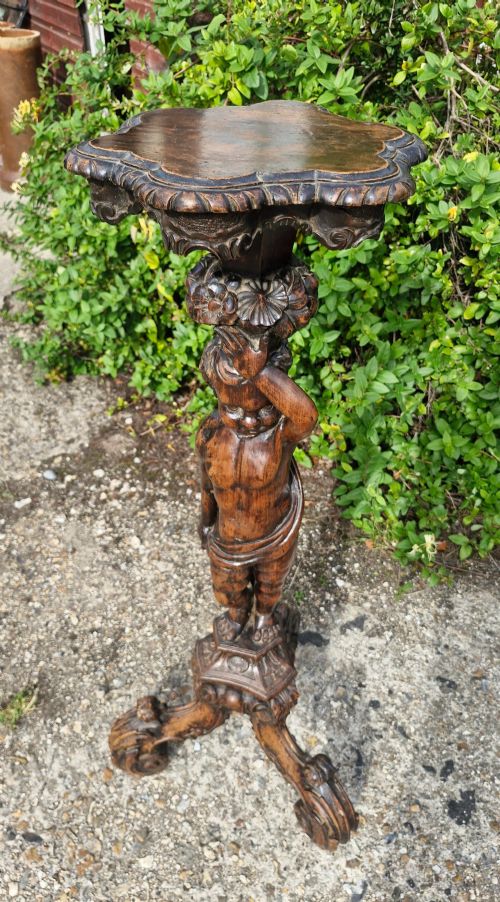
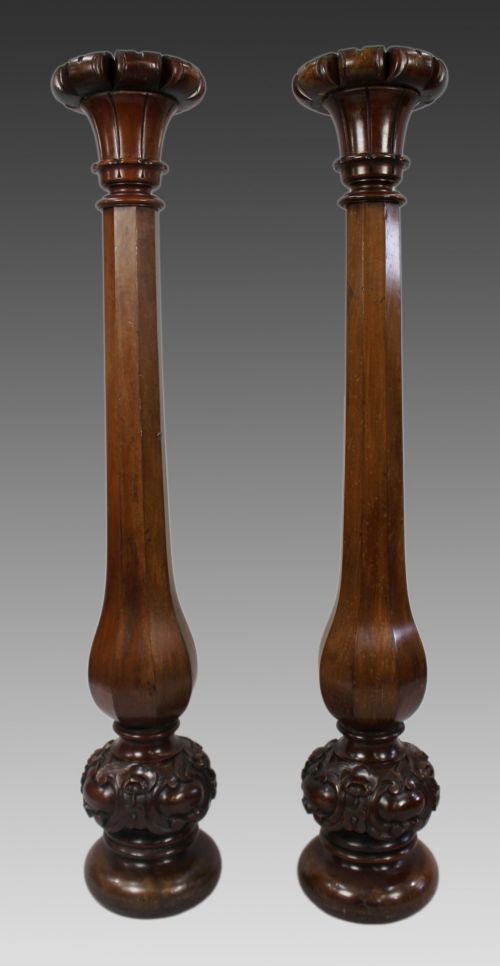
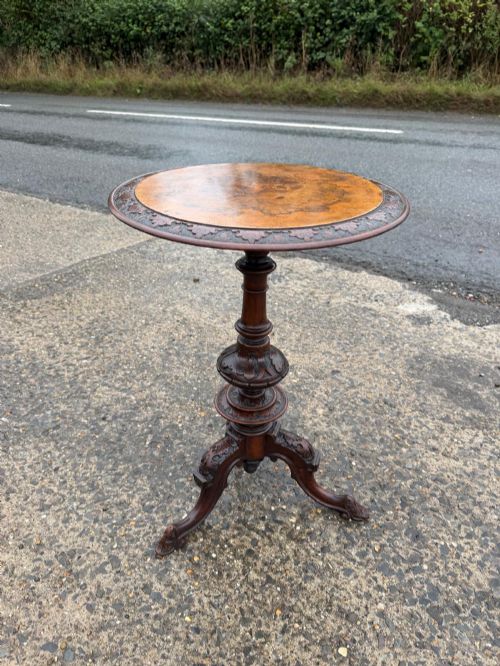
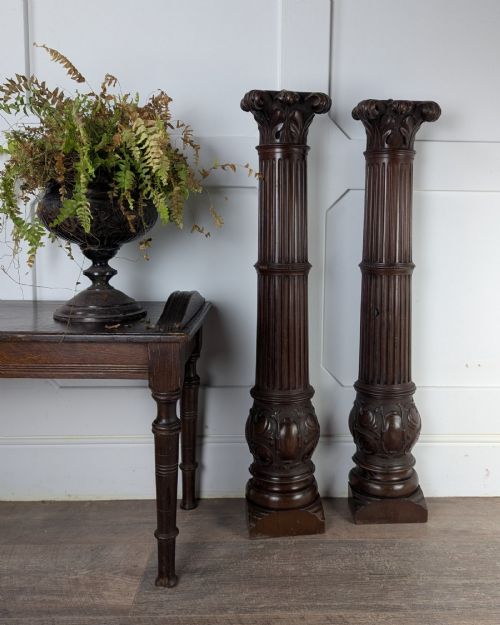
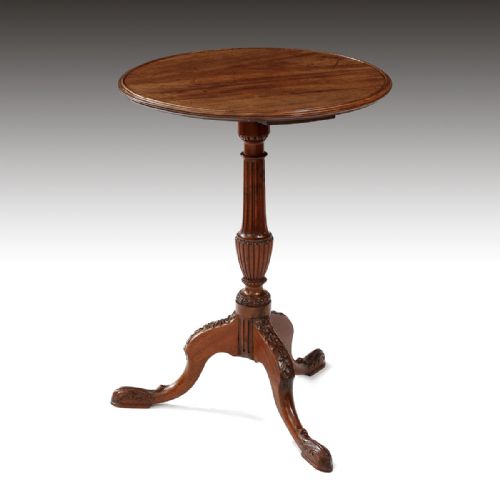
A carved wood column on this page typically appears as a Victorian or nineteenth-century torchere, plant stand, pedestal, or architectural element. These vertical forms elevate objects, lamps, or green plants, drawing the eye upward within an interior scheme.
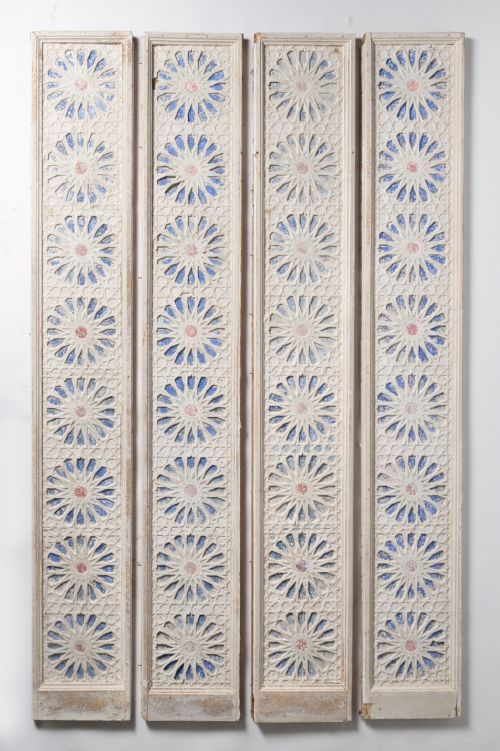
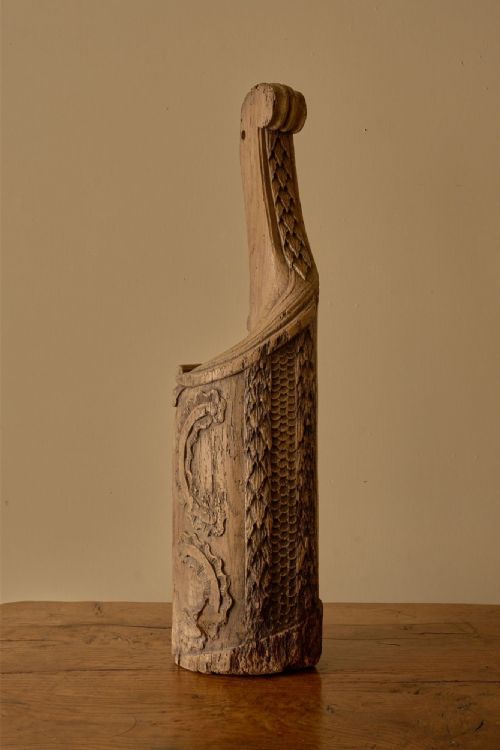
The selection ranges from tall walnut and mahogany stands to Italian baroque revival bases and architectural fragments such as newel posts and half columns. Pieces from the eighteenth and nineteenth centuries dominate the listings, alongside revival styles spanning William IV to the twentieth century.
How they were made
Craftsmen shaped these columns using dense timbers such as mahogany, walnut, and oak, often turning them on a lathe before executing detailed hand-carvation. Barley twist profiles, reeded shafts, and Corinthian capitals demonstrate advanced woodworking techniques.
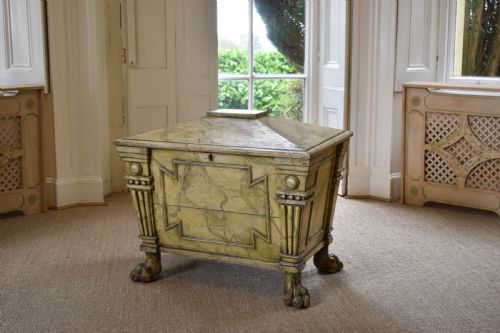
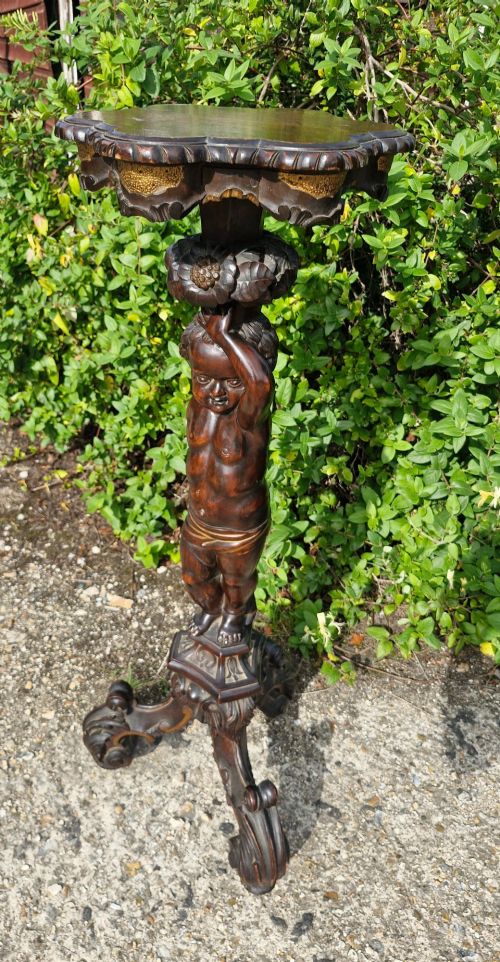
Surface finishes include applied gesso and gold leaf on giltwood pieces, alongside original paint, French polish, and clear wax over figured grain. Brass mounts, marble tops, and marquetry inlays appear on specific tables and display stands to add textural contrast.
Carved Wood Column Retail Price Guide 2026
Typical asking prices for carved wood column among the pieces listed under this phrase on Sellingantiques today, from the lower quarter to the upper quarter. They describe what is for sale here now, not the wider market.
Putti occasionally peer out from carved walnut torchiere bases, reminding us that classical lighting once required divine intervention.
What varies in quality
The distinction between ordinary and exceptional pieces lies in the crispness and depth of the hand carving, particularly around capitals, foliage, and figural elements. Sharp chisel work and balanced proportions elevate a standard turned shaft into a sculptural statement.
Material selection also dictates standing, with finely figured walnut or mahogany, substantial timber weight, and intact original gilding or paint surfaces marking out superior examples from simpler utilitarian items.
The Carved Wood Column Glossary
- Torchere
- A tall stand designed to hold a candle, lamp, or plant. These slender columns lift light sources to eye level in a room.
- Capital
- The uppermost member of a column, situated above the shaft. It frequently displays classical carved acanthus leaves or Corinthian orders.
- Newel post
- The principal post at the foot of a staircase. These architectural elements are often heavily carved in solid timber.
- Giltwood
- Wood that has been coated with thin gold leaf over a prepared gesso ground. This finish reflects candlelight and adds warmth to interiors.
- Barley twist
- A spiral turning resembling the shape of a barley stalk. This decorative woodworking technique creates a sense of dynamic movement along a column shaft.
Carved Wood Column: Frequently Asked Questions
What is a torchere column used for?
A torchere serves as an elevated display stand for decorative objects, urns, or potted plants. In period homes, they placed extra candle or oil light around dark corners.
Today, many are converted to wired floor lamps or hold table lamps to create ambient vertical lighting in a living space.
How do I place a tall pedestal in a room?
These vertical pieces suit empty corners, hallway landings, or spaces between windows where horizontal furniture does not fit. They draw the eye upward and break up plain wall expanses.
Ensure the base sits firmly on the floor and top it with a sculpture, vase, or lamp that matches its weight.
How do I tell Victorian columns from older pieces?
Victorian columns often lean into revival styles like Gothic, Chippendale, or Italian Baroque, using machine-assisted turning combined with hand carving. Mahogany and walnut are particularly common in this era.
Eighteenth-century and earlier examples display different timber patination, hand-cut joinery, and tool marks that reflect earlier workshop practices.
Can these columns support heavy items?
Most solid wood columns and pedestals possess sturdy tripod or stepped bases designed to bear considerable weight. Heavy marble tops or thick mahogany shafts provide inherent stability.
Check that the base makes level contact with the floor so that tall items remain secure.