
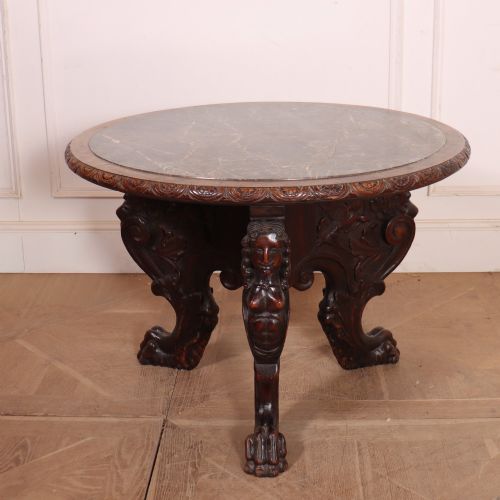
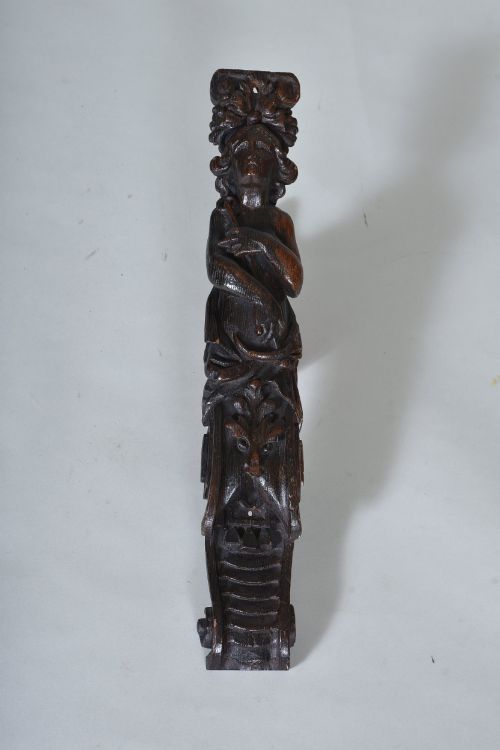
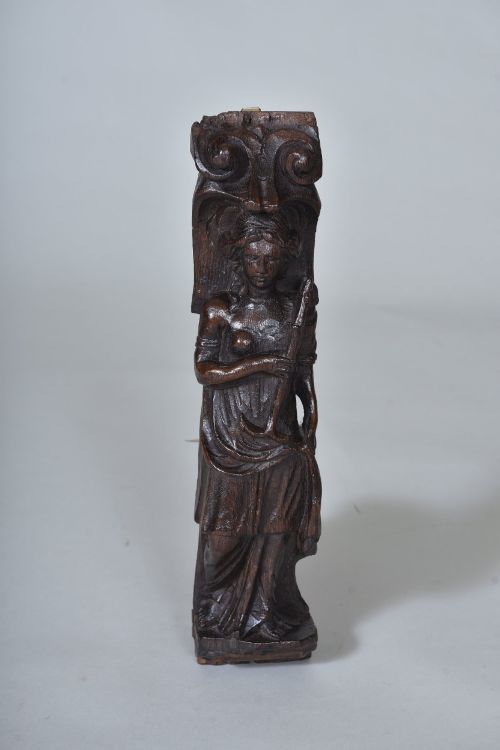
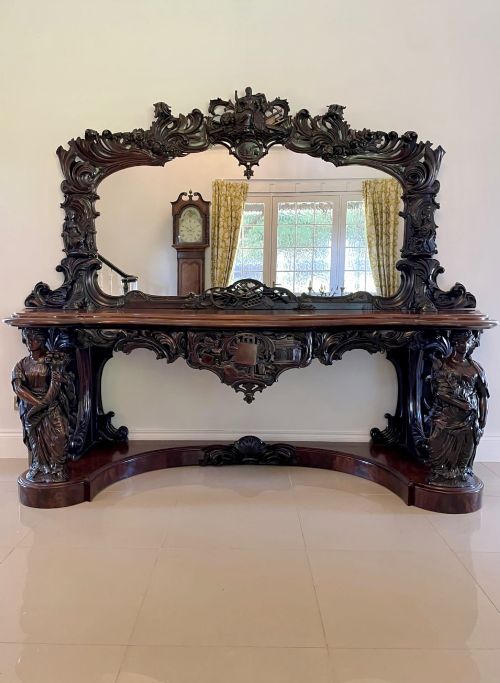


Carved Wood Caryatids
These carved wood caryatids are sculptural architectural supports and figures that bring classical weight and dramatic presence to a room.
Carved Wood Caryatids
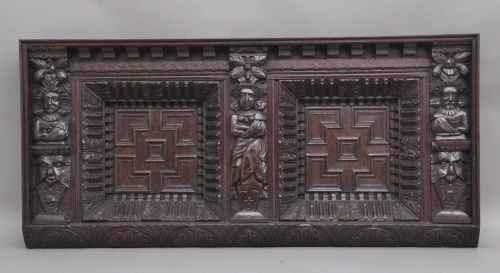
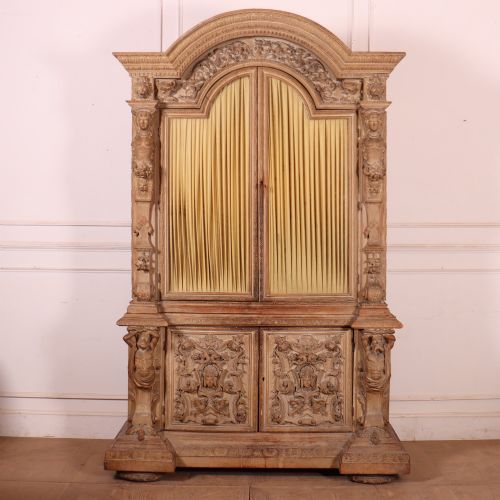
When searching for carved wood caryatids, a buyer examines architectural salvage, wall carvings, pedestals, and furniture elements that integrate human figures into their structural design. These pieces take the form of standing female figures, terms, herms, and putti supporting cornices, tables, and mirrors.
The items found here span multiple centuries, ranging from seventeenth-century oak fragments and sixteenth-century walnut termes to nineteenth-century console tables, pedestals, and lamp tables. Seventeenth-century oak carvings and nineteenth-century Italian walnut or oak pieces appear most frequently in this selection.
The origins of these works stretch across English, Italian, and continental European workshops, reflecting shifts from early Jacobean severity to Italian Renaissance Revival and Victorian opulence. Buyers encounter both isolated architectural elements removed from their original buildings and complete nineteenth-century display furniture incorporating figural supports.
How they were made
The makers of these pieces relied primarily on dense hardwoods, working chiefly in oak, walnut, mahogany, chestnut, and amboyna to achieve sharp detail in high-relief carving. Carvers utilised hand chisels and gouges to model drapery, musculature, and facial expressions directly from solid timber blocks.
Surface treatments varied according to period and regional taste, including raw waxed oak, parcel gilt highlights over paint, and water-gilt finishes on softwood or hardwood bases. Structural stability was achieved through traditional joinery, integrating the carved figures into console frames, table bases, and mirror surrounds.
The listings show carved wood caryatids spanning from the seventeenth century through the early twentieth century, executed in oak, walnut, mahogany, and marble.
What varies in quality
Material selection and historical integrity further differentiate the range, as solid timber pieces with original surfaces hold greater authority than heavily restored or later married components. The integration of the figural carving into its supporting structure - whether a console table, pedestal, or mirror frame - reveals whether the sculpture was conceived as an integral architectural element or applied afterward.
Hugues Sambin
The Carved Wood Caryatids Glossary
- Caryatid
- A sculpted female figure used as an architectural support in place of a column or pilaster. These figures carry entablatures or furniture tops on their heads.
- Term
- A pillar or pedestal tapering toward the base, surmounted by a carved bust or human figure. They serve as vertical supports in tables and architectural frameworks.
- Herm
- A sculptural bust or figure set upon a square pillar, originating in ancient Greece as boundary markers. Later furniture makers adopted them as structural corner supports.
- Putto
- A representation of a plump, naked child, often winged, found in Renaissance and later decorative carving. They frequently accompany caryatids and architectural frames.
- Overmantle
- A decorative structure placed above a fireplace mantel, often incorporating carved wooden panels, figures, and mirrors. These pieces anchor the decorative scheme of a historic room.
Carved Wood Caryatids: Frequently Asked Questions
What is a caryatid?
A caryatid is a sculpted female figure that functions as a structural support, taking the place of a column or pilaster to hold up a cornice or table top.
In furniture and architecture, these figures combine decorative sculpture with load-bearing utility.
How were caryatids used in historic homes?
Historic interiors utilised these figures as supports for console tables, overmantles, pedestals, and mirror frames.
They added classical dignity and visual drama to principal reception rooms and grand hallways.
How do I date a carved wooden figure?
Dating relies on analysing the timber species, tool marks, style of drapery, and regional carving conventions associated with specific periods.
Seventeenth-century pieces typically show heavier oak construction, while nineteenth-century revivals draw on Italian Renaissance or Baroque models.
What is the difference between a caryatid and a term?
A caryatid is a full or half-length human figure supporting a load, whereas a term is a bust or upper figure that merges into a tapering pillar.
Both served similar architectural and furniture support roles across Renaissance and revival periods.