

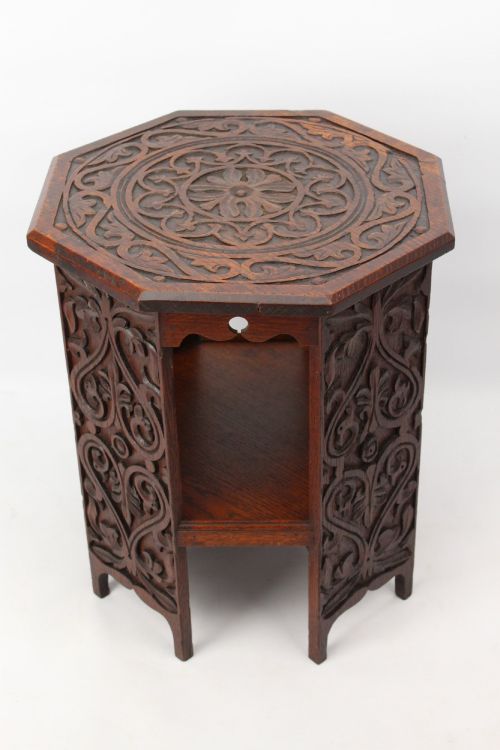

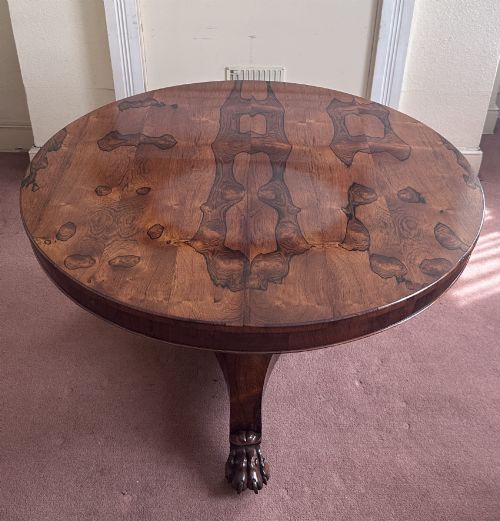
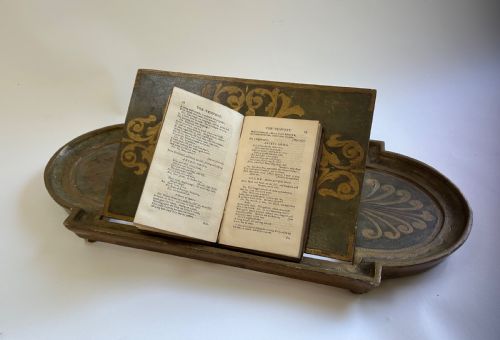


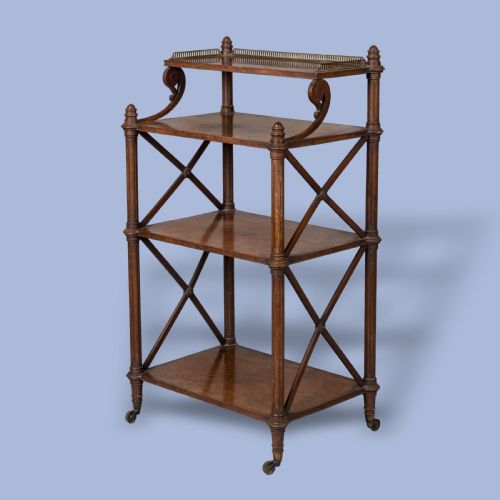
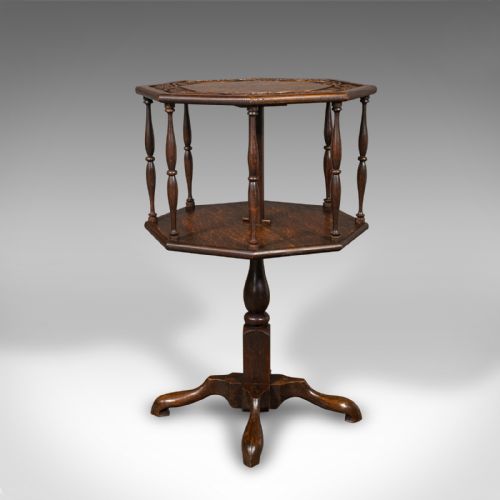

Carved Wood Book Table
These carved wood book table pieces bring practical elegance to a room, offering sturdy surfaces and clever ways to organise volumes.
Carved Wood Book Table
When you search for a carved wood book table, you encounter items designed specifically to hold and display books alongside regular table functions. The pieces on this page span several distinct forms, including small étagères, revolving tabletops, and open bookcases.
You are most likely to meet Victorian and Regency examples made from timbers such as rosewood, mahogany, and oak. These items combine the utility of a table with integrated book storage, ranging from desktop carriers to multi-tiered stands.
Origins vary across the periods represented, taking in standard British cabinetmaking alongside specific regional styles like Florentine and Anglo-Indian work. Each variant serves the fundamental purpose of keeping working libraries close to hand within domestic spaces.
How they were made
Cabinetmakers utilised dense hardwoods such as mahogany, rosewood, and oak to construct the main bodies and structural supports of these tables. These timbers were selected for their strength and stability, ensuring the furniture could bear the weight of heavy volumes.
Carving and decorative details were applied directly to the wood or built up using gesso, sometimes supplemented by brass fittings or leather inserts. Joinery methods matched the period, creating rigid frames designed for daily domestic use.
Carved Wood Book Table Retail Price Guide 2026
Typical asking prices for carved wood book table among the pieces listed under this phrase on Sellingantiques today, from the lower quarter to the upper quarter. They describe what is for sale here now, not the wider market.
Current listings feature pieces spanning the Regency, Victorian, and Edwardian eras, constructed primarily from rosewood, mahogany, and oak.
What varies in quality
The standard of a carved wood book table depends largely on the crispness of the carving and the selection of the timber grain. Finer examples display deliberate hand-carving and carefully matched wood veneers rather than hurried finishing.
Construction details also separate standard items from superior pieces, such as smooth mechanisms on revolving stands and solid timber framing throughout. The integration of decorative elements like giltwood or brass work reflects the original ambition of the piece.
The Carved Wood Book Table Glossary
- Étagère
- An open piece of furniture with multiple tiers for displaying small objects or books. It provides accessible storage in domestic rooms.
- Whatnot
- A multi-tiered shelving unit used for books and ornaments. It gained popularity during the nineteenth century for corner or wall placement.
- Revolving bookcase
- A freestanding book stand designed to rotate on a central pivot. This allows easy selection of volumes from a seated position.
- Giltwood
- Wood that has been coated with gold leaf or gold paint for decorative effect. It appears frequently on more ornate nineteenth-century items.
- Gesso
- A plaster-like material applied to wood surfaces as a base for intricate mouldings and gilding. It allows for sharp relief decoration.
Carved Wood Book Table: Frequently Asked Questions
What is a carved wood book table?
A carved wood book table is a piece of furniture combining a stable surface with built-in shelves or stands specifically intended for holding books. These items range from small revolving desktop units to larger multi-tiered étagères and occasional tables.
Cabinetmakers across the nineteenth and early twentieth centuries produced these designs to keep reading material accessible in studies, libraries, and drawing rooms. They unite practical storage with the decorative carving styles of their respective periods.
How were these tables used?
These pieces served as functional furniture for domestic reading spaces, holding current volumes, reference books, and writing accessories. Revolving versions allowed readers to access a small collection without leaving their chairs.
Larger variations functioned as centre tables or occasional furniture where books could be displayed alongside decorative objects. They kept daily libraries organised and within arm's reach in the principal rooms of the house.
How do I live with one?
Living with a carved wood book table involves placing it in a stable environment away from direct heat sources and strong sunlight, which can dry out the timber. Regular dusting with a dry cloth keeps the carved details clear of debris.
These pieces integrate easily into modern interiors as bedside tables, end tables, or corner display units. Their dual function provides both surface area and practical book storage without requiring excessive floor space.
How can I tell periods apart?
Distinguishing periods relies on observing the prevailing styles, carving motifs, and timber choices evident in the construction. Regency and William IV pieces often display heavier classical lines and dark mahogany or rosewood.
Later Victorian and Edwardian examples introduce lighter oak, Arts and Crafts simplicity, or flowing Art Nouveau curves. Examining the turning, joinery, and overall silhouette helps place an item within its specific era.