





Carved Wood Bedroom Bench
A carved wood bedroom bench offers a practical seat at the foot of the bed or beneath a window.
Carved Wood Bedroom Bench
When you search for a carved wood bedroom bench, you encounter seating forms ranging from compact dressing table stools to long window seats and small settees. The pieces appearing here predominantly span the nineteenth and early twentieth centuries, drawing on Victorian, Edwardian, and Arts and Crafts traditions alongside French revival styles.
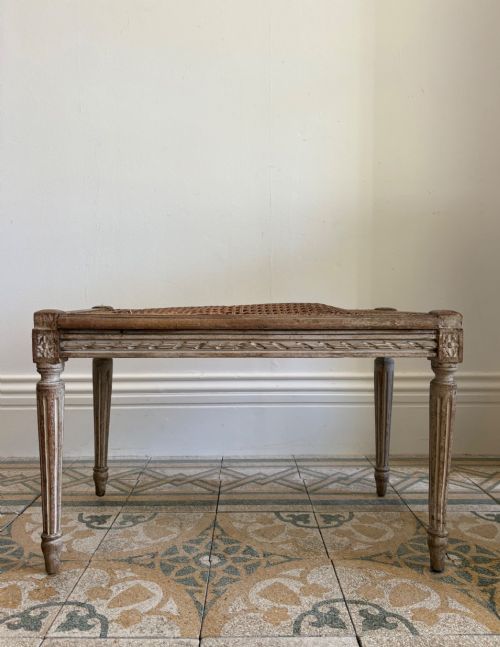
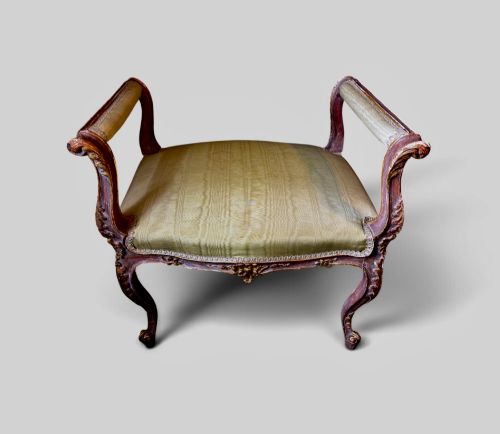
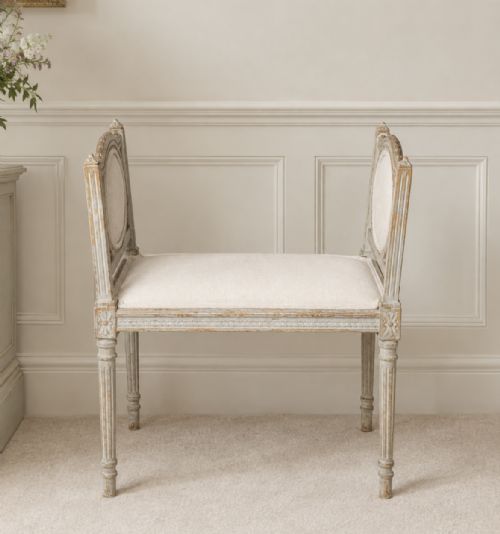
You will find items designated as benches, stools, window seats, and love seats, many featuring upholstered pads in fabric, damask, or cane. These forms serve functional roles at the dressing table or foot of the bed while displaying regional carver work in mahogany, rosewood, walnut, and giltwood.
The selection leans heavily towards French Neoclassical, Louis XVI style, and Victorian interpretations of earlier furniture forms. Buyers meet both restored examples ready for placement and project pieces requiring fresh upholstery or surface attention.
How they were made
Cabinetmakers shaped these frames from dense timbers including mahogany, walnut, rosewood, and satinwood, often applying gilt, white paint, or natural polish to the carved surfaces. Joinery relied on traditional pinned mortise and tenon construction to support the load of daily seating.
Carvers worked freehand to create cabriole legs, ball and claw feet, twisted rope turnings, and classical relief details directly into the solid wood. Caning and textile upholstery were integrated into the frames using webbing, stuffing, and tacks to form the seat pads.
Carved Wood Bedroom Bench Retail Price Guide 2026
Typical asking prices for carved wood bedroom bench among the pieces listed under this phrase on Sellingantiques today, from the lower quarter to the upper quarter. They describe what is for sale here now, not the wider market.
What varies in quality
The distinction between ordinary and superior pieces rests on the crispness and depth of the timber carving. Sharp, well-defined hand-carved details on cabriole legs or rail mouldings indicate a higher standard of workshop production than soft, shallow machine shaping.
Structural integrity of the frame joints and the quality of secondary timbers underneath also determine grade. Pieces retaining original gilding or high-grade cabinet woods command greater appreciation among collectors than heavily altered examples.
The Carved Wood Bedroom Bench Glossary
- Cabriole leg
- A furniture leg that curves outward at the knee and tapers inward to an ankle, mimicking animal limbs. This form appeared frequently on eighteenth-century furniture and later revival pieces.
- Giltwood
- Wood that has been coated with a thin layer of gold leaf or gilt powder. It is commonly found on decorative French-style window seats and settees.
- Caning
- Woven rattan or split material used to form light, supportive panels for seats and backs. It requires careful maintenance to prevent drying and breakage.
- Window seat
- A long, narrow bench designed specifically to fit beneath a window recess. These often feature upholstered tops and decorative carved ends.
- Satinwood
- A durable, hard timber with a natural golden sheen and smooth grain. Cabinetmakers utilised it for inlay work and refined decorative furniture frames.
Carved Wood Bedroom Bench: Frequently Asked Questions
Where should I place a bench in the bedroom?
These long seats sit naturally at the foot of a bed to hold cushions or clothing at the end of the day. They also fit beneath bedroom windows to create a quiet spot for reading.
Shorter stools function well tucked beneath dressing tables or paired beside wardrobes as convenient perches.
How do I care for antique wood frames?
Keep wooden frames away from direct sunlight and radiators to prevent the timber from drying out and splitting. Dust the carved details regularly with a soft, dry cloth.
Avoid using silicone polishes or abrasive cleaners, which can damage original painted, gilt, or polished surfaces over time.
How do I identify French revival styles?
French revival pieces typically display painted finishes, gilded surfaces, and classical motifs such as acanthus leaves and fluted column legs. Makers drew inspiration from Louis XV and Louis XVI royal furniture.
Proportions tend to be lighter and more decorative than heavier Victorian counterparts, often incorporating cabriole legs or cane panels.
Can I replace the upholstery easily?
Most drop-in or frame-mounted seat pads can be re-covered by an upholsterer using modern or traditional textile materials. Frames built with slip seats allow the pad to be unscrewed from beneath without disturbing the main wood structure.
Project pieces specifically noted as upholstery candidates offer the chance to match existing bedroom soft furnishings.