
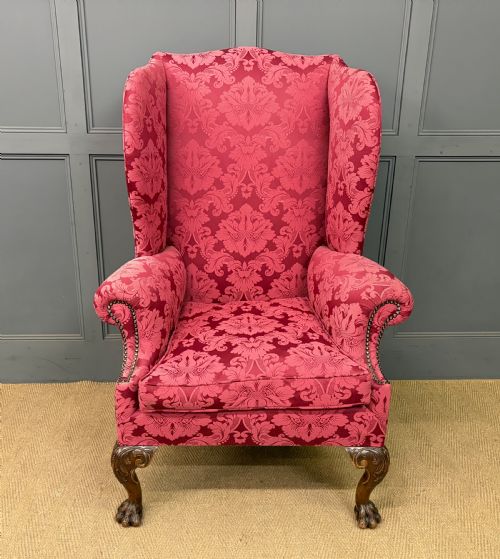


Carved Walnut Wingback Chair
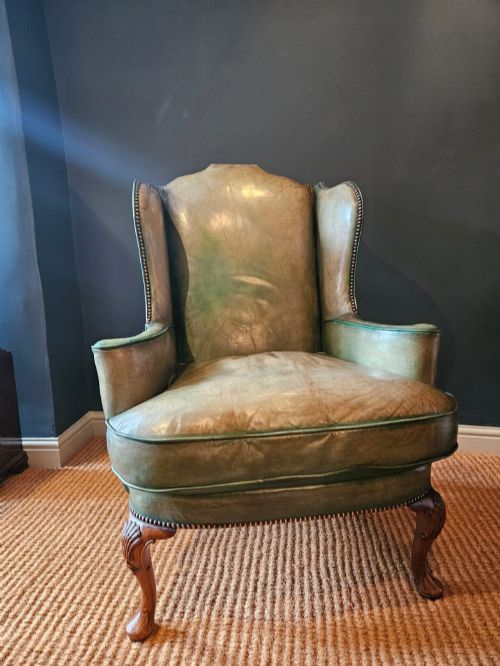
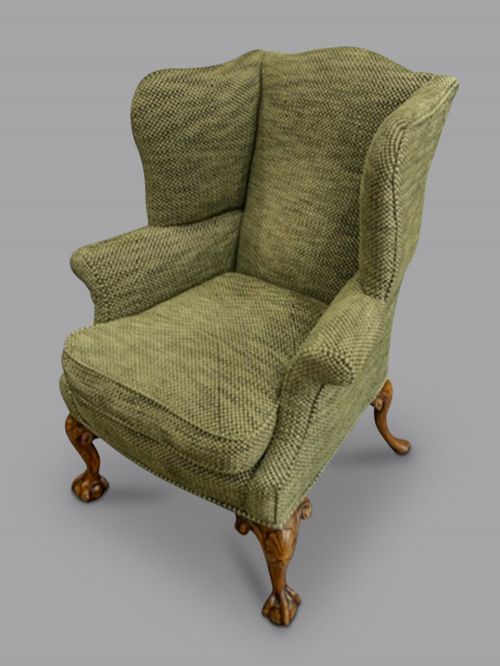
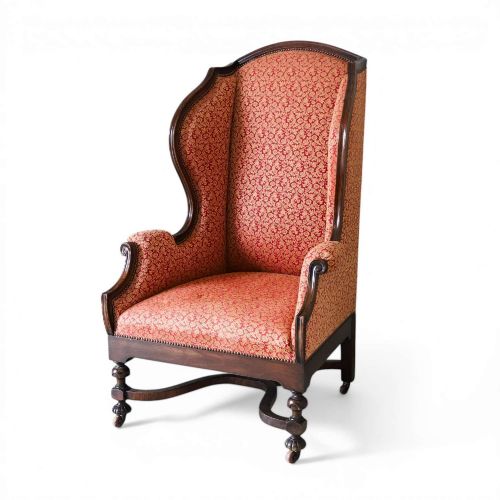
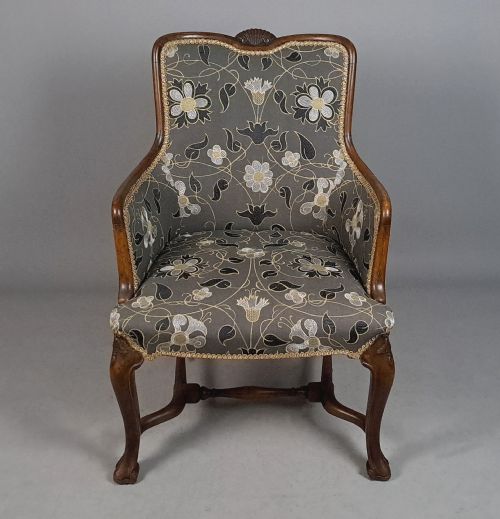
A carved walnut wingback chair brings deep timber frames and high upholstered sides together to hold the heat of the hearth.
Carved Walnut Wingback Chair
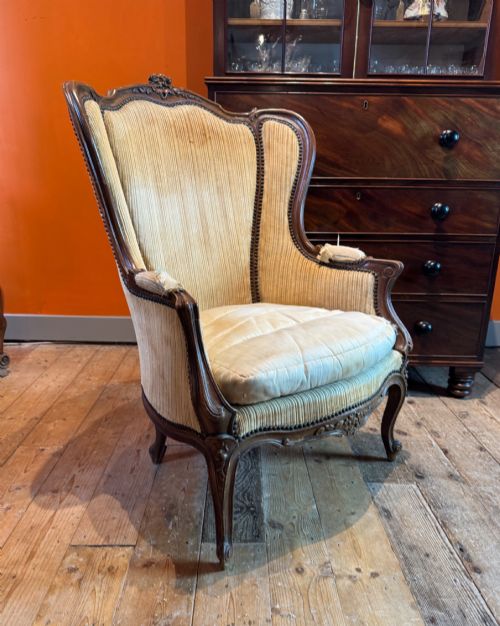
A carved walnut wingback chair is an armchair built with protective upholstered cheeks or wings designed to shield the sitter from drafts. The examples found here span the eighteenth century through to the early twentieth century, taking shape through Georgian, Queen Anne, and revival idioms. These seating forms range from compact fireside chairs to large library armchairs with substantial frames.
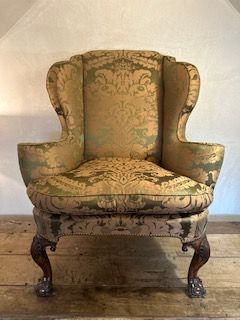
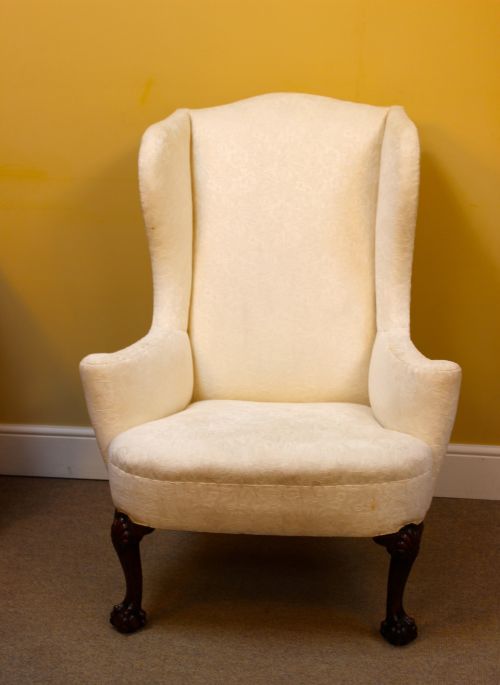
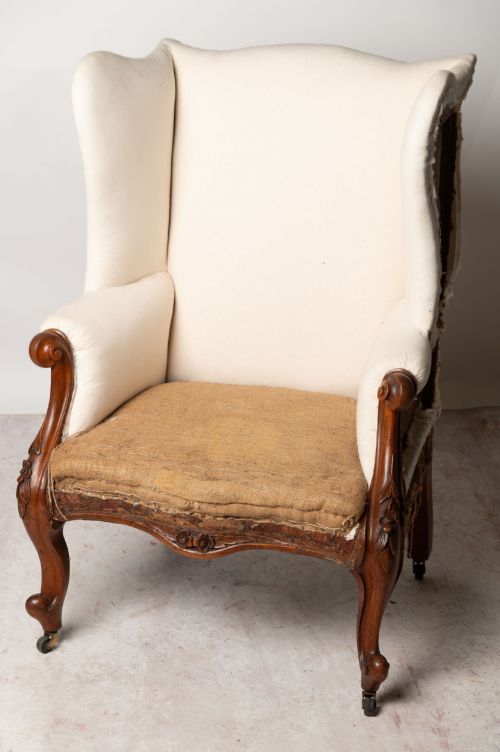
The version most commonly met on this page is a nineteenth-century piece, often adopting earlier Queen Anne or Georgian styles. Makers utilised walnut for the exposed wooden legs and frames, frequently embellishing the cabriole legs with carving. These chairs frequently arrive upholstered in textiles such as damask, velvet, leather, or hessian.
What varies in quality
The crispness of the timber carving sets the finer examples apart from simpler production. Sharp detailing on walnut cabriole legs and frame rails indicates a skilled hand, whereas softened or worn carving points to lower workmanship.
The integrity of the underlying frame and the quality of the upholstery materials determine the longevity of the piece. Chairs retaining substantial walnut frames with proportional wings and well-executed historical textiles command greater attention than heavily altered or poorly rebuilt frames.
The listings span pieces dated across the eighteenth, nineteenth, and early twentieth centuries, constructed mainly in walnut, mahogany, and hardwood.
Howard And Sons
The Carved Walnut Wingback Chair Glossary
- Wingback
- An armchair featuring upholstered side panels attached to the arms to deflect draughts. These wings also helped trap warmth from a fireplace around the sitter.
- Cabriole leg
- A furniture leg that curves out and then in, resembling the leg of an animal. This form typically terminates in a pad, claw and ball, or hoof foot.
- Bergere
- An enclosed upholstered armchair with wooden framing visible around the sides and back. Originating in France, these seats often feature cane work or fully upholstered sides.
- Damask
- A reversible figured fabric woven on a jacquard loom with patterns formed by contrasting warps and wefts. It appears frequently as upholstery on formal period seating.
- Hessian
- A coarse woven fabric made from jute fibres used historically as a foundation layer beneath top upholstery. It provides strong support for stuffing materials within the chair frame.
Carved Walnut Wingback Chair: Frequently Asked Questions
What is a wingback chair used for?
These armchairs served primarily as fireside seating in period homes, where the upholstered wings trapped heat and blocked cold draughts from reaching the head and shoulders.
Over time they migrated to libraries and parlours, functioning as comfortable reading chairs that offered privacy and structural support for extended sitting.
How do I identify a Georgian wing chair?
Authentic Georgian examples typically display dense walnut timber with hand-carved cabriole legs, often finishing in pad or claw-and-toe feet. The proportions remain balanced, with upright backs and modestly scaled wings constructed using period joinery.
Many pieces seen here are later nineteenth or twentieth-century revivals copying these specific eighteenth-century traits, so timber age and construction methods require careful inspection.
Are these chairs suitable for daily use?
Most of these antique and vintage armchairs remain structurally sound for regular sitting, provided the internal webbing and joints have been maintained or restored. Chairs designated for re-upholstery require professional attention before regular use to ensure the internal stuffing meets modern standards.
Leather and sturdy textile upholstered versions handle daily friction well, while delicate silk damasks benefit from more careful placement in low-traffic rooms.
How do I tell original upholstery from later replacement?
Original period textiles show consistent wear, oxidation, and attachment methods matching the assumed age of the wooden frame, such as hand-forged brass tacks. Most surviving chairs have undergone re-upholstery across their lifespan to replace degraded stuffing and worn fabrics.
Examining the underside webbing and tack holes reveals whether the current cover represents a recent restoration or an older historical layer.