

Carved Walnut Shell
These carved walnut shell and related walnut pieces span several centuries, offering rich timber surfaces and classic seating or mirrors for domestic interiors.
Carved Walnut Shell
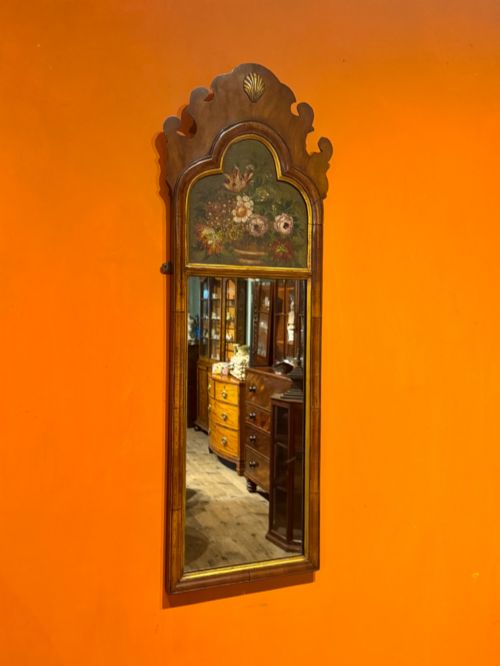
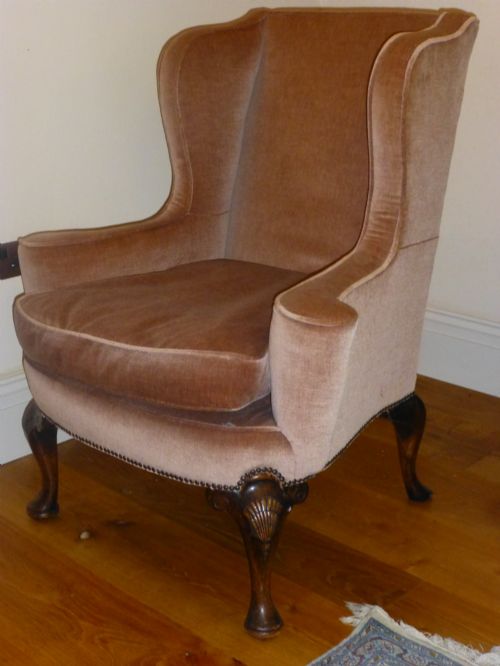
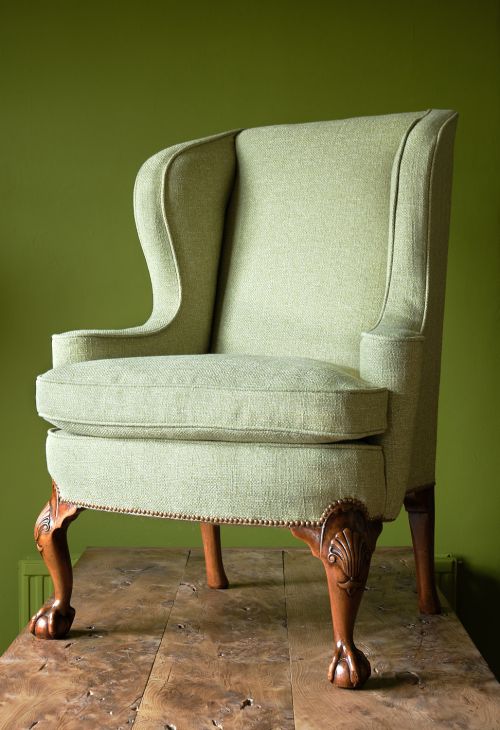
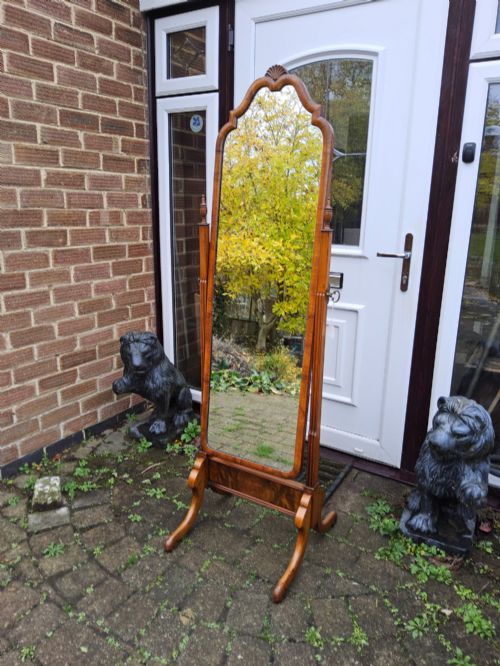
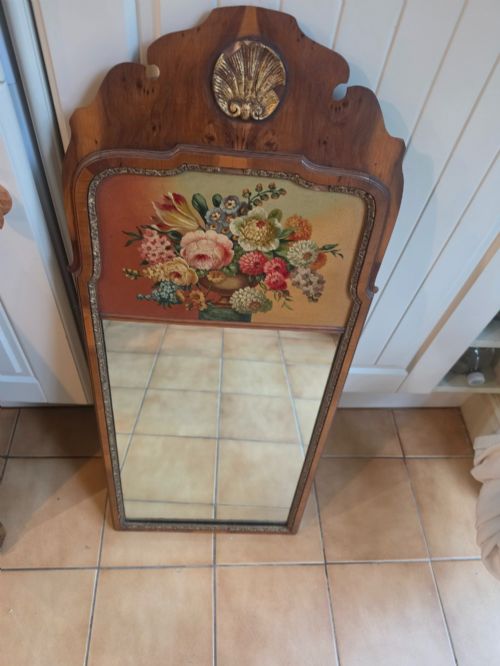
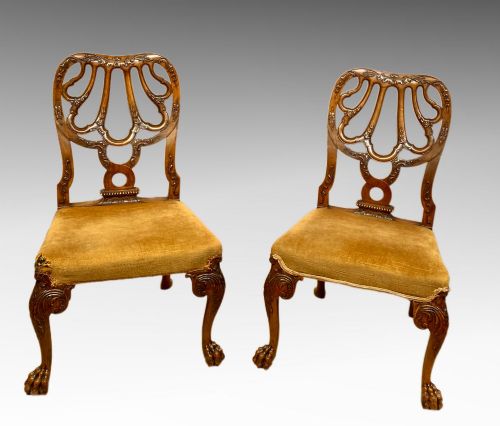
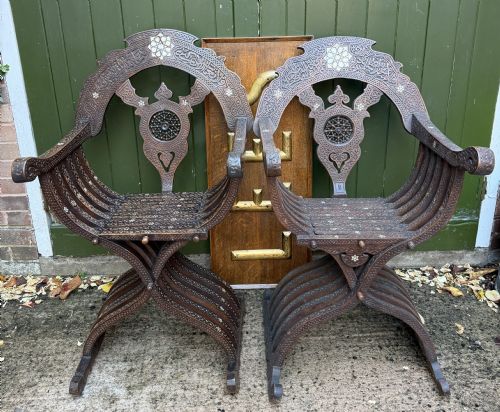
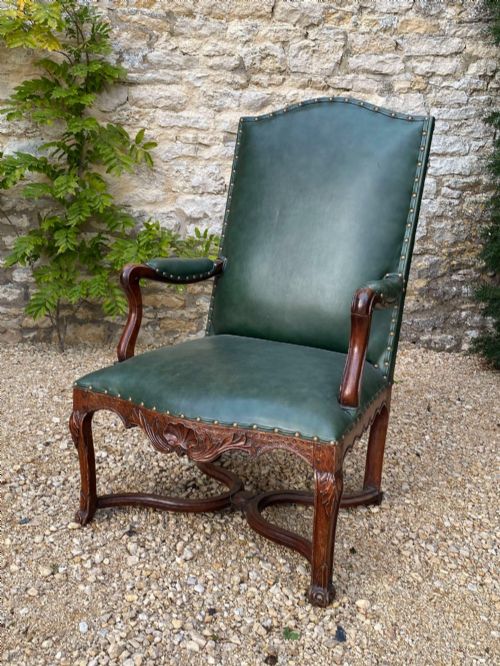
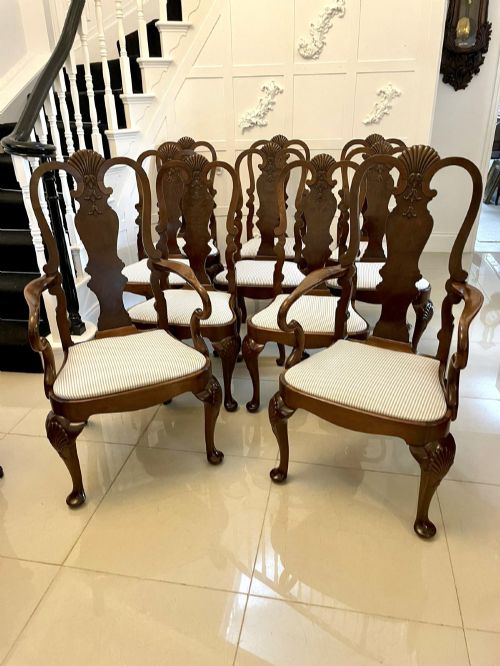
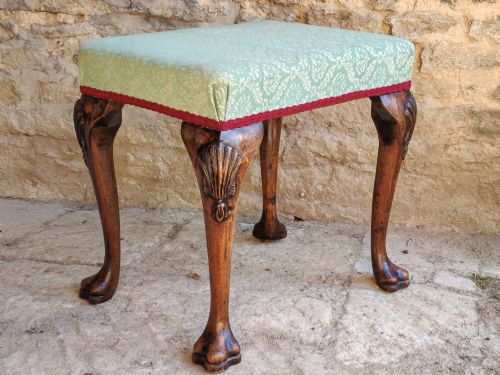
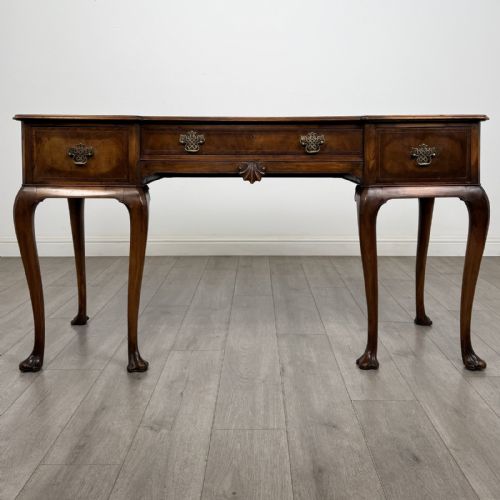
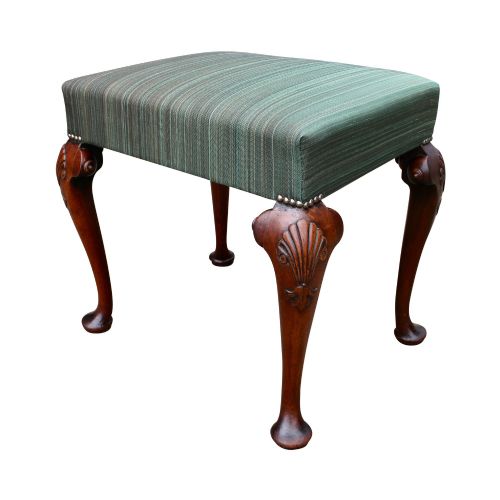
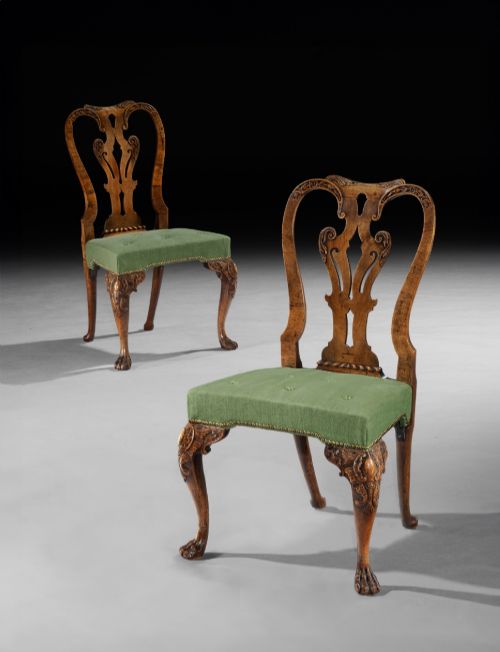
The objects take various functional domestic forms, including side chairs, armchairs, stools, coffee tables, chests of drawers, and wall mirrors. Many items reflect distinct historical design influences, notably Queen Anne style and George II aesthetics, alongside regional or Middle Eastern inlaid works utilising fruitwood and nacre-shell.
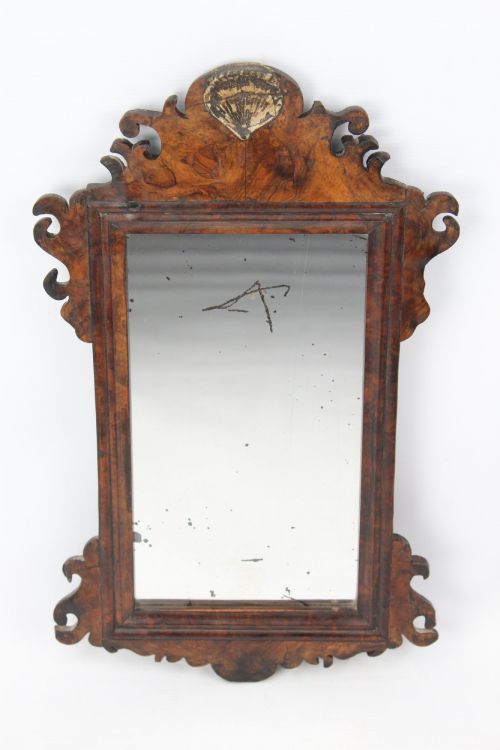
Stools and seating predominate among the items associated with this term, often featuring carved wooden frames paired with textile or fabric upholstery. Alongside these, mirrors and small tables demonstrate the versatility of walnut as a primary cabinet timber across different eras of British and European design.
How they were made
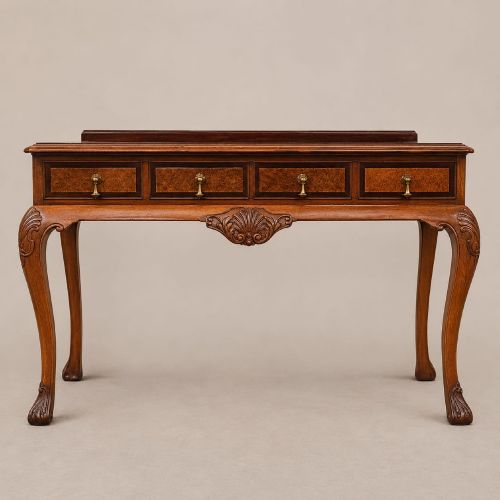
Cabinet makers constructed these pieces using solid walnut, burr walnut veneers, and figured timber selections over secondary woods. Timber choice dictated the visual character, with burr veneers and figured grains providing deep, swirling patterns on table tops and drawer fronts.
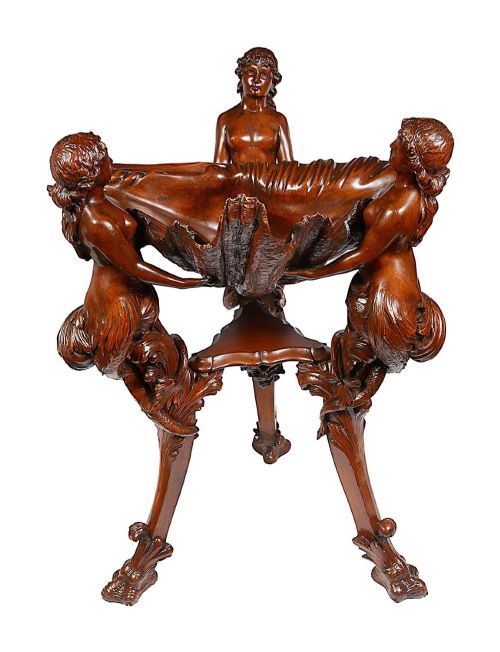
Carving was executed by hand to shape cabriole legs, frame borders, and structural details on chairs and mirrors. Inlays of nacre-shell and bone appear on specific Levantine or Syrian frames, integrated alongside turned woodwork and traditional joinery methods.
Carved Walnut Shell Retail Price Guide 2026
Typical asking prices for carved walnut shell among the pieces listed under this phrase on Sellingantiques today, from the lower quarter to the upper quarter. They describe what is for sale here now, not the wider market.
Listings feature eighteenth century pieces alongside Victorian and 1920s examples, utilising walnut, burr walnut, brass, and mirror glass.
What varies in quality
Quality rests upon the selection and matching of the walnut timber itself, where highly figured burr veneers and rich grain patterns elevate a piece above plain stock. The crispness and depth of hand carving across chair knees, mirror crests, and frame edges further distinguish superior examples.
Structural integrity and the preservation of original surfaces also determine standard. Pieces retaining their early patination, original brass hardware, and sound joinery represent the finer end of the available range.
Maple and Co
The Carved Walnut Shell Glossary
- Walnut
- A hard, dark brown timber prized for furniture making, offering rich grain patterns and suitability for carving.
- Burr Walnut
- A veneer taken from the growth growths or burls of a walnut tree, creating complex, swirling decorative grain patterns.
- Cabriole Leg
- A furniture leg that curves out and then in, resembling the leg of an animal, common in Queen Anne and George II designs.
- Vitrine
- A glass-displayed cabinet designed for exhibiting porcelain, curiosities, or fine objects.
- Nacre
- Iridescent pearlescent inner shell material used for intricate inlay work on frames and decorative panels.
Carved Walnut Shell: Frequently Asked Questions
What periods do these walnut pieces come from?
The selection includes pieces dating from the eighteenth century up to the early twentieth century. Examples encompass Georgian eras alongside later Victorian and Edwardian revival movements.
Craftsmanship reflects the aesthetic preferences of each respective decade, from early walnut lowboys to twentieth century occasional tables and mirrors.
Where were inlaid mirrors and chairs made?
Certain specialised mirrors and folding chairs originate from Syrian or Levantine workshops of the late nineteenth and early twentieth centuries. These pieces incorporate distinct regional techniques such as mashrabiya turned panels and nacre-shell inlay.
They offer a contrasting aesthetic to traditional British walnut furniture while frequently sharing walnut or fruitwood framing.
How should I care for antique walnut furniture?
Walnut benefits from being kept away from direct sunlight and extreme temperature fluctuations to prevent timber movement or veneer cracking. Regular dusting with a soft, dry cloth preserves the finish.
Occasional application of appropriate wax polish maintains the lustre of the wood without building up heavy residues.