

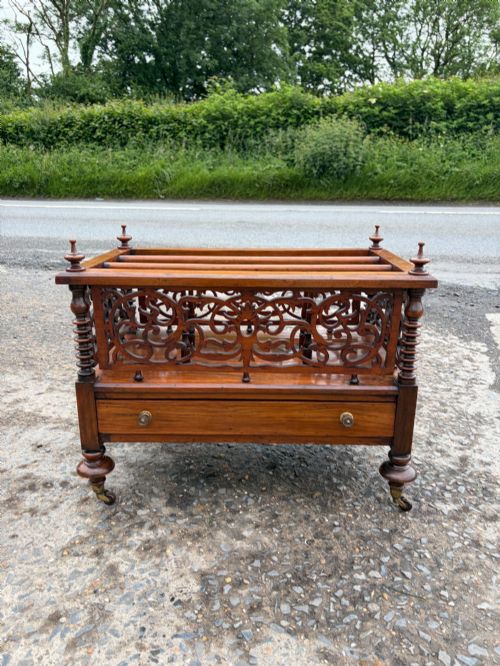
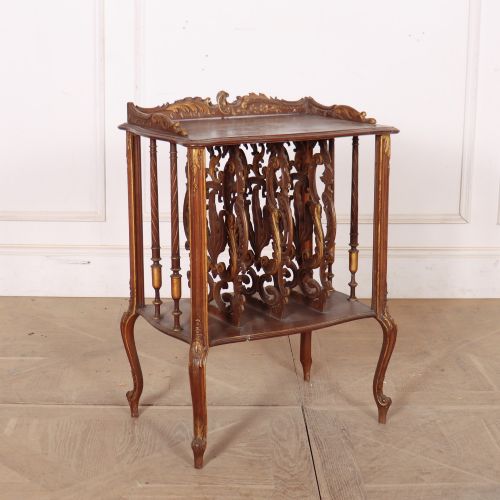
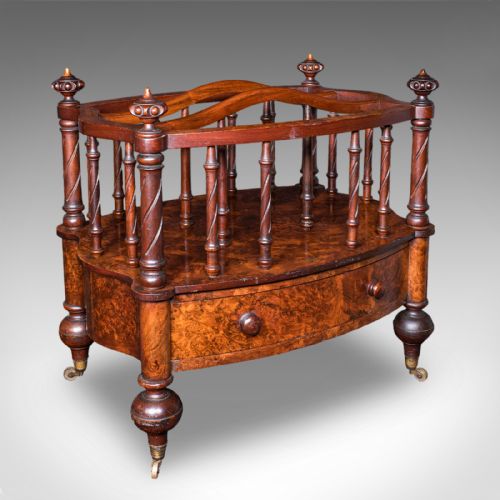


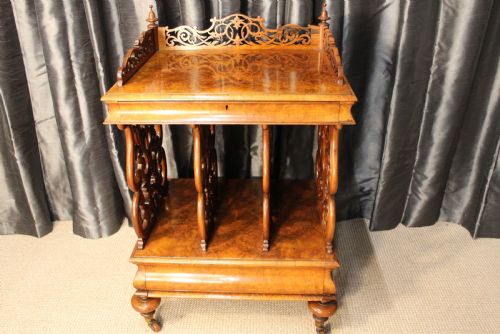


Carved Walnut Paper Rack
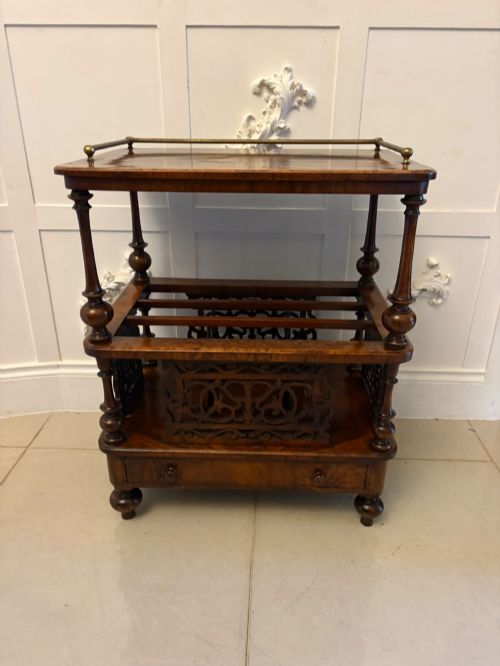
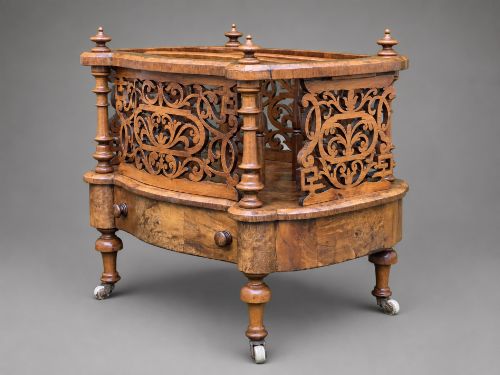
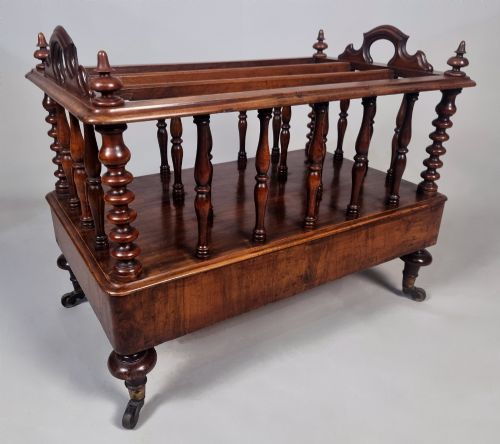
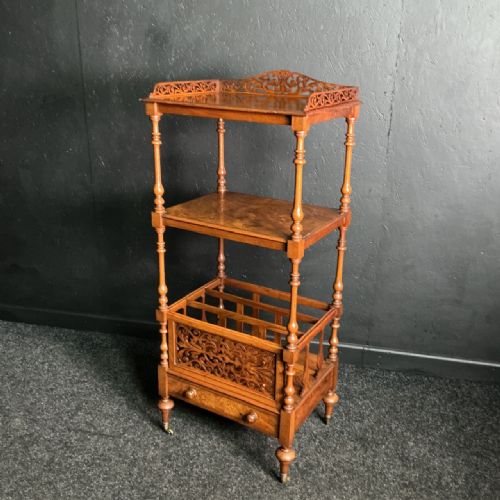
These carved walnut paper rack pieces are timber stationary organisers designed for the desk or table, prized for their figured grain and crisp relief work.
Carved Walnut Paper Rack
A carved walnut paper rack typically appears on this page in the form of a freestanding canterbury, whatnot, or music stand designed to hold periodicals, sheets, and correspondence. The examples seen here span the Victorian, Regency, and French Rococo Revival styles, crossing periods from the early nineteenth century through to eighteen ninety.
Most pieces meeting this description are constructed as multi-tiered storage units featuring dividers for papers alongside lower drawers or open bases. The material palette centres on walnut and burr walnut, frequently enhanced by brass, ceramic, metal, gilt, leather, and wood inlay.
How they were made
Cabinetmakers utilised solid walnut and decorative burr veneers applied to secondary timbers, selecting pieces for rich grain movement and natural depth. Joinery methods relied on precise dovetailing for drawers and mortise and tenon joints for upright frameworks and dividers.
Carving was executed by hand to achieve relief motifs, scrollwork, and pierced fretwork panels. Details such as turned columns, inset brass castors, and inlaid stringing were integrated into the structural assembly before finishing.
Carved Walnut Paper Rack Retail Price Guide 2026
Typical asking prices for carved walnut paper rack among the pieces listed under this phrase on Sellingantiques today, from the lower quarter to the upper quarter. They describe what is for sale here now, not the wider market.
Victorian readers often misplaced their sheet music so frequently that these stands required built-in drawers just to hold the overflow.
What varies in quality
Quality rests upon the selection of timber and the complexity of the figure in the burr veneer. Pieces with deep, book-matched grain patterns and crisply executed hand carving sit at the higher end of the scale.
Structural complexity also dictates standard, with multi-functional designs incorporating fitted drawers, turned spindles, and fine fretwork panels demonstrating superior craftsmanship compared to plain utility items.
The Carved Walnut Paper Rack Glossary
- Canterbury
- A low stand with partitions for holding sheet music, newspapers, or books, often fitted with a drawer below. These items were widely used in nineteenth-century parlours.
- Burr walnut
- A veneer taken from the growth excrescence of a walnut tree, showing intricate swirling patterns. It is prized for its decorative appearance.
- Whatnot
- An open set of shelves used for displaying or storing small objects and papers. They often combine multiple tiers with compartments.
- Fretwork
- Ornamental design executed by cutting patterns through thin wood panels using a piercing saw. This technique creates delicate, lace-like wooden screens.
- Inlay
- The technique of inserting pieces of contrasting material into a solid wood surface to form decorative patterns. Common materials include lighter woods and brass.
Carved Walnut Paper Rack: Frequently Asked Questions
What is a carved walnut paper rack used for?
These pieces were originally manufactured to sort correspondence, newspapers, and sheet music in domestic sitting rooms and studies. They kept loose documents organised and accessible near desks or seating areas.
Today, they serve a similar function in modern interiors, holding magazines, letters, or modern media while adding period character to a room.
How do I date a walnut canterbury?
Dating relies on examining the construction methods, timber selection, and stylistic details present in the piece. Pieces from the early nineteenth century often display Regency restraint, whilst mid-century items lean into exuberant Victorian burr veneers and fretwork.
Secondary woods, fixing types, and castors also provide clues to the decade of manufacture. Comparing the decorative vocabulary helps narrow down the period.
Are these pieces sturdy enough for daily use?
Most items are constructed from dense hardwoods like walnut, making them robust for holding paper and periodicals. Freestanding designs are balanced to handle the weight of stacked documents.
Care should be taken not to overload fragile fretwork dividers or drawers. Gentle placement ensures the historical joinery remains secure over time.