

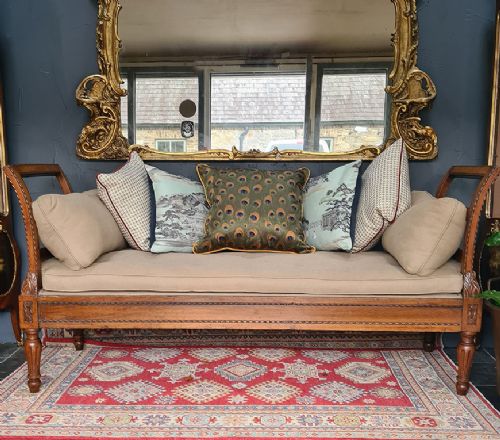
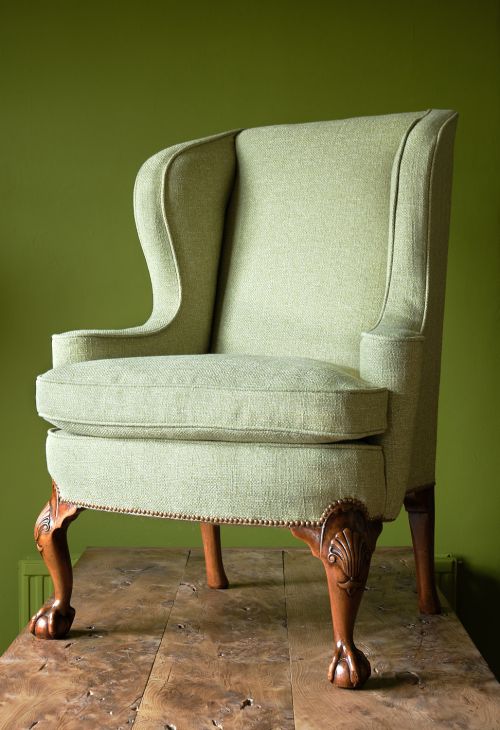
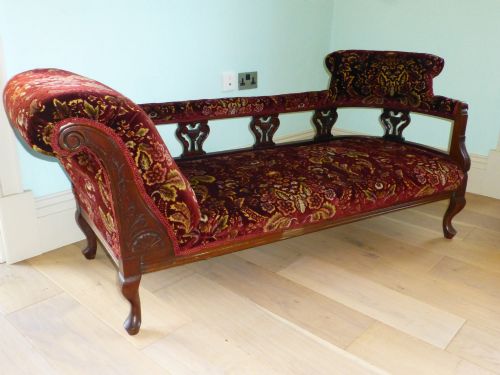
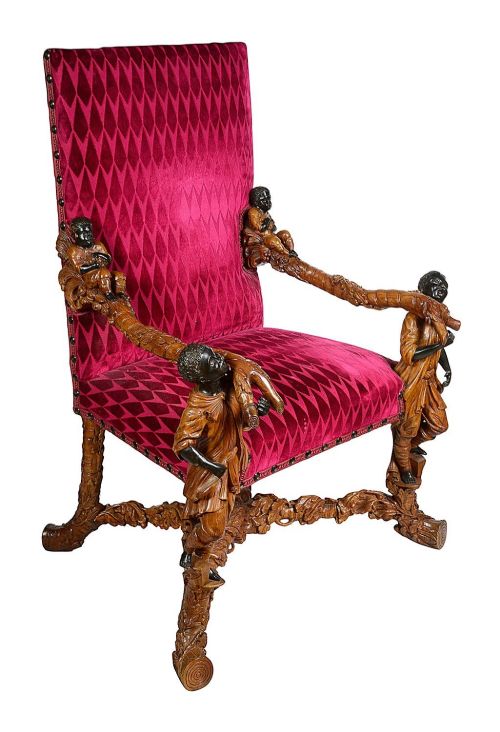
Carved Walnut Lounge
A carved walnut lounge piece brings rich timber frames and period upholstery together to anchor a traditional or eclectic interior.
Carved Walnut Lounge
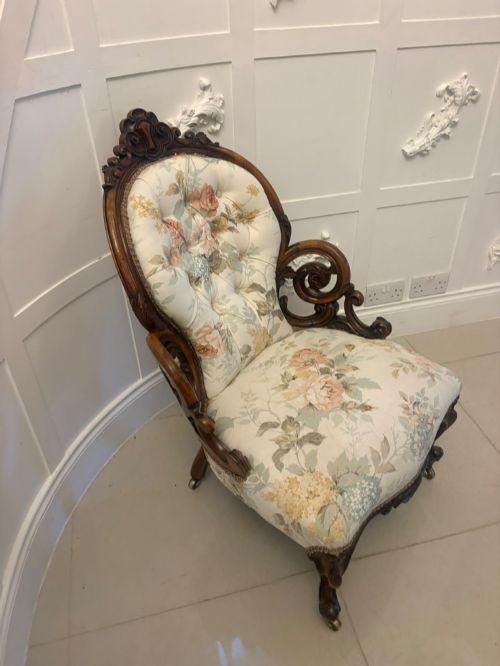
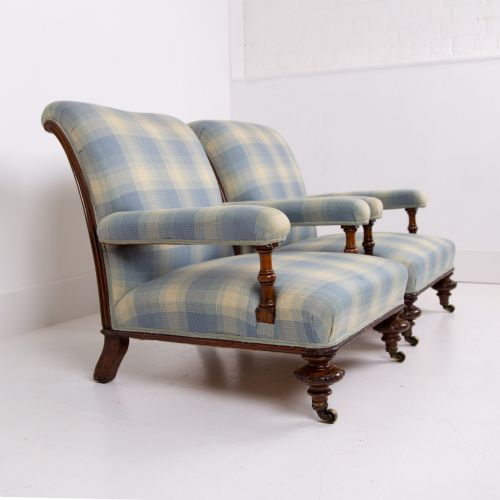
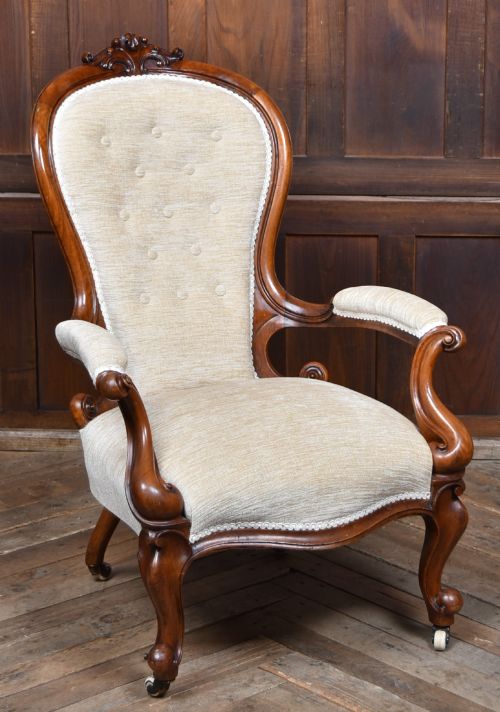
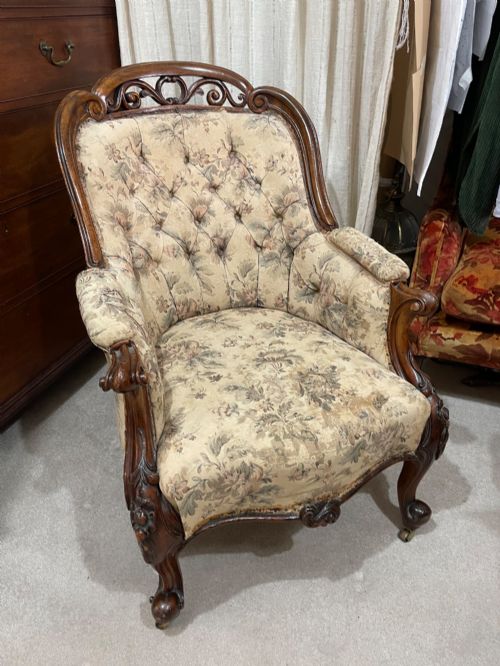
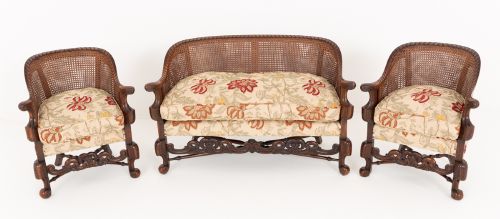
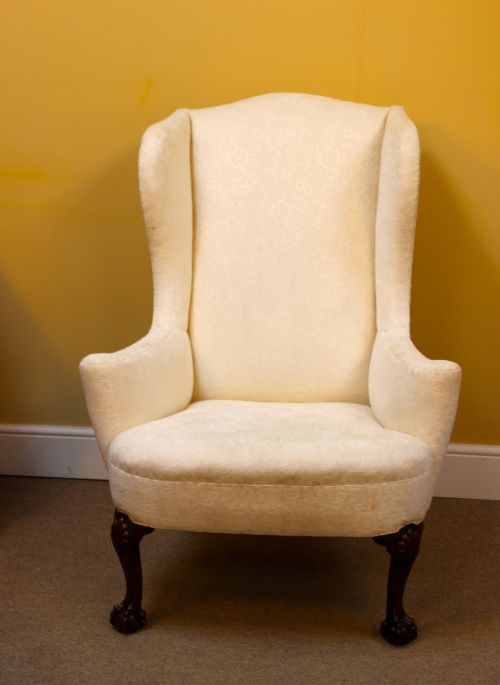
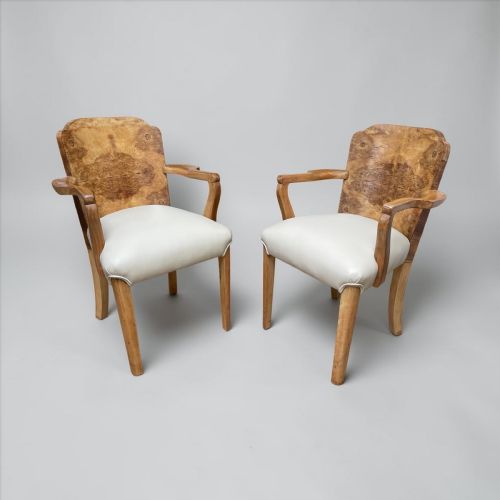
A carved walnut lounge search reveals a diverse mix of upholstered seating and occasional furniture produced across the nineteenth and early twentieth centuries. Pieces range from Victorian button-backed armchairs and daybeds to Art Deco occasional chairs and French revival bergere suites.
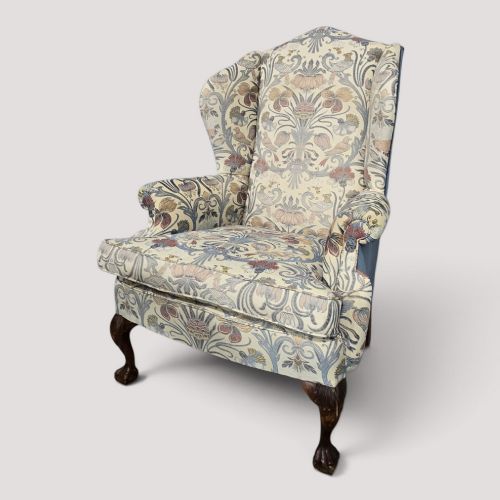
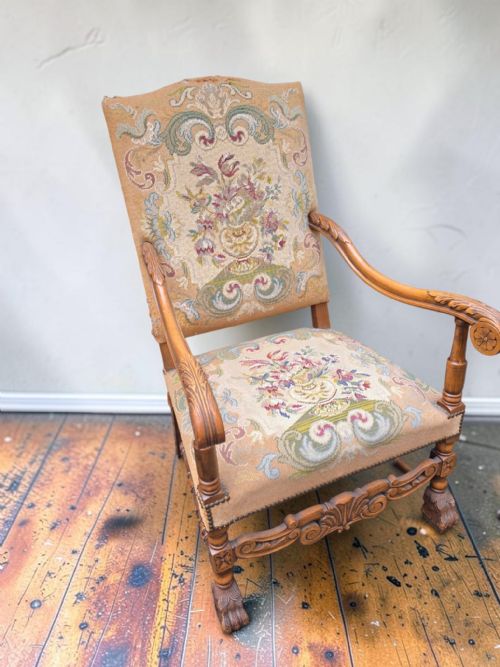
Buyers most frequently encounter nineteenth-century walnut armchairs and chaise longues alongside twentieth-century revival seating. These forms reflect historical revivals including Louis XV, Carolean, and Queen Anne styles executed in durable walnut timber.
Materials and construction methods
Makers utilised solid walnut and burr walnut for structural frames, combining dense grain patterns with hand-carved ornamentation. Brass castors, cane panels, and marquetry inlay frequently complement the timber framework on select tables and cabinets.
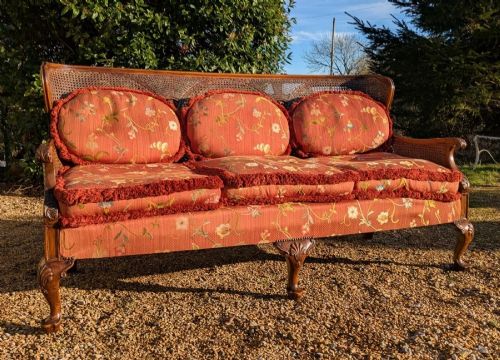
Upholstery relies on traditional textiles such as silk, velvet, tapestry, and leather, often secured over feather cushions or sprung interiors. Split cane work appears on bergere frames, requiring careful weaving through drilled or slotted walnut rails.
Carved Walnut Lounge Retail Price Guide 2026
Typical asking prices for carved walnut lounge among the pieces listed under this phrase on Sellingantiques today, from the lower quarter to the upper quarter. They describe what is for sale here now, not the wider market.
Current listings feature items spanning the Victorian era through the 1930s, constructed from walnut, burr walnut, cane, leather, and various textiles.
Distinctions in construction and finish
Quality rests upon the crispness of the hand-carved detail in the walnut timber and the structural integrity of the frame joints. Superior examples exhibit deep, fluid carving and well-proportioned scrolling arms without clumsy timber repairs.
The choice of covering material and the preservation of original cane or upholstery webbing further separate standard production from exhibition-grade work. High-end pieces maintain synchronous period textiles or sympathetic re-upholstery that respects the original maker's design.
Hindley & Sons
The Carved Walnut Lounge Glossary
- Bergere
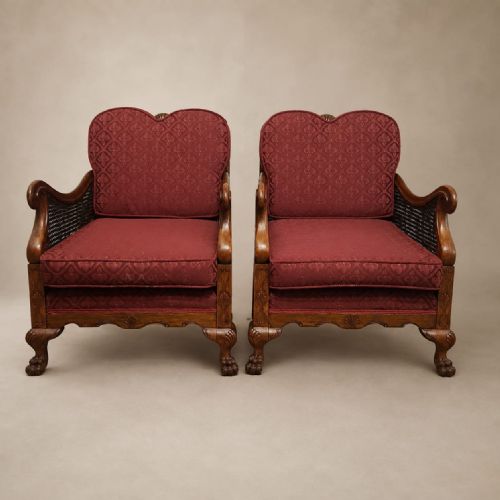
- An enclosed armchair with a wooden frame and cane sides or back. These seats commonly feature loose squab cushions.
- Chaise Longue
- An elongated upholstered chair designed for reclining, combining the backrest of a chair with the seat of a daybed. Nineteenth-century examples often display carved walnut scroll ends.
- Burr Walnut
- Timber taken from a walnut tree growth showing intricate, swirling grain patterns. Cabinetmakers sliced this wood into veneers for decorative surfaces.
- Marquetry
- The art of applying pieces of veneer to a structure to form decorative patterns. This technique appears on Victorian walnut tables and cabinets within the selection.
Carved Walnut Lounge: Frequently Asked Questions
How do I identify a Victorian walnut armchair?
Victorian walnut armchairs typically display dark timber frames with hand-carved ornamentation, deep buttoned upholstery, and sturdy sprung seats. Look for characteristic nineteenth-century proportions and stylistic nods to French revival or classical designs.
Examination of the underside and joints reveals traditional joinery methods. Makers often utilised walnut alongside secondary hardwoods, mounting the piece on castors for mobility.
What is a bergere chair?
A bergere is a traditional upholstered armchair featuring an exposed wooden frame and woven cane panels along the back and sides. These seats originated in France and gained popularity during various revival periods.
They generally include a loose seat cushion filled with down or feathers. The combination of rigid walnut woodwork and flexible cane creates a lighter visual weight than fully upholstered armchairs.
How should I care for antique walnut furniture?
Protect antique walnut from direct sunlight and rapid temperature fluctuations to prevent the timber from drying out or splitting. Dust the carved wooden frames regularly with a soft, dry cloth.
Avoid chemical polishes that can degrade historical finishes. Professional conservation methods should be employed for antique textiles and delicate cane work.