
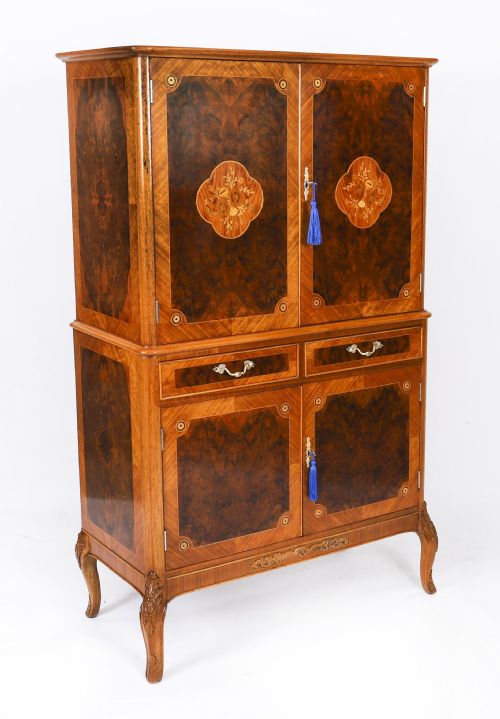


Carved Walnut Dry Bar
A carved walnut dry bar offers clever home hospitality in style, bringing period presence and practical drinks storage together.
Carved Walnut Dry Bar
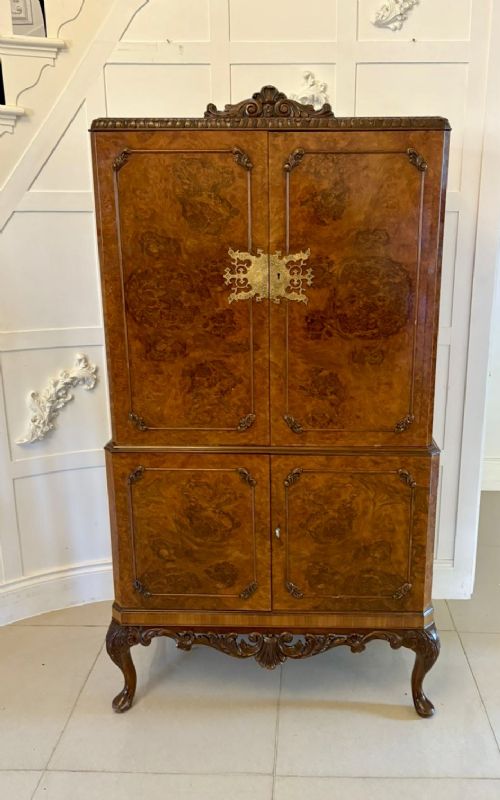
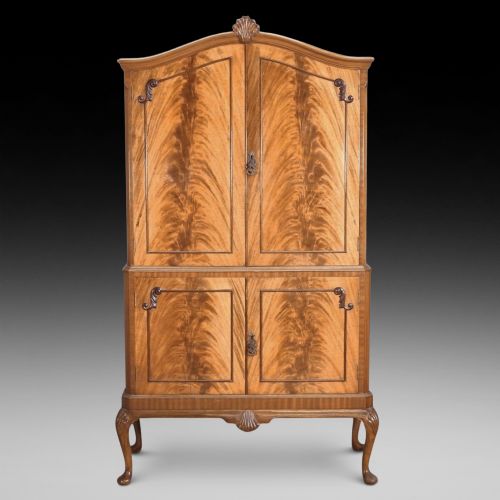
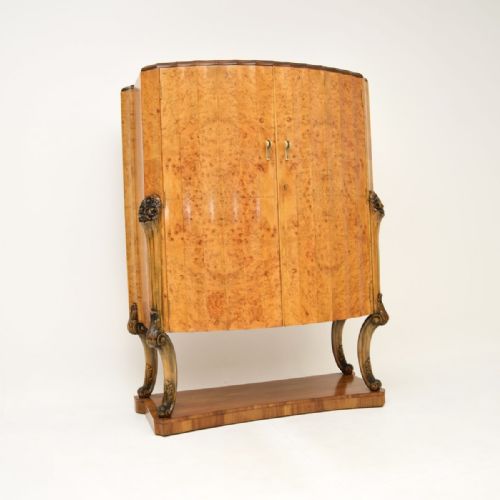
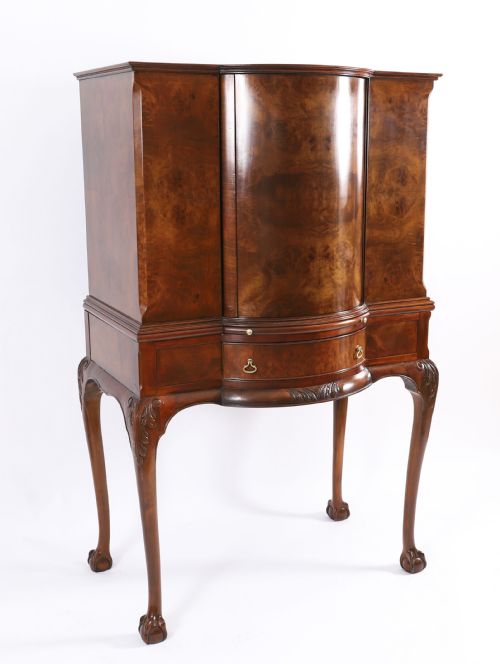
A carved walnut dry bar brings together cocktail cabinets and drinks chests designed for entertaining, originating from the 1920s and 1930s. Buyers searching for a carved walnut dry bar encounter sophisticated cocktail cabinets that conceal internal storage for bottles and glassware behind grand timber doors.
The pieces on this page span the Art Deco and Queen Anne Revival styles, showing how cabinet makers combined period motifs with modern social habits. Most examples date from around 1920 to 1930 and rely on rich timber figures to create decorative impact.
How they were made
Carpenters built these cabinets using solid walnut and oak frames overlaid with burr walnut, flame walnut veneer, and marquetry details. The natural grain patterns of the timber take centre stage, often arranged symmetrically across the main doors.
Fitted interiors incorporate glass and mirror surfaces alongside brass hardware, creating reflective spaces for serving drinks. Carved details frame the cabinet bodies, drawing on traditional woodworking techniques adapted for twentieth-century furniture.
The inventory spans two distinct decades, featuring designs from both 1920 and 1930.
What varies in quality
The distinction between standard production and exceptional work rests on the choice of wood veneers and the sophistication of the internal layout. Cabinets featuring highly figured burr walnut or intricate marquetry demonstrate a superior grade of craftsmanship.
Makers such as Epstein produced pieces where the integration of carved elements and mirrored interiors elevates the design far beyond simple utility. The precision of the joinery and the quality of the brass fittings determine the overall standing of each cabinet.
Epstein
The Carved Walnut Dry Bar Glossary
- Burr walnut
- A prized timber harvested from growth excrescences on walnut trees, yielding turbulent and highly decorative grain patterns. Cabinet makers prized this wood for creating dramatic focal points on doors and drawer fronts.
- Flame walnut veneer
- A thin slice of timber cut to display a characteristic tongue of flame or feather pattern in the grain. This technique allowed workshops to achieve symmetrical visual effects across large surfaces.
- Marquetry
- The art of applying small pieces of veneer to a structure to form decorative patterns and pictures. Artisans used contrasting woods to build complex ornamental scenes.
- Art Deco
- A design style from the interwar period characterised by sleek geometric shapes, stylised motifs, and modern luxury materials. This aesthetic heavily influenced the proportions and decorative details of the drinks cabinets.
- Queen Anne Revival
- A style drawing inspiration from early eighteenth-century English furniture, notable for graceful curves and carved ornament. Makers blended these traditional forms with the functional requirements of a twentieth-century cocktail cabinet.
Carved Walnut Dry Bar: Frequently Asked Questions
What is a carved walnut dry bar?
A carved walnut dry bar is a specialised drinks cabinet designed for home entertaining, usually featuring dedicated interior space for bottles, glasses, and mixing equipment.
These cabinets date primarily to the 1920s and 1930s, combining decorative wood veneers with practical storage compartments.
How were these cabinets used?
Owners used these pieces to store spirits, wine, and glassware for hosting guests during the interwar cocktail era.
The drop-down or panelled doors often doubled as preparation surfaces for mixing drinks before serving.
How do I date a walnut dry bar?
Dating relies on stylistic clues, contrasting the geometric lines of Art Deco pieces with the traditional curves of Queen Anne Revival examples.
The presence of specific veneer types and hardware styles helps place a cabinet within the 1920 to 1930 timeframe.
Where should I place a dry bar?
These cabinets suit dining rooms, living spaces, or reception areas where home hospitality takes place.
Positioning them away from direct sunlight protects the delicate burr and flame walnut veneers from fading.