
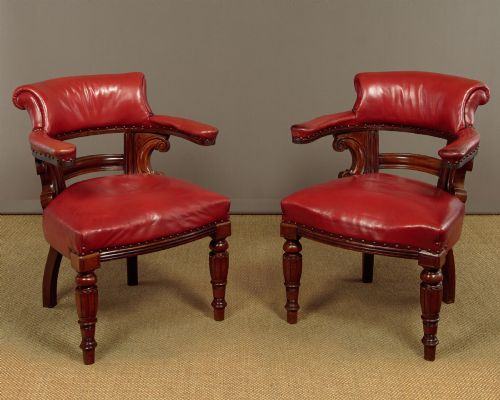
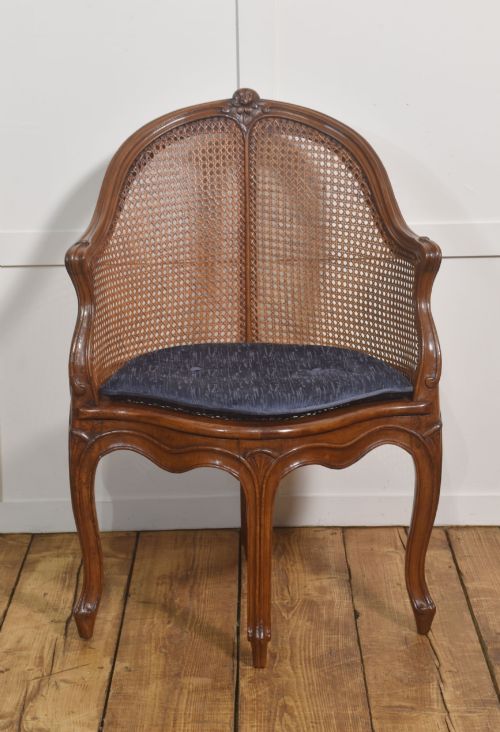
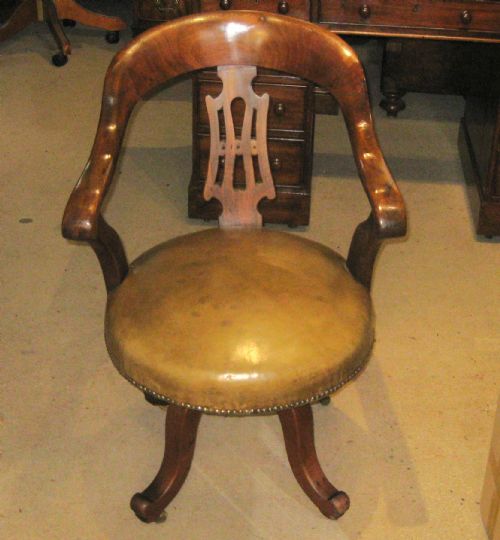
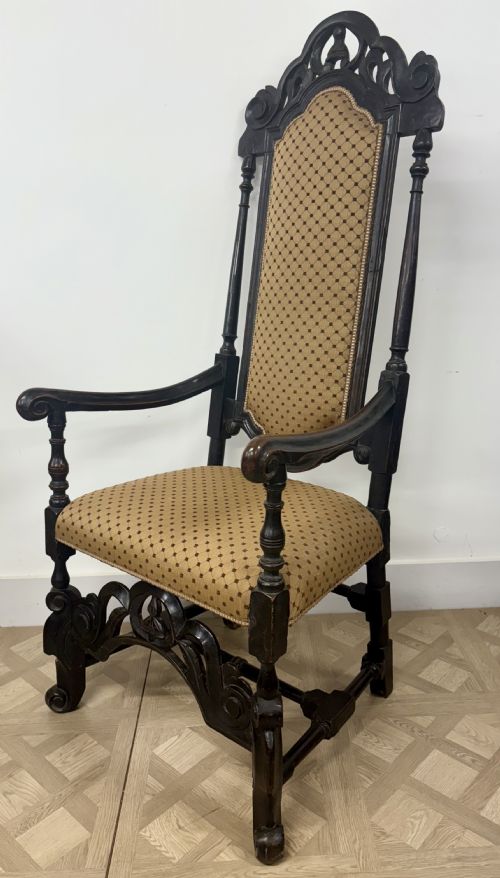
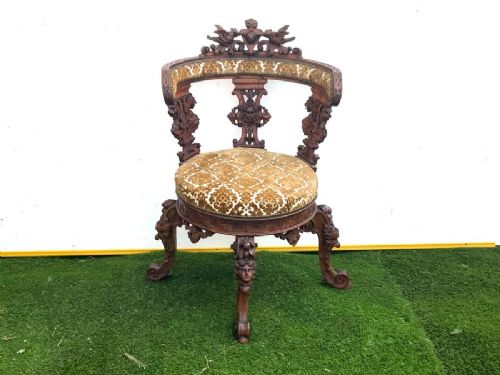
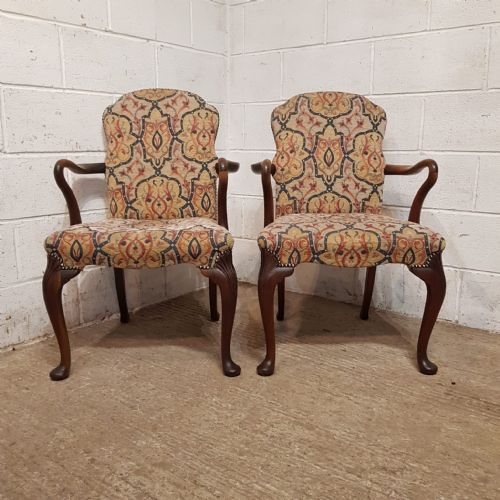
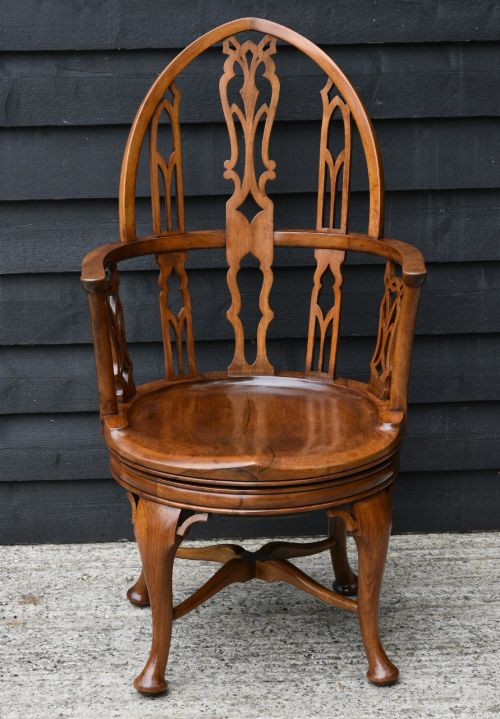
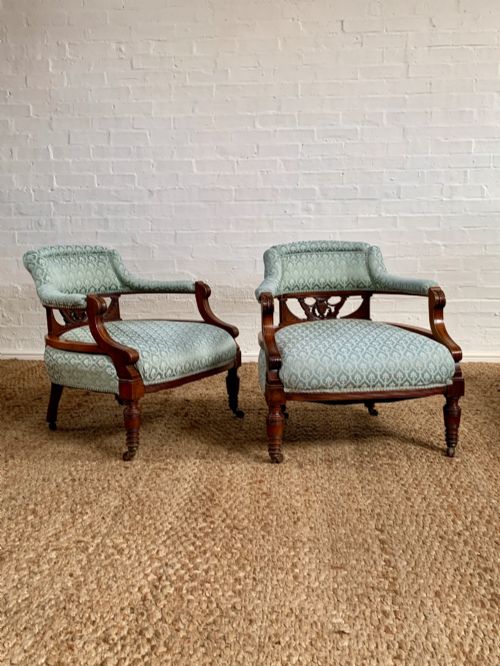
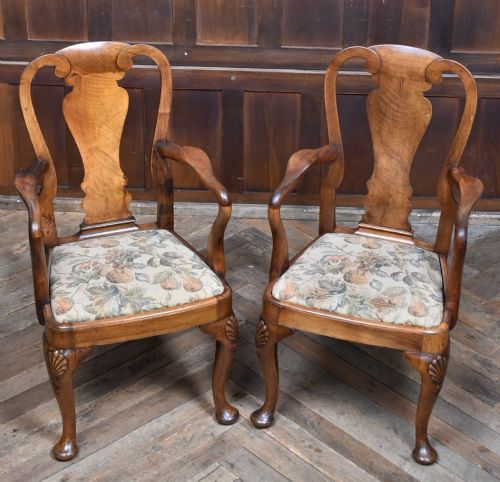
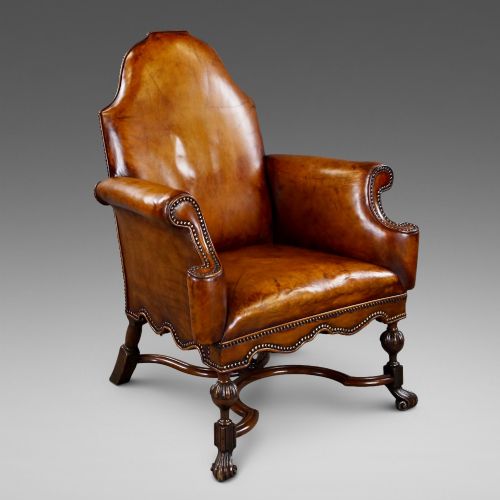
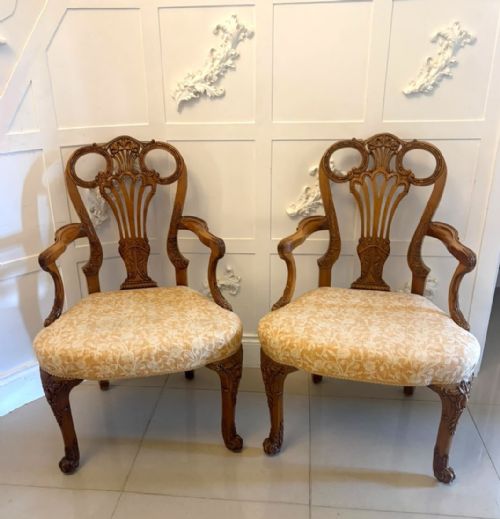
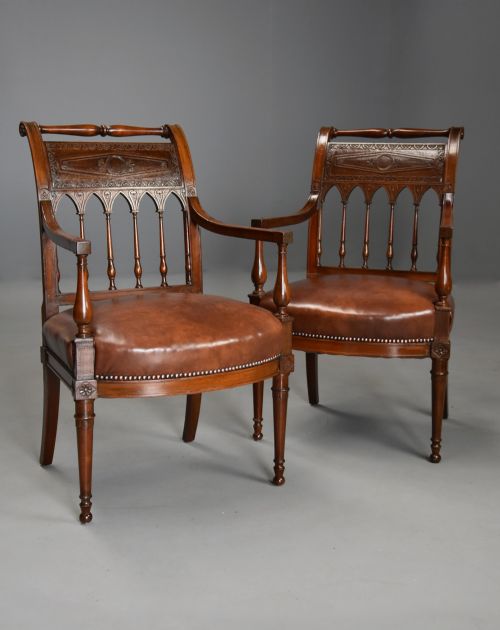
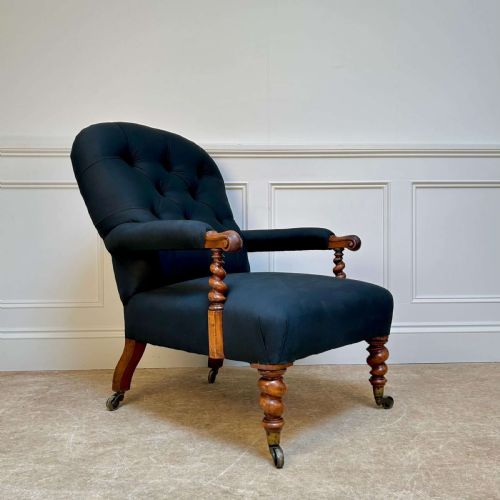
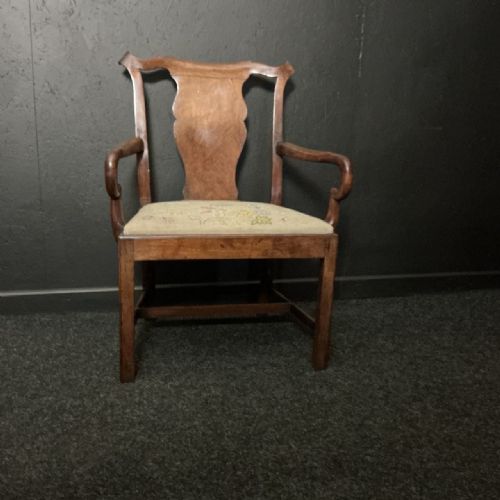
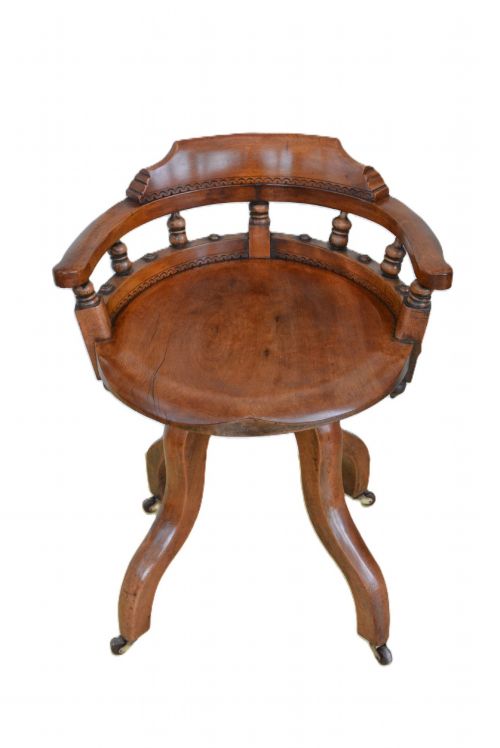

Carved Walnut Desk Armchair
A carved walnut desk armchair brings rich timber and architectural form to a study, offering sturdy comfort for daily work.
How they were made
The primary structural material is walnut, chosen for its dense grain and capacity for deep, crisp carving along the arms, crest rails, and cabriole legs. Frames are typically joined with traditional mortise and tenon construction to withstand the rigours of constant movement and weight.
Upholstery elements rely on leather, velvet, tapestry, and fabric, frequently secured with brass tacks over supportive stuffing. Caning is also utilised for open, flexible backrests and seats on lighter models.
What varies in quality
The depth and crispness of the carving distinguish standard utilitarian seating from pieces commissioned for important domestic interiors. Master carvers imparted vitality into scrollwork, foliage, and figural details, whereas lesser examples show flat, repetitive chisel work.
Timber selection and secondary framing integrity dictate longevity, with well-figured walnut retaining its rich colour and structural firmness over centuries of use. The integration of mechanical swivel and revolving systems on desk variants also marks the difference between basic assembly and superior workshop engineering.
The listings here span the 17th, 18th, 19th, and 20th centuries, featuring styles from Queen Anne and Georgian to Victorian and Arts and Crafts.
Hindley And Sons
The Carved Walnut Desk Armchair Glossary
- Cane
- Woven rattan material utilised for chair seats and backrests. It provides lightweight flexibility and ventilation.
- Fauteuil
- An open-framed armchair with upholstered armrests, originating in France. These pieces emphasise decorative woodwork alongside padded comfort.
- Cabriole leg
- A furniture leg that curves outward in a convex arc and then bends inward in a concave arc, ending in a pad or claw foot. This form is typical of Queen Anne and eighteenth-century styles.
- Crest rail
- The top horizontal member of a chair back. It often bears the principal carved ornamentation of the piece.
- Revolving desk chair
- A seating form fitted with a central spindle or pivot mechanism allowing rotation. These often include wheel castors for mobility in a study.
Carved Walnut Desk Armchair: Frequently Asked Questions
What is a carved walnut desk armchair?
A carved walnut desk armchair is a sturdy, decorative seat built from walnut timber, featuring supportive armrests and carved details suited for a study or library.
These chairs combine functional design with ornamental woodwork, often including swivel mechanisms or upholstered panels for extended sitting.
How were these chairs used historically?
Historically, they served as principal seating for writing desks, libraries, and studies where gentlemen and scholars managed correspondence and books.
Their robust construction and supportive arms made them suitable for long hours of reading, office work, and scholarly pursuits.
How do I care for walnut and leather?
Walnut benefits from occasional polishing with natural wax to preserve the grain and prevent the timber from drying out in heated rooms.
Leather upholstery requires gentle cleaning and conditioning to maintain flexibility and prevent cracking over decades of use.
How do I tell a Victorian chair from an eighteenth-century piece?
Eighteenth-century examples display authentic period joinery, wear patterns, and regional timber characteristics typical of hand-built cabinet making.
Victorian pieces often incorporate nineteenth-century mechanical innovations like revolving iron spindles alongside revival styles inspired by earlier eras.