

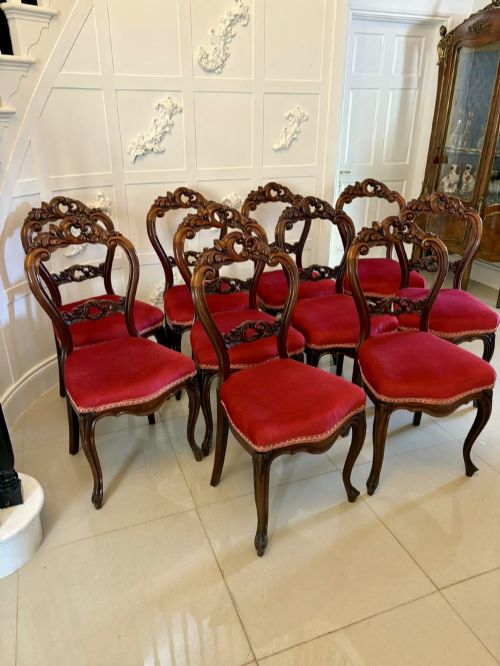
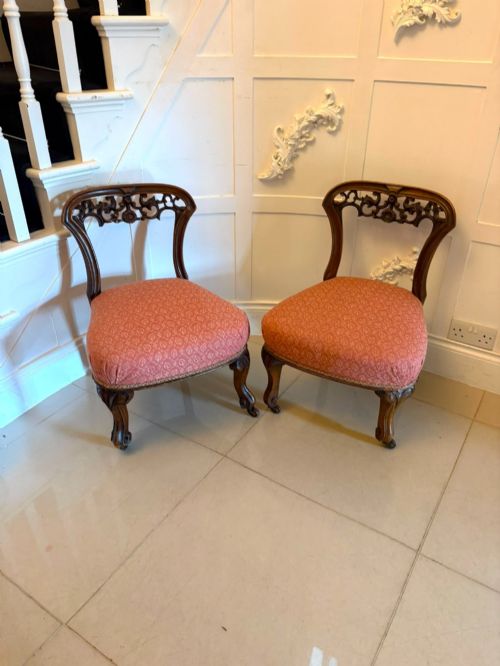
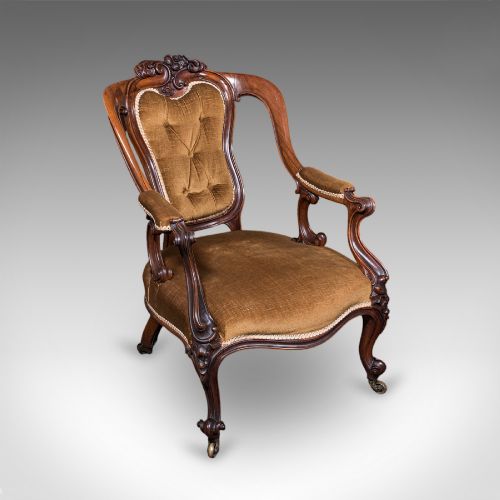
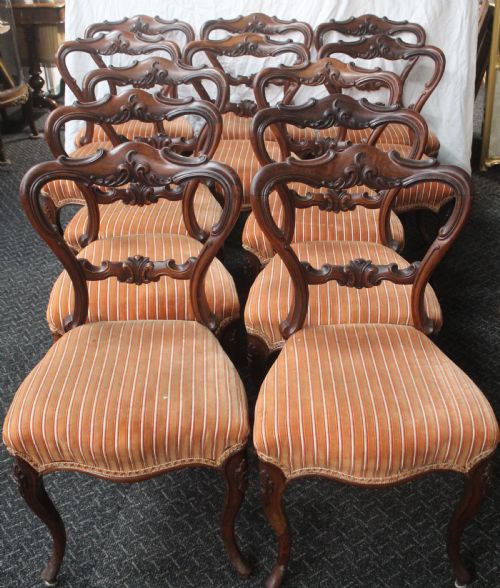
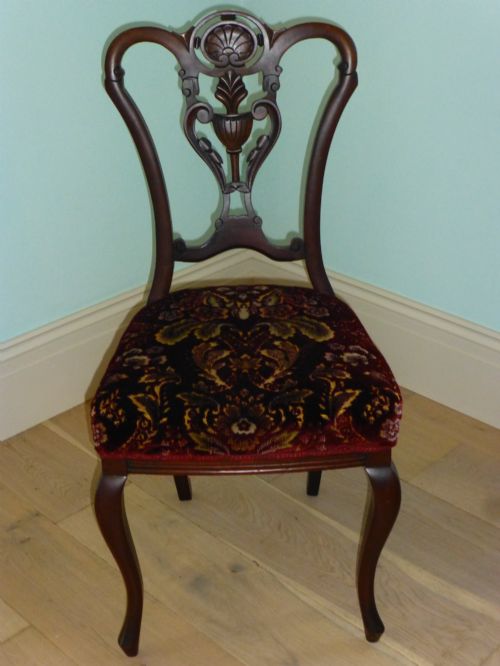
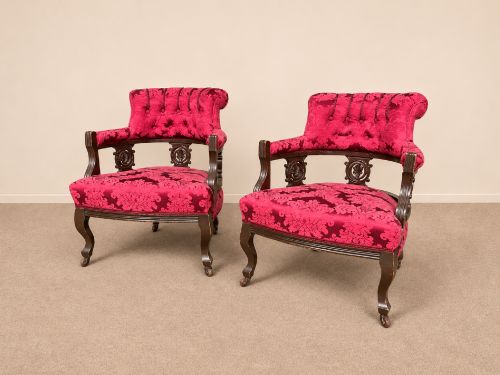
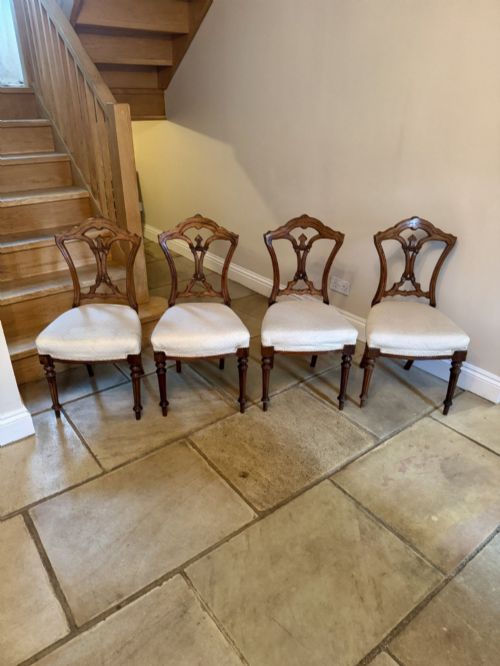
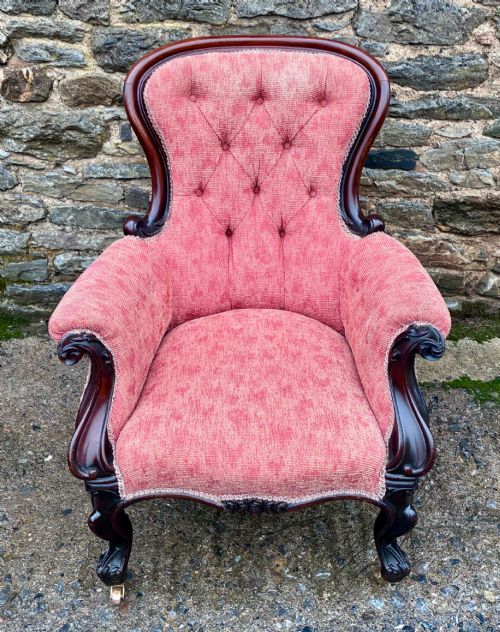
Carved Victorian Salon Chairs
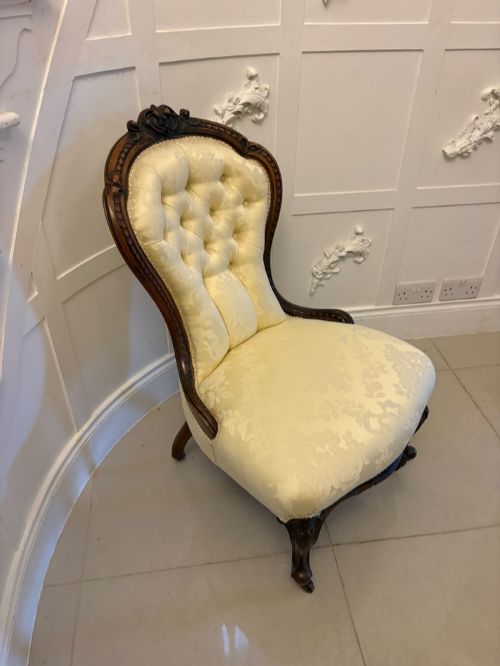
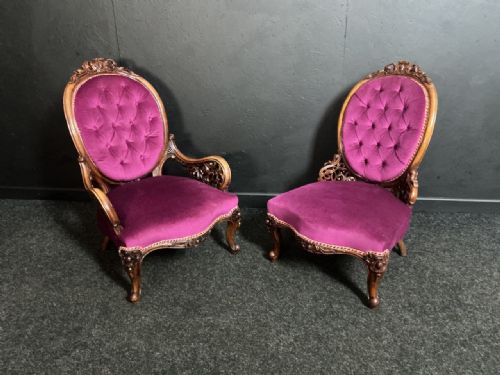
These carved victorian salon chairs combine rich timber frames with period upholstery, offering both formal presence and comfortable parlour seating.
Carved Victorian Salon Chairs
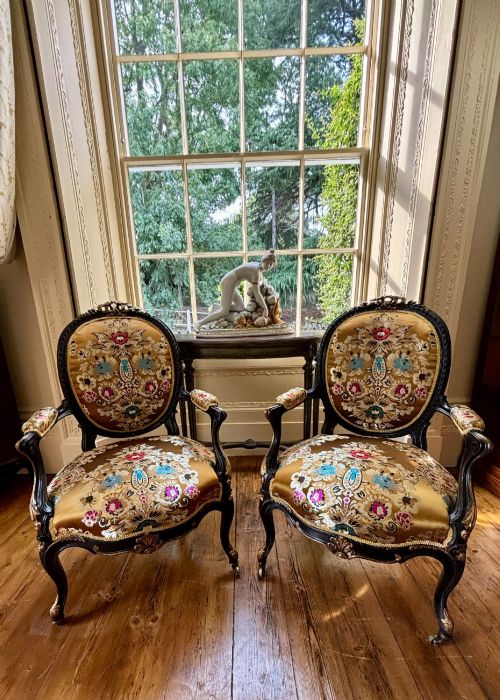
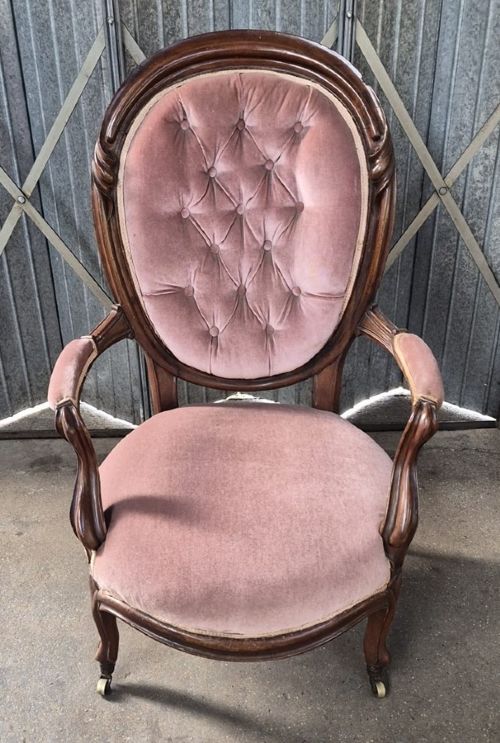
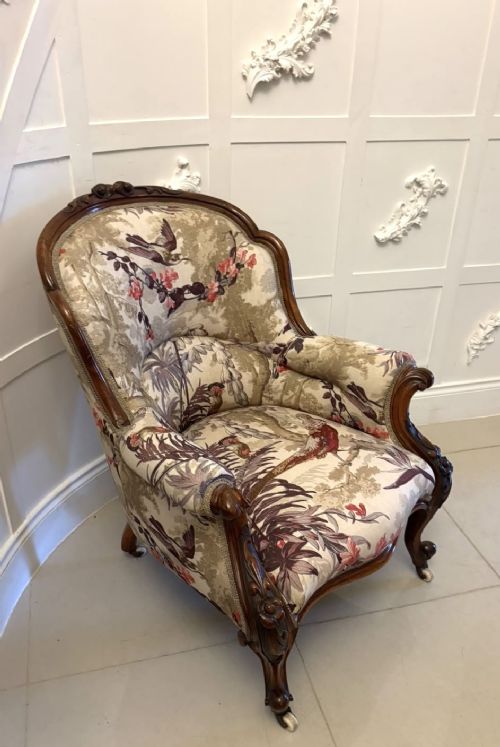
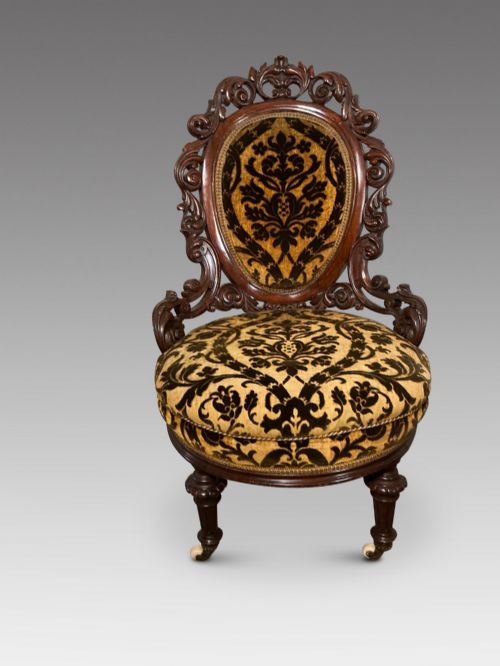
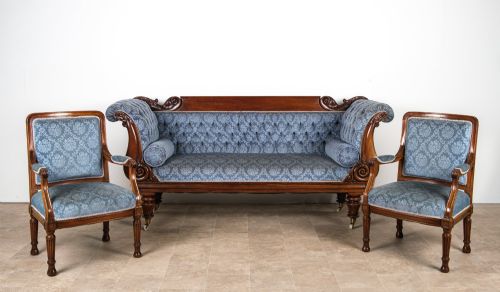
Carved victorian salon chairs encompass a variety of seating forms designed for nineteenth-century reception rooms, drawing rooms, and parlours. The selection on this page ranges from single occasional chairs to pairs of armchairs and larger salon suites.
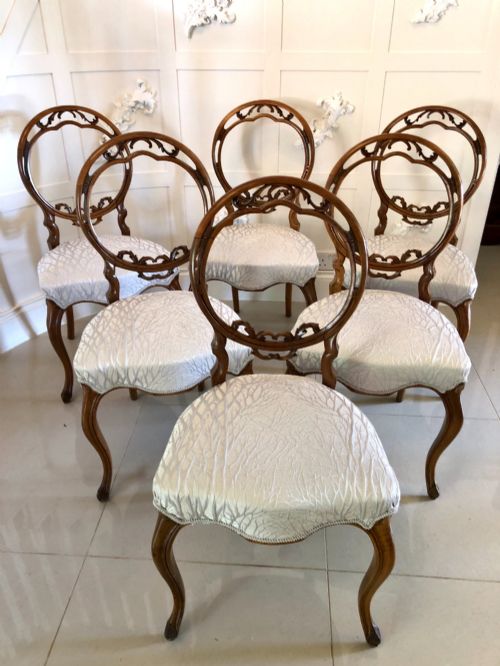
Buyers frequently encounter walnut and mahogany frames shaped into balloon backs, spoon backs, and open armchair configurations. Styles span from early Victorian pieces to later Rococo Revival, Louis XV Revival, and Aesthetic Movement designs dating across the nineteenth century.
The inventory includes dedicated parlour seats, bedroom chairs, and slipper chairs alongside sets of dining chairs sharing similar carved wooden frames. Origins and construction reflect English workshop traditions from the 1850s to the late 1900s.
How they were made
Frames are constructed predominantly from dense hardwoods such as walnut, mahogany, and rosewood, chosen for their ability to hold intricate carved details. Cabinetmakers shaped solid timber components using traditional joinery methods before applying hand-carved ornamentation to crest rails, stiles, and cabriole legs.
Upholstery techniques involve traditional stuffing secured over webbing and springs, finished with textiles including velvet, damask, fabric, and decorative tapestries. Brass fixings and tacks frequently secure the edges of the textile covering to the wooden framework.
Carved Victorian Salon Chairs Retail Price Guide 2026
Typical asking prices for carved victorian salon chairs among the pieces listed under this phrase on Sellingantiques today, from the lower quarter to the upper quarter. They describe what is for sale here now, not the wider market.
Period styles represented across the inventory span early Victorian forms through to Rococo Revival, Louis XV Revival, and Aesthetic Movement designs.
What varies in quality
The standard of a carved victorian salon chair depends largely on the depth and crispness of the timber carving on the frame. Superior examples display sharp, detailed foliage or scrollwork executed by skilled hands, whereas simpler items feature flatter, more mechanical moulding.
Selection of the primary timber also dictates the tier of the piece, with richly figured walnut and rosewood commanding greater visual presence than standard mahogany. Furthermore, the integrity of the original frame construction and the fidelity of subsequent upholstery influence overall execution.
The Carved Victorian Salon Chairs Glossary
- Balloon back
- A chair back shaped in a continuous oval curve resembling an inflated balloon. This form became prevalent in mid-nineteenth-century seating.
- Spoon back
- A padded chair back hollowed out in the centre to mimic the bowl of a spoon. It provides ergonomic support for the spine.
- Rococo Revival
- A nineteenth-century design movement inspired by eighteenth-century French style. It utilises asymmetrical C-scrolls and naturalistic floral carvings.
- Open armchair
- A seat featuring unpadded wooden armrests supported by open framing. These pieces were standard additions to Victorian drawing rooms.
- Occasional chair
- A light, movable seat designed for flexible placement around a parlour or salon. They frequently match larger sets of furniture.
Carved Victorian Salon Chairs: Frequently Asked Questions
Where were carved victorian salon chairs placed?
These chairs were arranged in parlours, drawing rooms, and formal reception spaces to accommodate guests during social calls and musical evenings. Their decorative frames allowed them to sit against walls or function as movable seating.
Smaller occasional and slipper chairs were frequently positioned near fireplaces or dressing areas, while larger armchairs formed part of matched salon suites alongside sofas.
What is the difference between an armchair and a salon chair?
Salon chairs generally encompass lighter, more decorative occasional seating designed specifically for entertaining rooms. They include both armless side chairs and open-armed variants with slender proportions.
Standard armchairs usually offer heavier timber frames, wider seats, and more substantial padding intended for prolonged lounging.
How should I care for nineteenth-century upholstery?
Preserving historic fabric involves gentle vacuuming with a low suction attachment through a protective mesh screen. Avoid exposing antique textiles to direct sunlight to prevent fading of the original colours.
Wooden frames benefit from occasional dusting with a dry cloth and the sparing application of traditional wax polish to nourish the timber.