
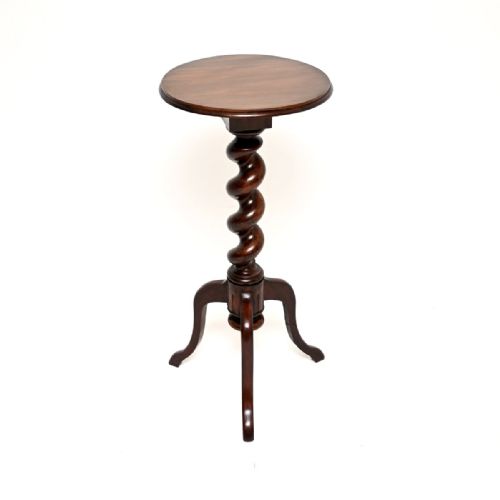
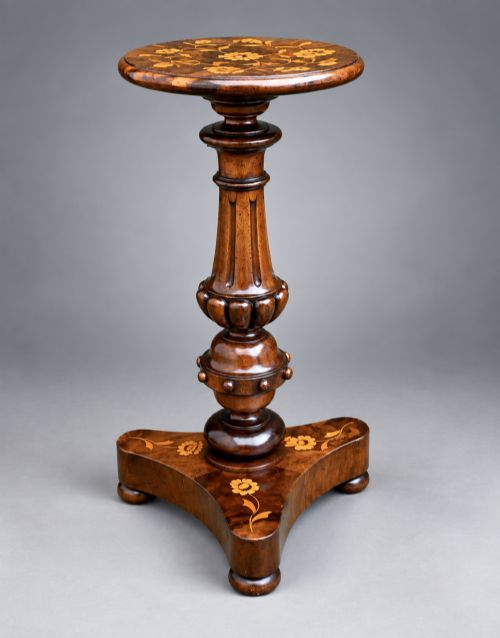
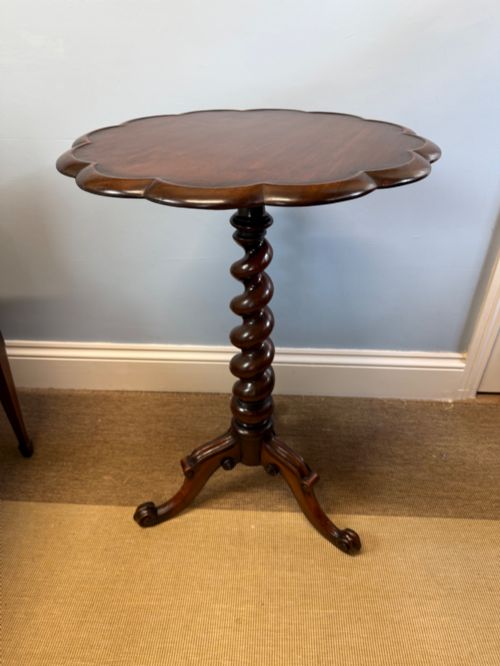
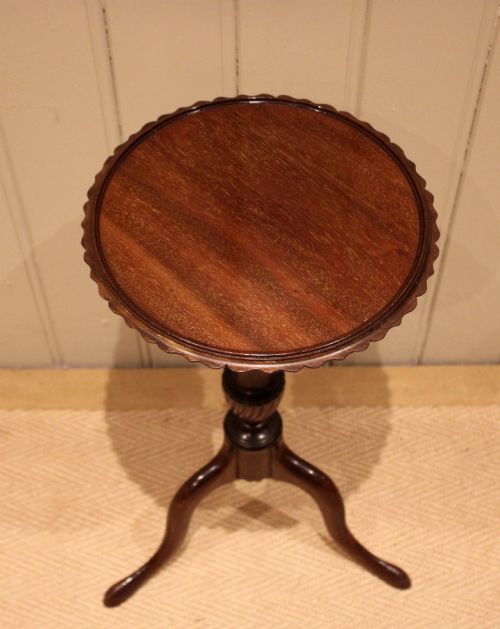
Carved Tripod Wine Stand
These carved tripod wine stand examples span Georgian elegance to Victorian utility, offering compact surfaces designed to hold bottles and glasses near seating.
Carved Tripod Wine Stand
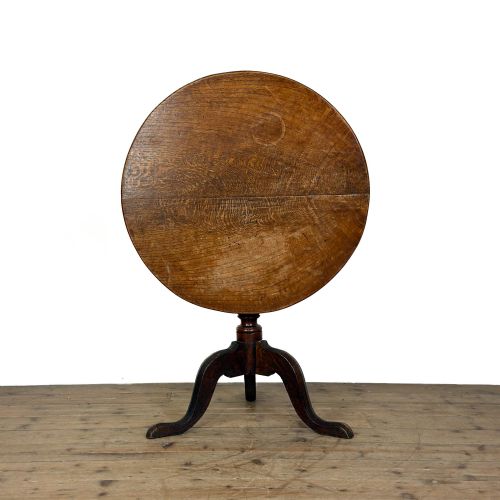
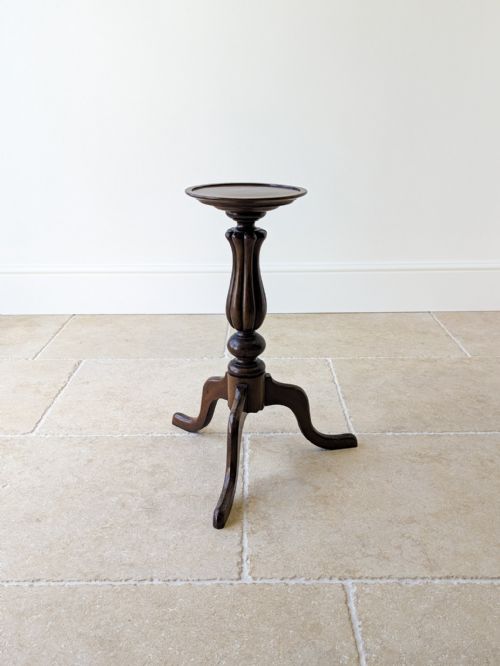
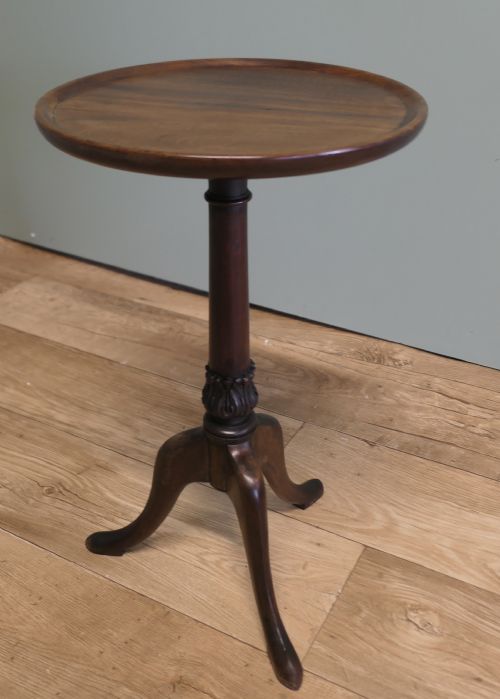
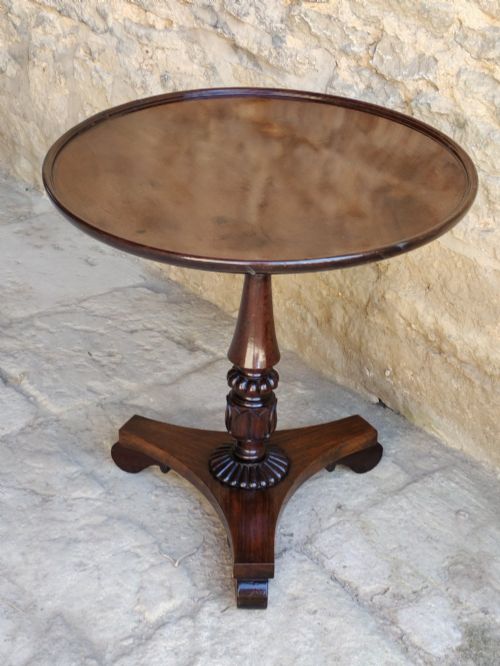
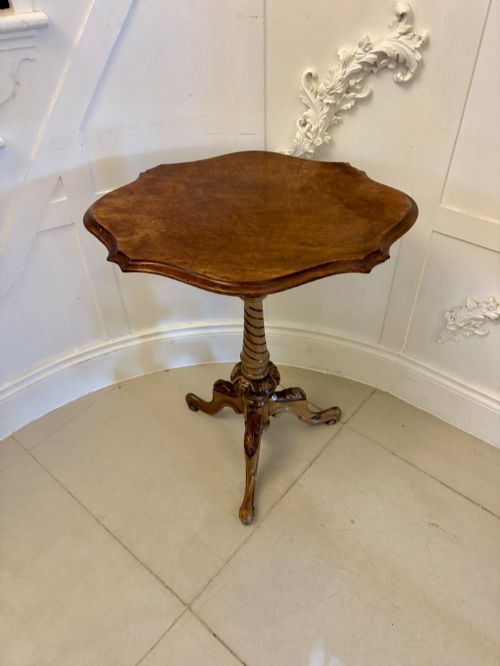
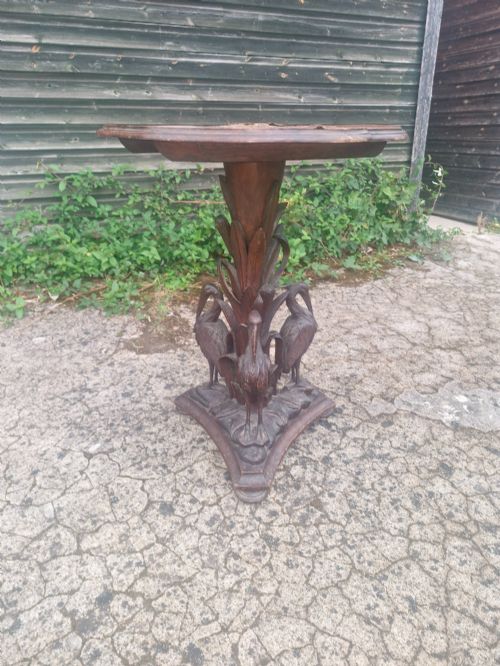
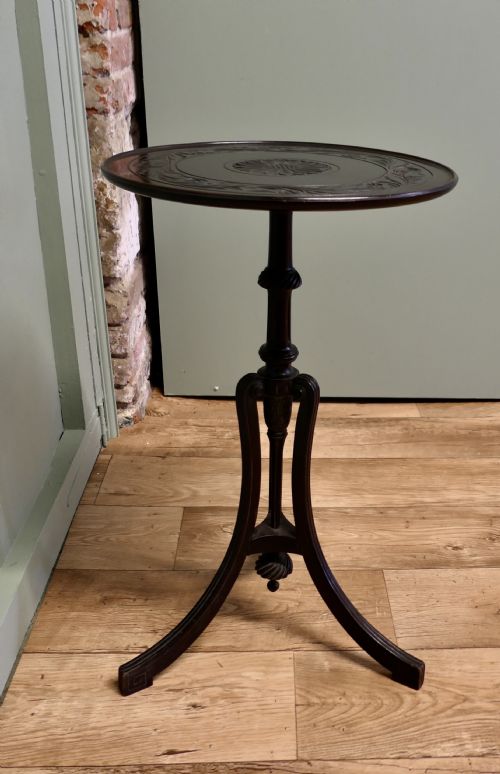
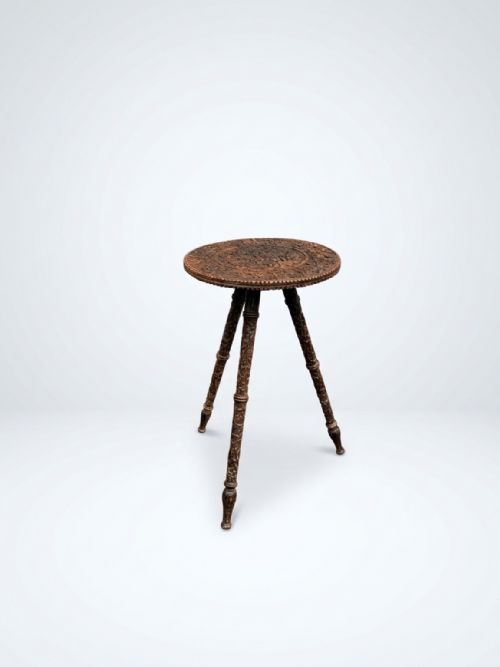
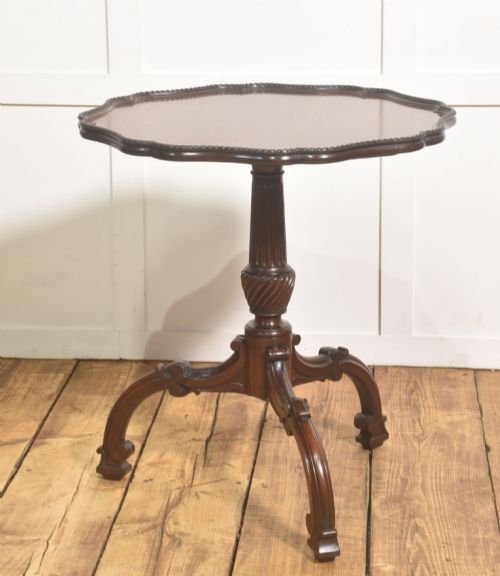
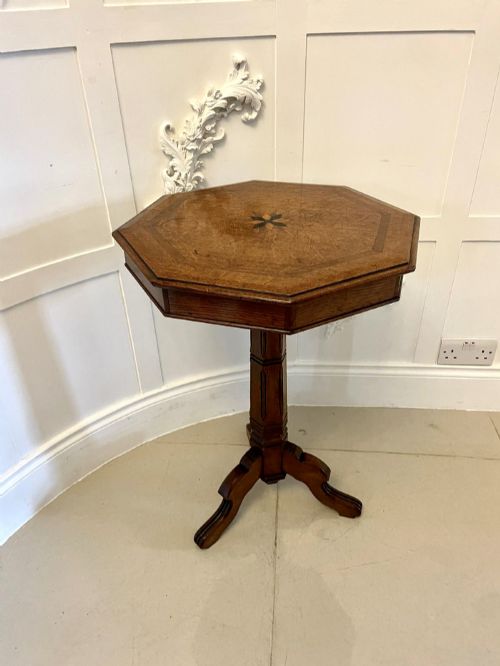
A carved tripod wine stand is a small occasional table supported by a central pillar and three legs, historically positioned beside chairs for serving drinks. The examples found here span the eighteenth, nineteenth, and early twentieth centuries, encompassing Georgian, Regency, and Victorian periods.
Materials and construction methods
Cabinetmakers utilised dense timbers like mahogany, walnut, rosewood, and oak to construct the central pedestals and slender legs of these tables. Many feature turned columns and carved tripod feet, sometimes augmented by brass fittings, marble inserts, or glass elements.
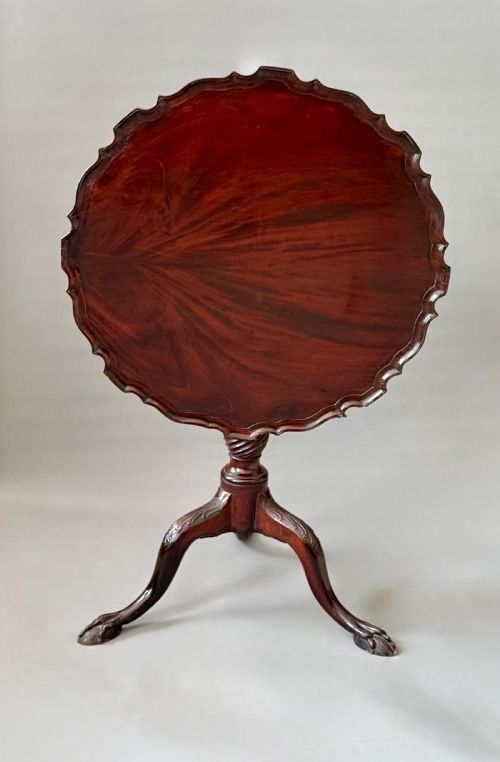
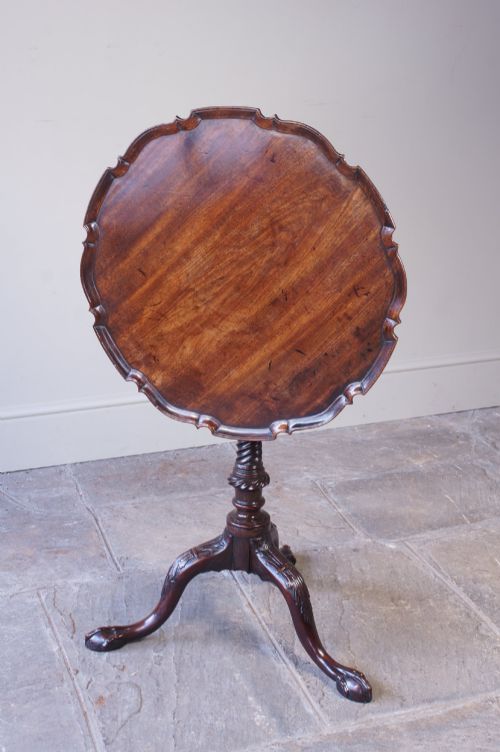
Surface decoration ranges from pie crust rims and shaped edges to burr wood veneers and elaborate carved detailing. Some examples incorporate tilt-top mechanisms allowing the top to pivot upright when not in use.
Listings feature woods including mahogany, walnut, oak, rosewood, and ebony, spanning the eighteenth to twentieth centuries.
Distinctions in craftsmanship and materials
Quality in a carved tripod wine stand rests on the crispness of the timber carving and the stability of the central pillar joint. Superior examples display finely proportioned legs and well-figured wood veneers such as burr walnut or select mahogany.
Finer pieces maintain original mechanisms on tilt-top variants and demonstrate seamless joinery between the top and the pedestal. Lesser examples show heavier proportions and simpler turning without hand-carved detailing.
Gillow
The Carved Tripod Wine Stand Glossary
- Tripod table
- A small circular table supported on three legs radiating from a central pillar. This form became prevalent during the eighteenth century for serving tea or wine.
- Tilt-top table
- A table designed with a hinged mechanism allowing the top to fold vertical for storage against a wall when not in service.
- Pie crust edge
- A raised, carved circular border shaped in undulating curves resembling pastry work on a pie. It is frequently found on eighteenth-century and revival tripod tables.
- Kettle-stand
- A small low table intended specifically to support a water kettle for tea preparation. These often share the tripod pillar construction of wine tables.
- Dishtop
- A table surface with a concave circular depression carved directly from the solid timber of the top. This design prevented cups or glasses from sliding off.
Carved Tripod Wine Stand: Frequently Asked Questions
What is a carved tripod wine stand used for?
These small tables were historically placed beside armchairs or sofas to hold glasses, decanters, or tea equipment within easy reach. Today, they function effectively as lamp tables or decorative accents in sitting rooms.
Their compact footprint allows them to fit into tight spaces where larger occasional tables cannot go.
What does tilt-top mean on these tables?
A tilt-top mechanism uses a wooden catch and birdcage or block pivot beneath the surface, allowing the tabletop to fold flat against the central pillar. This clever design enabled servants to store multiple tables against the wall of a drawing room when guests departed.
When examining a tilt-top table, test the pivot mechanism to ensure the catch secures the top firmly in both horizontal and vertical positions.
Where should I place a wine table at home?
A wine table suits narrow spaces between armchairs, beside a reading chair, or in an empty corner that requires a small surface for a lamp or decorative item. Their modest scale means they easily integrate into both traditional and contemporary interiors.
Keep them away from direct heat sources and strong sunlight to protect the polished wood finishes and delicate veneers.