


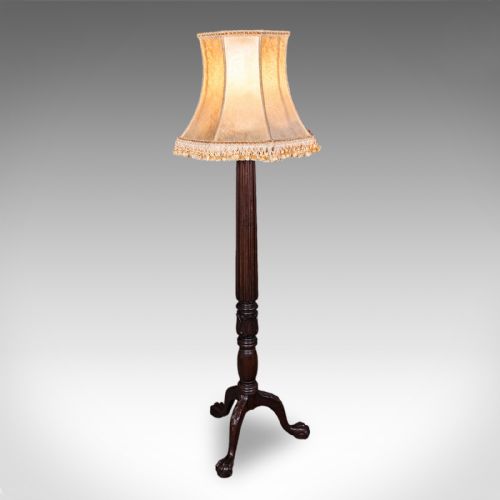
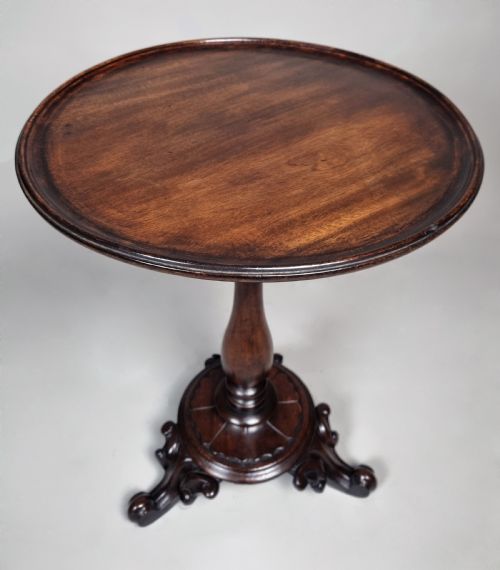
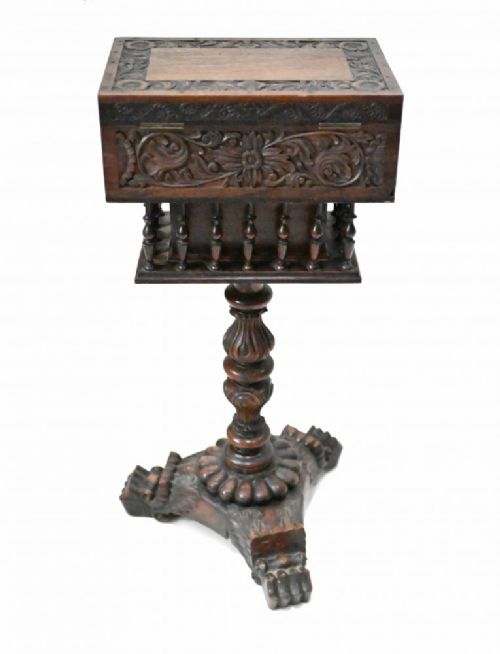
Carved Tripod Base
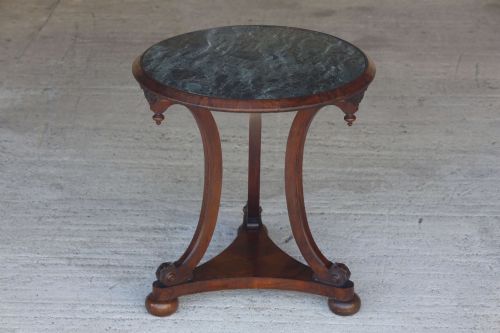
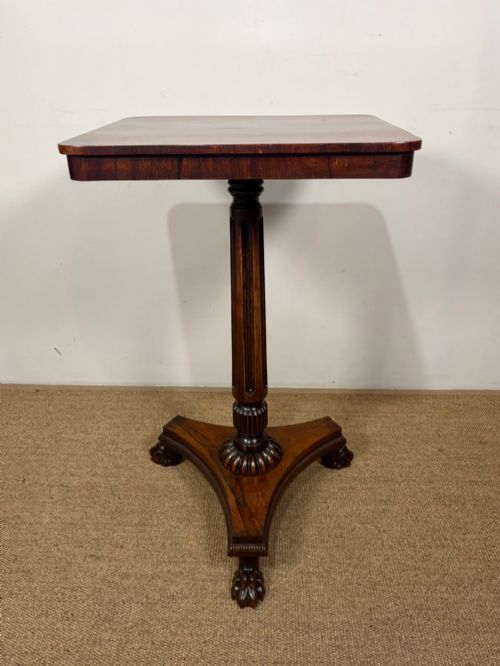
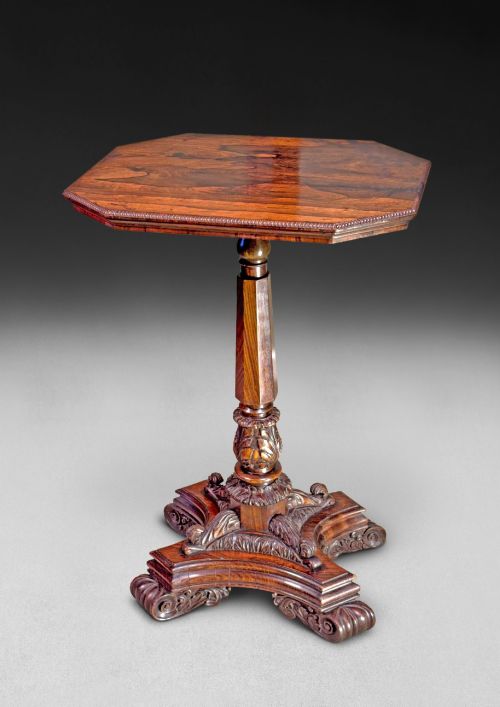
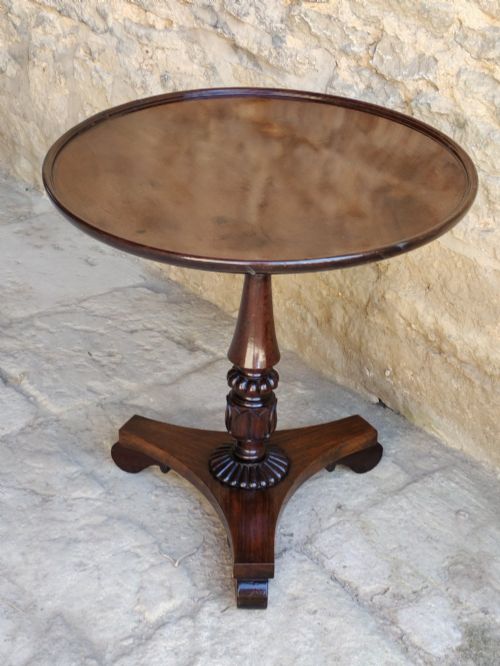
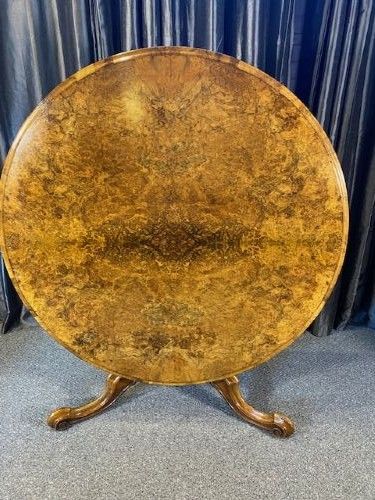
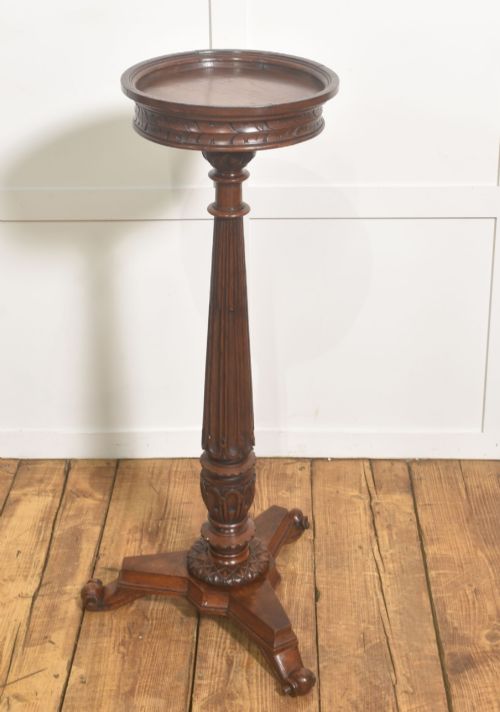
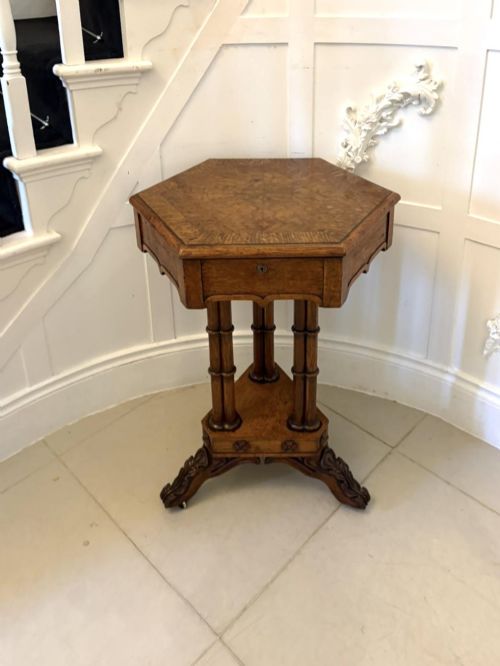
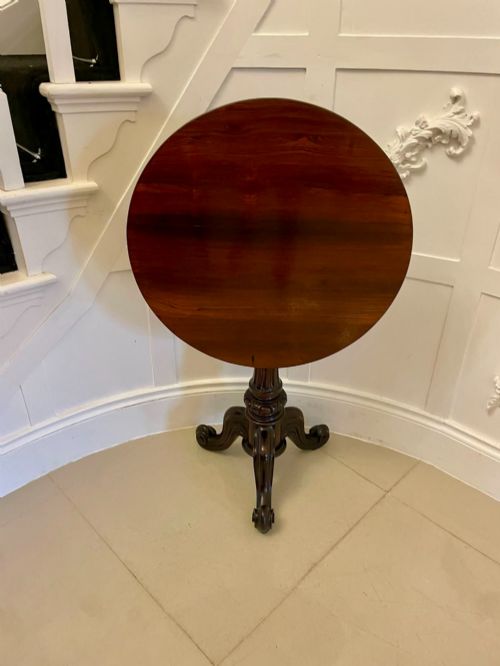
These pieces with a carved tripod base offer stable elegance, supporting tables, stands, and lamps across various historic periods.
Carved Tripod Base
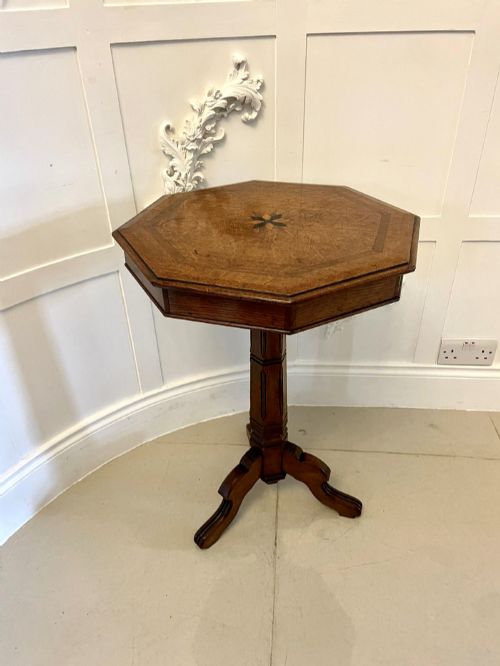
A carved tripod base supports a variety of freestanding items, most commonly occasional tables, lamp tables, centre tables, and floor lamps. When searching for a carved tripod base, buyers encounter items ranging from Georgian and Regency wine tables to Victorian plant stands and standard lamps.
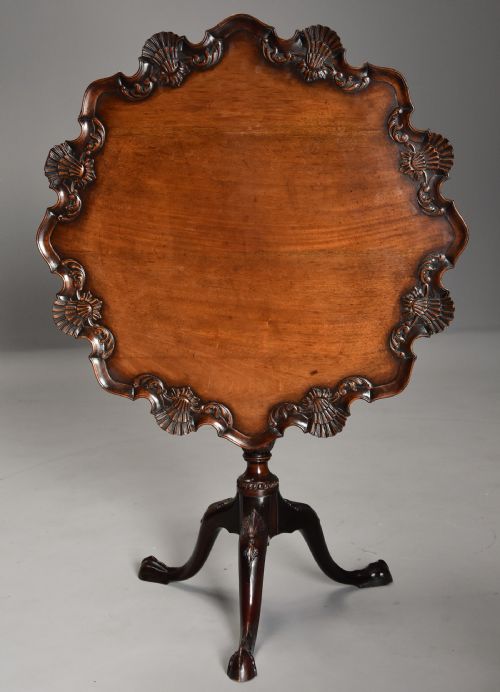
The format relies on three supporting legs radiating from a central pillar, providing stability on uneven historical flooring while allowing makers to carve intricate details into the wood. The listings show these forms spanning the nineteenth and early twentieth centuries, executed in diverse timber selections.
Tables and stands dominate the selection, accompanied by floor lamps, music stands, and pole fire screens. These pieces serve functional roles in reception rooms and hallways, combining sculptural pedestals with practical upper surfaces or lighting fittings.
How they were made
Cabinetmakers constructed these pieces using dense hardwoods such as mahogany, rosewood, walnut, and pollard oak, often turning the central columns on a lathe before carving the legs by hand. Joinery techniques included robust tenoning and dovetailing to ensure the three-legged structure bore weight securely without wobbling.
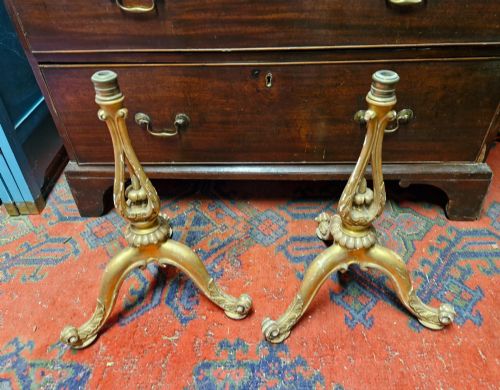
Surface decoration frequently involved rich polish, inlay, or gilding on giltwood examples, highlighting the natural grain of burr walnut or mahogany. Metal components such as brass mounts occasionally reinforced the structure or decorated the feet and collars.
Carved Tripod Base Retail Price Guide 2026
Typical asking prices for carved tripod base among the pieces listed under this phrase on Sellingantiques today, from the lower quarter to the upper quarter. They describe what is for sale here now, not the wider market.
Periods represented span from Georgian and Regency through William IV to Victorian and Edwardian.
What varies in quality
Quality rests upon the crispness of the hand-carving on the knees and feet of the tripod, where skilled artisans defined crisp acanthus leaves or claw-and-ball motifs rather than soft, shallow moulding. The proportion between the slender central column and the splayed legs dictates the visual balance and stability of the object.
The choice of timber significantly alters the character of the piece, with figured mahogany, burr walnut, and dense rosewood representing the upper tier of material selection. Superior examples maintain original structural integrity without excessive reinforcement at the joints where the legs meet the pillar.
The Carved Tripod Base Glossary
- Tripod base
- A three-legged support structure beneath a pillar table, lamp, or stand. It provides self-levelling stability on uneven floors.
- Dishtop
- A tabletop with a raised rim carved directly from the solid timber panel. This edge prevents items from sliding off tilt-top tables.
- Gueridon
- A small French table supported by a central column or figures. These pieces often feature marble tops and giltwood mounts.
- Teapoy
- A small box or table designed to hold tea canisters, frequently raised on a pillar and tripod support. They originate from the colonial and Regency periods.
- Pole screen
- A vertical panel mounted on a slender pole with a tripod base, used to shield a face from fireplace heat. The screen height is typically adjustable along the shaft.
Carved Tripod Base: Frequently Asked Questions
What is a carved tripod base?
A carved tripod base consists of three shaped legs joined to a central vertical pillar, supporting tables, lamps, or stands. This configuration prevents rocking on uneven historic floors.
Cabinetmakers utilised this design across Georgian, Regency, and Victorian eras to combine structural stability with decorative woodcarving.
How were these tables used?
These pieces functioned as occasional tables for serving wine, holding lamps, or displaying decorative objects in principal rooms. Tilt-top versions allowed the surfaces to fold vertically when not in use to save space.
Floor-standing variations supported lighting or reading materials beside seating areas in nineteenth-century interiors.
What woods are commonly found?
Mahogany, rosewood, and walnut appear frequently across the listings from the nineteenth century. Oak and pollard oak also feature in specific regional or revival pieces.
Cabinetmakers selected these hardwoods for their strength and ability to hold fine carved details on the legs and pillars.
How do I date a tripod table?
Dating relies on stylistic clues such as the profile of the central column, the shape of the feet, and the choice of timber. Regency and William IV pieces often display bolder classical motifs, while Victorian examples introduce varied revival styles.
Construction methods, including the type of pivot mechanism on tilt-top tables, also indicate the period of manufacture.
Can I use a floor lamp daily?
Standard lamps and floor lights from the Victorian and later periods accommodate modern electrical setups while retaining their historic wooden or giltwood bases. Placement in low-traffic corners protects the antique timber from knocks.
Regular dusting and careful handling preserve the original polish and carved surfaces during daily use.