

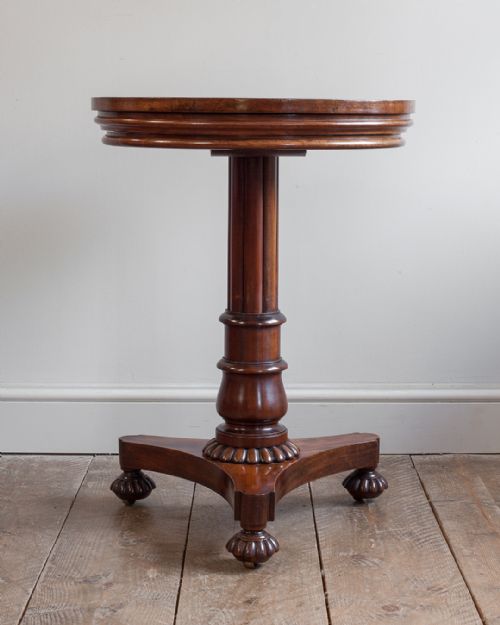
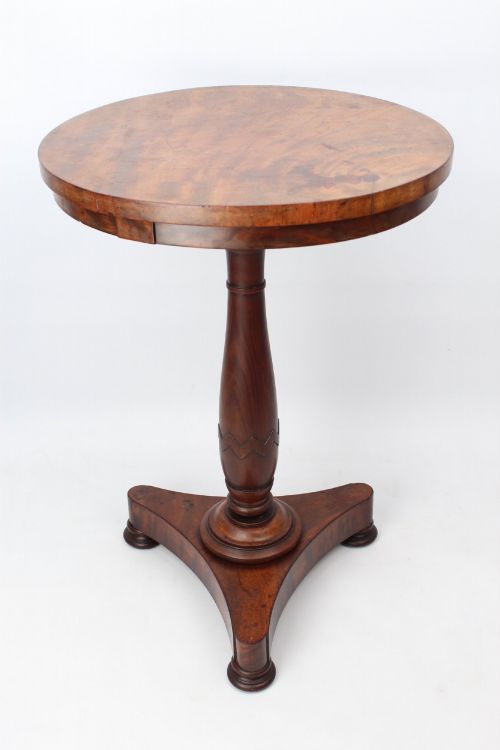
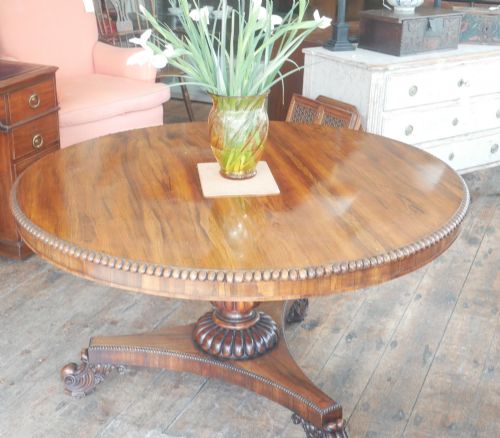
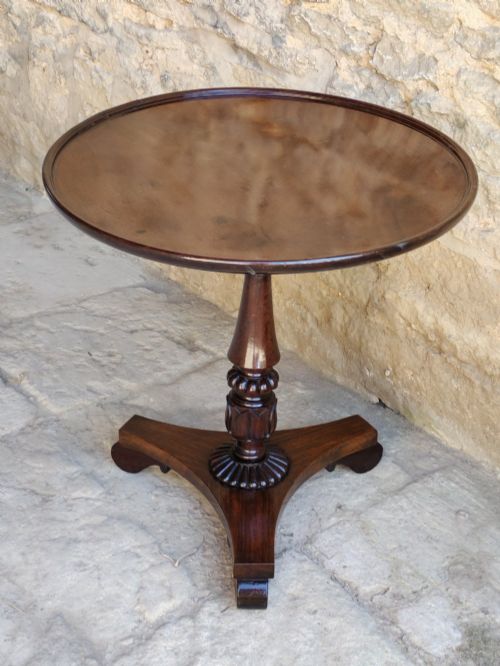


Carved Triform Base Table
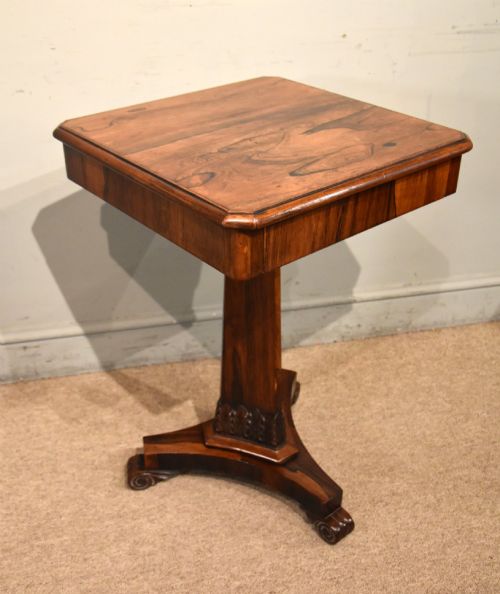
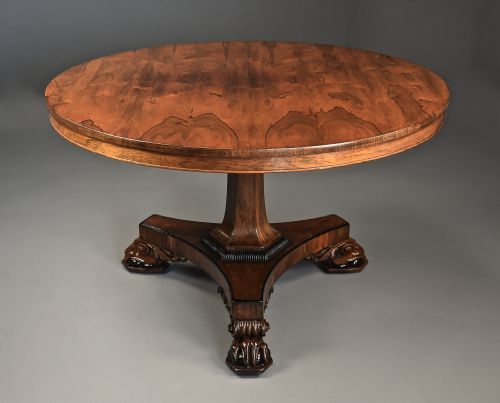
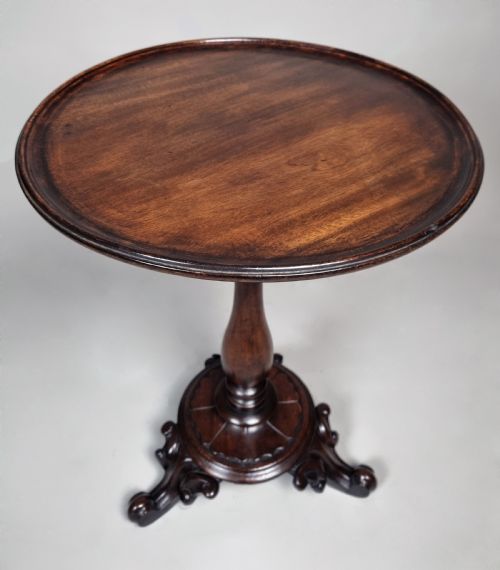
A carved triform base table brings architectural presence to a room, offering a stable three-sided footing that supports circular tops in rosewood and mahogany.
Carved Triform Base Table
A carved triform base table appears primarily across the Regency, George IV, and William IV periods, spanning the nineteenth century alongside French and continental variants. These pieces function as centre tables, breakfast tables, occasional tables, and wine tables, often featuring circular or square tops supported by three-sided pedestals.
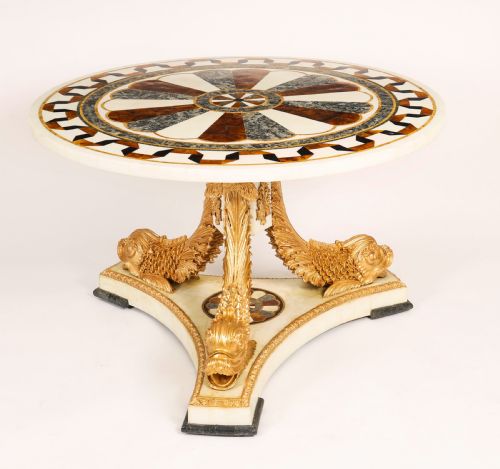
The buyer meets heavy rosewood and mahogany constructions most frequently, supplemented by rarer timbers such as gonçalo alves, macassar ebony, and walnut. Many examples incorporate tilt-top mechanisms, parcel gilding, or marble inserts, serving as principal focal points in principal reception rooms.
Materials and construction
Cabinetmakers utilised solid timbers and applied veneers, selecting flame mahogany, burr walnut, and rosewood for their rich grain patterns. Timber surfaces were hand-polished to a deep sheen, while structural cores frequently employed secondary woods to support heavy stone or wooden tops.
Carving was executed by hand on pedestals, scroll feet, and pillar mounts, sometimes enhanced with parcel gilt details or brass inlays. Tilt-top tables required precise iron box catches and knuckle joints to secure the heavy circular leaves when upright.
Listings feature 19th-century pieces predominantly, spanning Regency, William IV, and Victorian periods in mahogany, rosewood, and marble.
Judging the execution
Quality rests in the crispness of the hand-carved ornament on the triform pedestal and the choice of figured veneers across the top. Stronger pieces display thick, well-matched timber grains and stable, heavy pillar supports that bear the weight of stone or wood without shifting.
The refinement of the base joinery dictates durability, separating standard production from exceptional cabinet work. Attention to secondary details, such as original brass castors and the tightness of tilt mechanisms, marks the upper tier of surviving examples.
Gillows·Strahan of Dublin·Thomas King
The Carved Triform Base Table Glossary
- Triform base
- A three-way support structure resting on three feet, commonly seen on nineteenth-century centre and breakfast tables. This configuration provides floor stability and allows decorative carving on the central pillar.
- Tilt-top
- A hinged table top that folds into a vertical position when not in use. This mechanism saved floor space in historical interiors.
- Gueridon
- A small French table supported by a central column or figures, frequently topped with marble. These pieces function as occasional or plant tables.
- Parcel gilt
- Woodwork partially decorated with gold leaf applied over a prepared ground. This technique highlights carved details such as leaves or moulding.
- Gonçalo alves
- A dense exotic hardwood with striking dark brown and pale yellow markings, utilised for cabinet making during the Regency era. It yields a distinctive decorative surface.
Carved Triform Base Table: Frequently Asked Questions
What is a triform base table used for?
These tables serve as centre pieces, breakfast tables, and occasional surfaces in principal rooms, providing a stable platform for lamps, books, or dining.
Their three-sided footprint allows easy movement around the pedestal, making them practical for central placement in a space.
How do I date a nineteenth century table?
Dating relies on timber selection, such as rosewood and flame mahogany, alongside stylistic markers from the Regency, George IV, and William IV eras.
Construction methods, including the presence of hand-cut joints and original castors, offer further clues to the decade of manufacture.
Are marble top tables original?
Many nineteenth-century French gueridons and English tables were manufactured specifically to carry heavy marble slabs, particularly in neoclassical and Victorian designs.
Inspect the seating rebate beneath the top to confirm whether the stone rests securely within the original wooden framework.
How do I care for rosewood and mahogany?
Protect antique timber surfaces from direct sunlight and excessive heat fluctuations to prevent veneer splitting and fading.
Apply a traditional beeswax polish sparingly to maintain the natural moisture and sheen of the polished wood.