

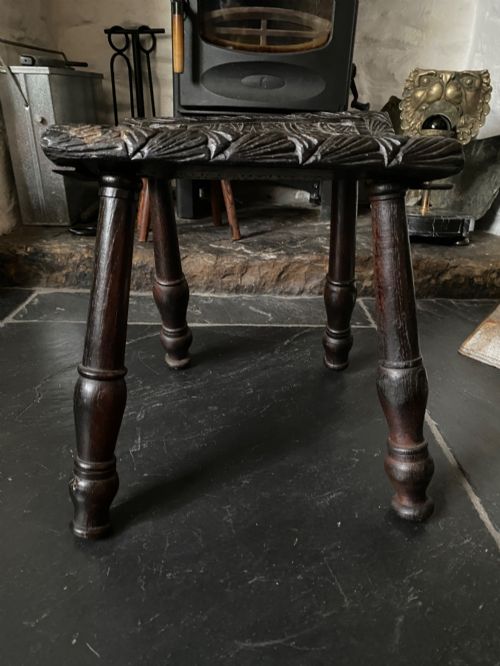
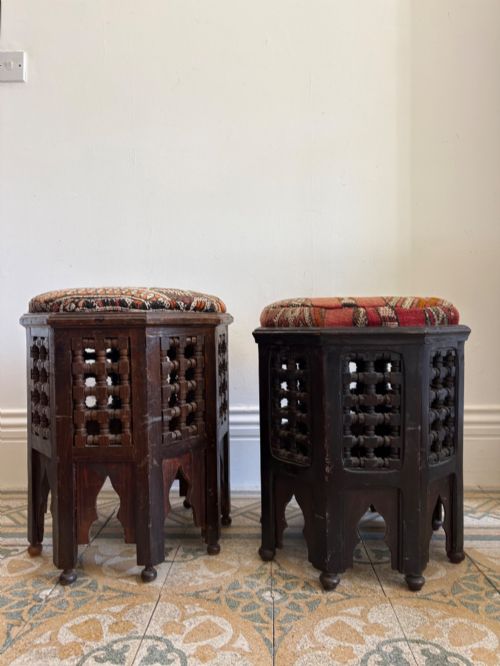


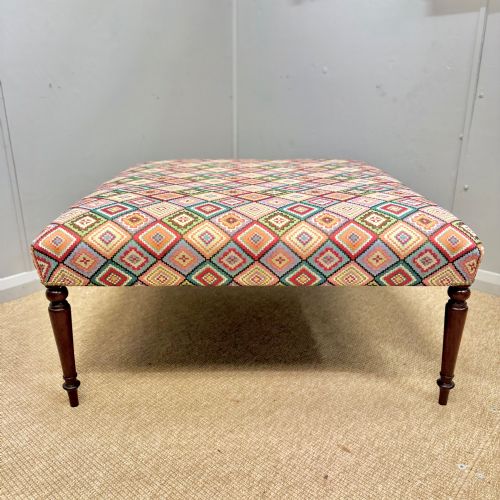
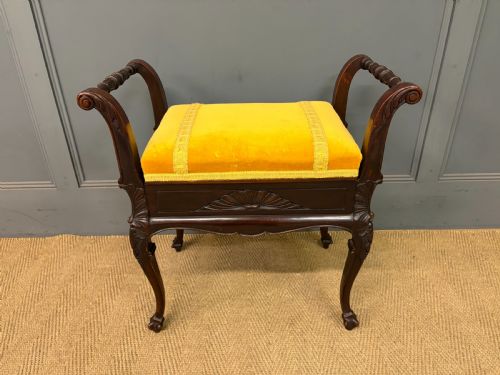


Carved Top Stool
A carved top stool brings solid timber work and tactile textile or stone surfaces directly into a room as a versatile seat or stand.
Carved Top Stool
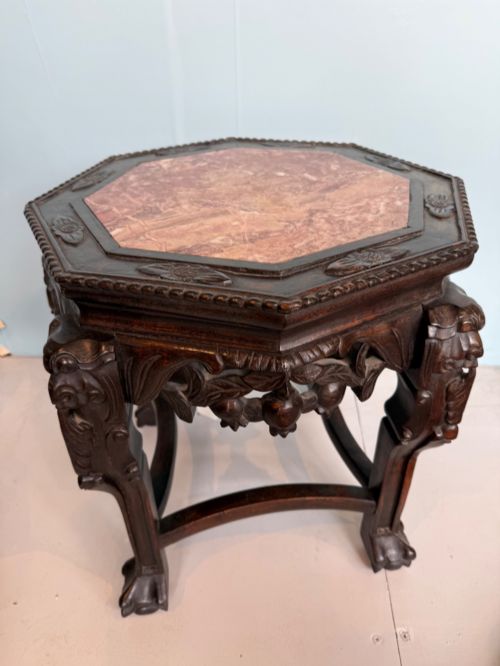
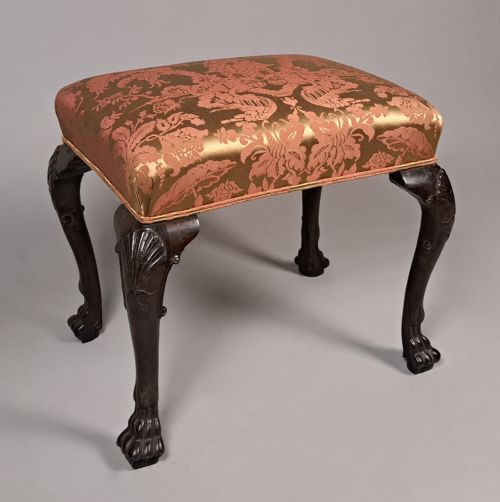
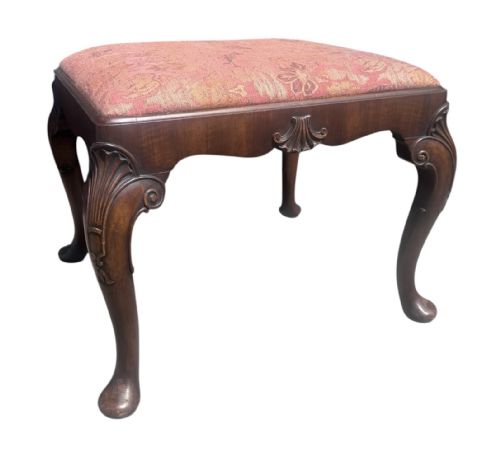
The search phrase carved top stool covers a diverse selection of low seating, footstools, and small display stands created across the eighteenth, nineteenth, and early twentieth centuries. These pieces encompass English Georgian and Victorian designs, Scottish baronial oak work, and intricate hardwood pieces from Chinese Qing dynasty workshops.
Most items you encounter here combine a heavily carved wooden frame with distinct upper surfaces, ranging from inset marble tops and rootwood panels to traditional needlepoint, tapestry, kilim, and cane seating.
Makers utilised various forms including piano stools, ottoman footstools, plant stands, and occasional side tables, ensuring that the carved wooden top remains the visual centrepiece of each object.
Materials and construction methods
Cabinetmakers built these pieces using dense timbers such as mahogany, walnut, oak, beech, yew wood, and exotic Chinese hardwoods like hongmu and huali, frequently pairing them with brass hardware or woven plant fibres.
Decoration relied on deep hand-carving across the wooden frames, supplemented by inset marble slabs, quartz tops, and precise joinery to support upholstery like needlepoint and kilim textile covers.
Carved Top Stool Retail Price Guide 2026
Typical asking prices for carved top stool among the pieces listed under this phrase on Sellingantiques today, from the lower quarter to the upper quarter. They describe what is for sale here now, not the wider market.
Materials documented across the pieces include marble, hard stone, brass, cane, tapestry, needlepoint, and several varieties of hardwood and oak.
Assessing craftsmanship and condition
Quality rests on the crispness and depth of the hand-carving on the wooden frame, along with the selection of dense, well-figured timber rather than secondary pine or plain secondary woods.
The integrity of the upper surface matters greatly, whether that involves intact stone inserts without hairline fractures or tightly tensioned cane work, upholstery, and needlepoint.
The Carved Top Stool Glossary
- Needlepoint
- A form of counted thread embroidery traditionally worked on canvas, frequently used to cover Victorian and Edwardian footstools. This durable textile provides a colourful, textured surface that softens wooden framing.
- Hongmu
- A dense, dark Chinese hardwood translating to red wood, utilised extensively for Qing dynasty stands and low furniture. Its heavy weight allows for intricate, sharp carving without splintering.
- Kilim
- A flatwoven carpet or rug originating from the Middle East and parts of Central Asia, often repurposed as durable seat covers on nineteenth-century stools. The geometric weave adds vibrant patterns to wood-framed furniture.
- Caning
- A method of weaving rattan or split reed into open mesh panels for seats and panels. This technique introduces lightness and flexibility to rigid wooden furniture frames.
- Rootwood
- Natural tree root material shaped and polished to create organic, irregular furniture forms. Chinese artisans selected these gnarled sections to build highly individual stands and low tables.
Carved Top Stool: Frequently Asked Questions
What is a carved top stool used for?
These items serve multiple domestic functions beyond basic seating, frequently acting as footstools, piano benches, dressing table seats, or small display stands for lamps and plants.
Their compact dimensions allow them to move easily between rooms as occasional furniture or decorative pedestals.
How do I date a nineteenth-century stool?
Dating relies on examining the timber species, joinery techniques, and the style of the hand-carving applied to the frame. Victorian and Edwardian pieces often show machine assistance alongside hand work, whereas earlier eighteenth-century examples display entirely hand-tools joinery.
Upholstery webbing and stuffing materials also offer clues, though many pieces have been re-covered over subsequent decades.
Are marble top stands durable?
Marble and quartz inserts provide sturdy, heat-resistant surfaces originally intended for holding plants, lamps, or decorative objects without damaging the wood beneath.
While stone is hard-wearing, owners should protect it from acidic spills and heavy impacts to prevent chipping or staining.
How do I clean antique wooden stools?
Maintenance requires dusting with a soft, dry cloth and occasionally feeding dry hardwood or oak with traditional beeswax to preserve the finish. Avoid using modern liquid polishes or abrasive cleaners that can strip historic wax layers and damage delicate carvings.