
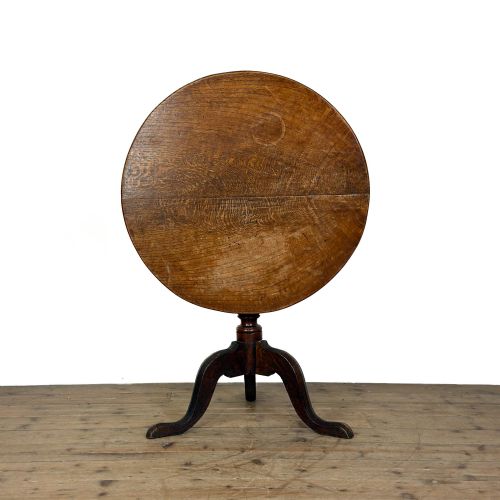
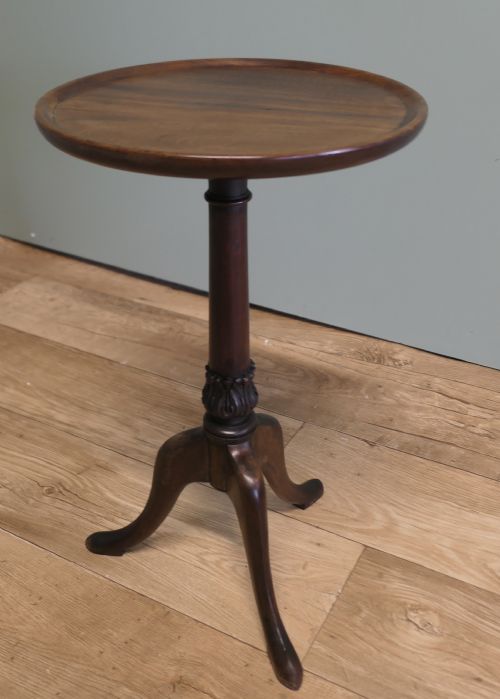
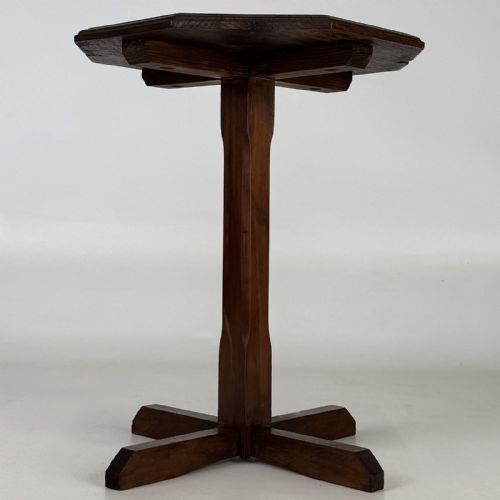
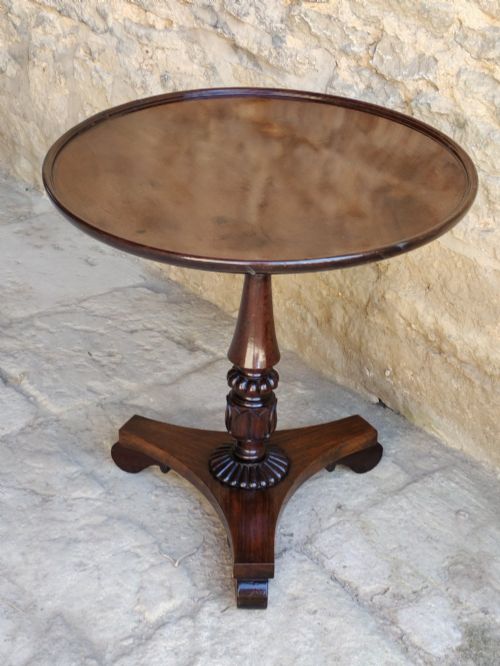
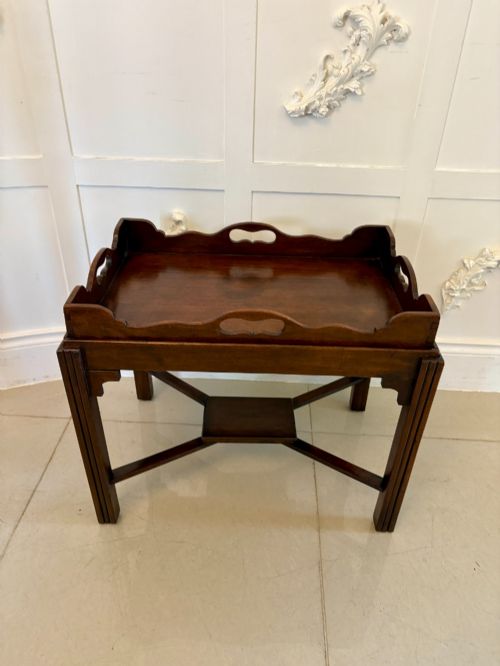
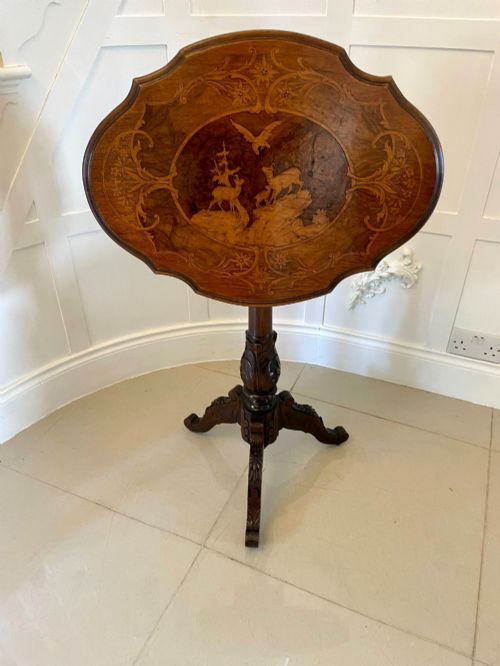
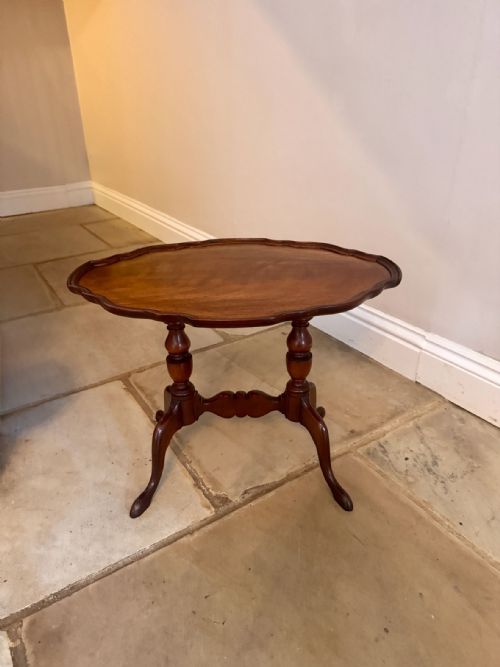
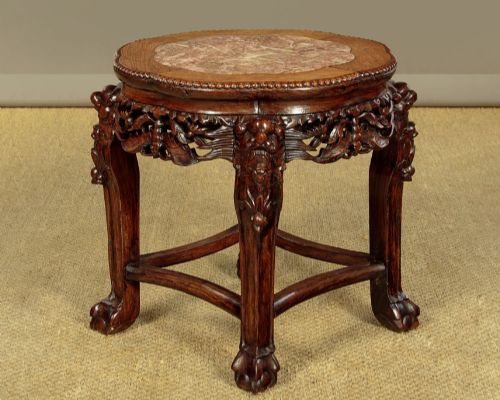
Carved Top Occasional Table
A carved top occasional table brings compact function and deep timber grain to a corner, moving easily from a lamp stand to a wine surface.
Carved Top Occasional Table
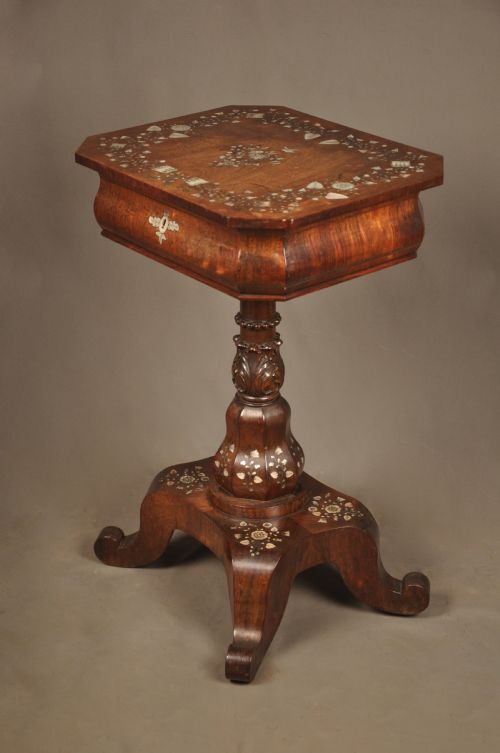
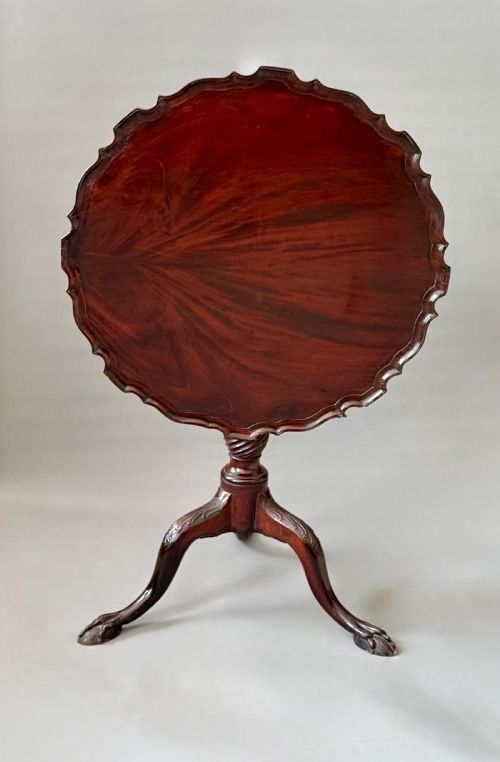
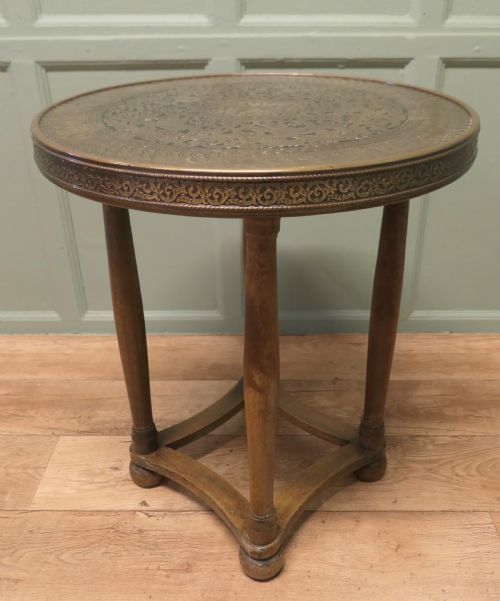
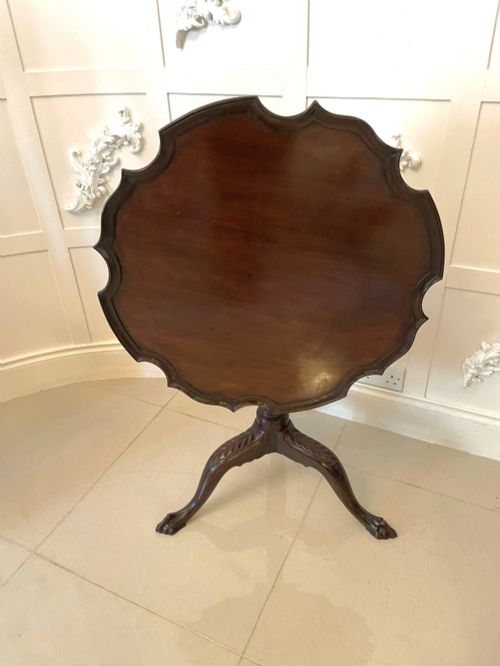
A carved top occasional table represents a portable surface built for flexible placement around a room, most frequently encountered in nineteenth century Victorian and Edwardian iterations. These small tables take several structural forms, from simple tripod wine tables and tilt tops to larger centre and lamp tables.
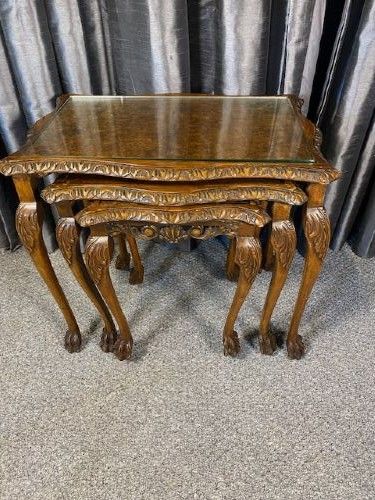
Makers produced these pieces in forms such as side tables, games tables, and tea tables alongside standard occasional tables. Walnut, mahogany, and rosewood dominate the evidence, frequently paired with carved tripod bases or pedestal supports.
How They Were Made
Cabinet makers utilised dense hardwoods like mahogany, walnut, and rosewood, often selecting burr veneers to create figured table surfaces. These timbers provided the structural strength needed for slender tripod legs and tilt top mechanisms.
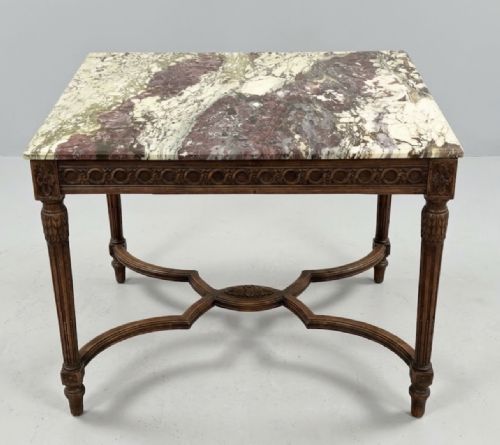
Carving was executed directly into the solid timber or applied through parcel gilt, mother of pearl inlay, and marble inserts. Mechanisms such as birdcage actions allowed table tops to rotate and tilt when not in use.
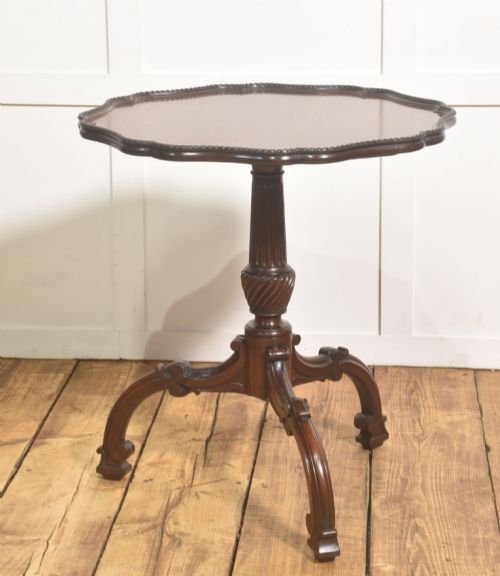
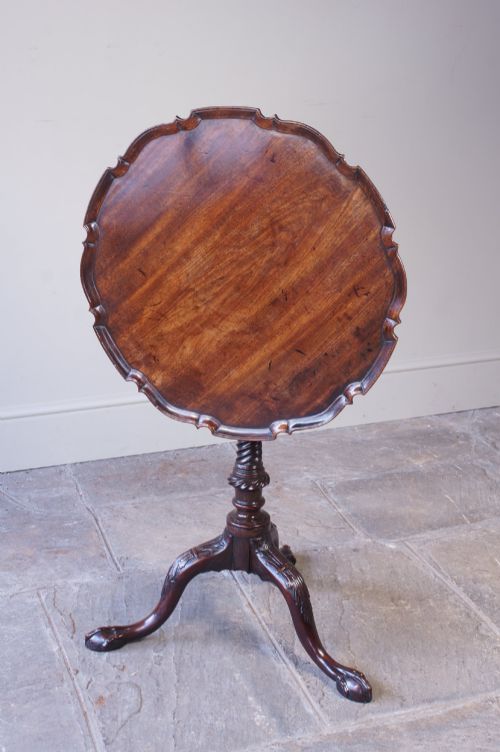
The archive includes tripod wine tables, tilt top supper tables, and gueridon forms.
What Varies in Quality
Quality rests on the crispness of the timber carving and the selection of figured veneers such as burr walnut or rosewood. Superior examples display thoughtful proportions where the carved legs balance the weight of the solid top.
The engineering of movement separates standard tables from finer work, visible in smooth birdcage mechanisms and tight joints on tilt top tripod bases. Original marble inserts and retained parcel gilt details further elevate an individual piece.
Gillow
The Carved Top Occasional Table Glossary
- Tilt top table
- A table featuring a hinged mechanism that allows the surface to fold vertical when not in use. This clever design saved floor space in smaller rooms.
- Tripod table
- A small freestanding table supported by three legs radiating from a central pillar. They offer stability on uneven floors.
- Birdcage mechanism
- A rotating wooden cage beneath a table top that allows it to turn and tilt. It represents a marker of skilled joinery.
- Pie crust table
- A table top finished with a raised, carved edge resembling pastry crimping. It was popular on eighteenth century supper tables.
- Gueridon
- A small decorative French table supported by a figure or central column. They frequently feature inset marble tops.
Carved Top Occasional Table: Frequently Asked Questions
What is a carved top occasional table used for?
These small tables served multiple domestic duties, functioning as portable stands for lamps, decanters, or tea service. Their compact footprints made them easy to reposition beside chairs or in empty corners.
Tilt top versions allowed owners to fold the surface flat against a wall when floor space was required. They remained versatile furniture pieces across the eighteenth, nineteenth, and early twentieth centuries.
How do I tell an 18th century table from a Victorian one?
Eighteenth century examples, particularly those in the Georgian or Chippendale taste, often exhibit restrained, deeply carved mahogany tripod bases and pie crust edges. Burr walnut and heavier ornamentation became widespread during the Victorian era.
Timber choice and carving depth offer strong clues to a piece's age. Later Edwardian and revival pieces frequently copy these earlier Georgian motifs with slight variations in construction.
What does a tilt top mechanism do?
A tilt top mechanism uses a hinged block or birdcage pivot beneath the table surface to let the top rotate and fold flat. This allowed the furniture to occupy minimal space against a wall.
Master cabinet makers engineered these joints to lock securely in both horizontal and vertical positions. The presence of a working birdcage action often indicates a higher quality build.
Where should I place an occasional table at home?
An occasional table suits small spaces where a full sized desk or dining surface will not fit. Use one beside a reading chair to hold a lamp or book.
Marble topped or inlaid versions make striking display surfaces in hallways or drawing rooms. Their portability means you can shift them between rooms as needed.