


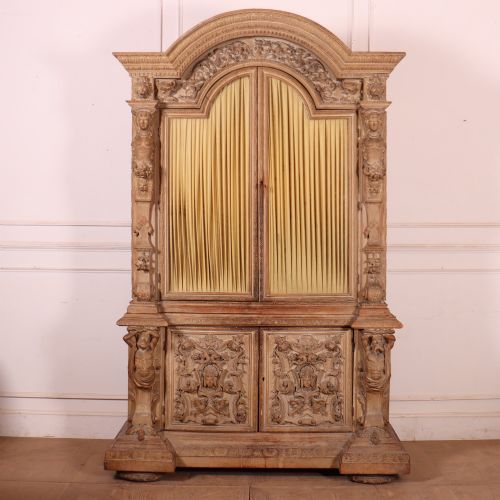

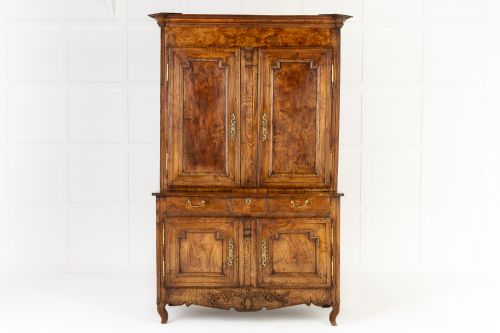


Carved Timber Armoire
A carved timber armoire offers substantial storage through panelled doors and deep timber construction, bringing historic presence to a bedroom or hall.
Carved Timber Armoire
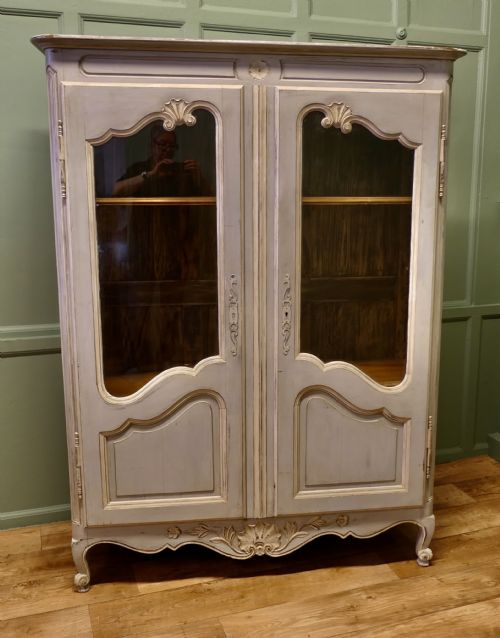
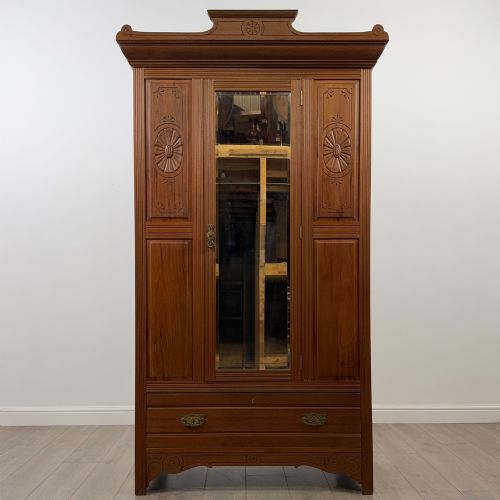
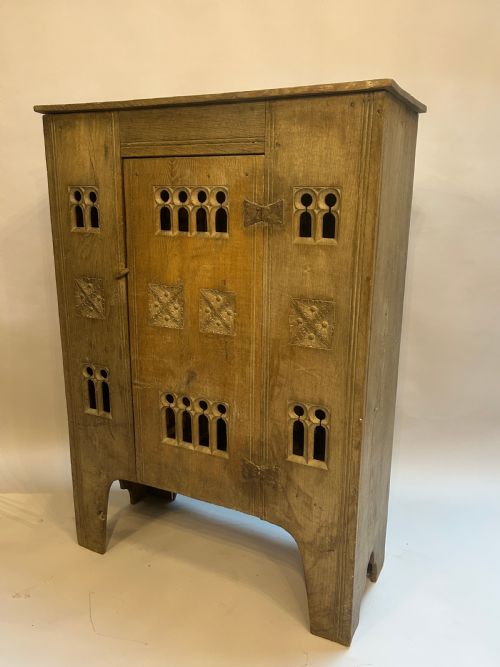
A carved timber armoire is a large freestanding wardrobe or storage cupboard designed to hold garments and household goods, spanning several centuries of cabinet-making. These pieces range from substantial seventeenth-century oak cupboards to eighteenth-century French bleached oak armoires and nineteenth-century walnut and mahogany wardrobes.
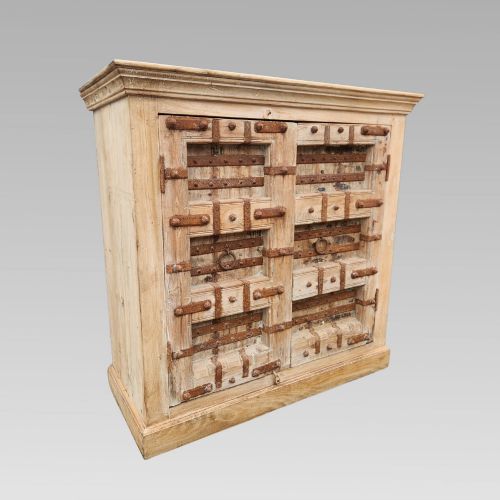
Buyers browsing this selection will frequently encounter European and Asian examples, including French provincial cabinets, Edwardian multi-door bedroom wardrobes, and Indian teak storage cupboards. The form extends from single-door units and vitrines to massive three-piece bedroom suites and compound cabinets.
How They Were Made
Cabinet-makers constructed these pieces using dense hardwoods such as oak, walnut, mahogany, teak, and ash, often supported by secondary timbers and panelled joinery. Surfaces display extensive hand carving, relief work, and turned elements, with French Rococo, Gothic, and Renaissance Revival styles appearing across different regions.
Hardware consists of brass hinges and locks, while glass panels feature in vitrine doors and display cabinets. Finishes range from natural waxed grain and bleached oak to painted and distressed surfaces.
Materials represented include traditional European hardwoods like walnut and mahogany alongside exotic species such as teak, zitan, and amboyna.
What Varies in Quality
Quality rests in the selection of timber figures - such as figured birch, burr amboyna, and satinwood - and the depth and crispness of the hand carving on the doors and cornice. Superior examples display balanced proportions, integrated architectural mouldings, and well-executed joinery that accommodates wood movement over centuries.
The integrity of the original hardware, hinges, and internal fittings distinguishes better workshops from simpler vernacular production. Finer cabinets retain their original doors, backboards, and surface patination without excessive structural alterations.
The Carved Timber Armoire Glossary
- Armoire
- A tall cupboard or wardrobe with doors enclosing shelving or hanging space. Originally French, the term now applies broadly to large European storage cabinets.
- Vitrine
- A glass-fronted cabinet or display case designed for showing books, porcelain, or curiosities. These often feature glazed doors set into carved wooden frames.
- Buffet Deux Corps
- A large two-stage storage piece consisting of a lower cabinet surmounted by a matching upper section. This form is common in eighteenth-century French regional furniture.
- Burr Amboyna
- A highly decorative wood veneer showing intricate swirling grain patterns created by growths on the narra tree. It appears on elite nineteenth-century cabinet work.
- Cornice
- The moulded projection that crowns the top of a cabinet or wardrobe. It provides a visual cap to the architectural composition of the piece.
Carved Timber Armoire: Frequently Asked Questions
How do I fit an armoire in a modern bedroom?
Measure your ceiling height and floor space carefully before purchasing, remembering that many antique armoires were designed to be dismantled for transport and reassembled on site.
Ensure there is sufficient clearance for the heavy panelled doors to swing open fully within your room layout.
Can I use an armoire for modern clothes hanging?
Many older cupboards and armoires were built with fixed shelving rather than hanging rails, as historical garments were often folded or stored in chests.
A restorer can install a discreet hanging rail inside, though you should check the internal depth to ensure modern coat hangers clear the closed doors.
How do I identify eighteenth-century French pieces?
Look for pegged mortise and tenon joinery, hand-carved floral or scroll motifs typical of regional French provinces, and wide hand-split oak or ash panels in the backboards.
French pieces from this era often display a warm, pale patination from decades of waxing or intentional bleaching.
What is the difference between an armoire and a wardrobe?
An armoire is traditionally a multipurpose storage cupboard with shelves or pegs, whereas a wardrobe is specifically engineered for hanging garments vertically.
In modern usage, these terms often overlap as antique cabinets are adapted to contemporary bedroom storage needs.
How should I care for a polished hardwood cabinet?
Maintain the timber by applying a traditional beeswax polish sparingly a couple of times a year, buffing gently with a soft cloth to nourish the grain.
Keep the cabinet away from direct heat sources and strong sunlight to prevent the timber from splitting or warping.