
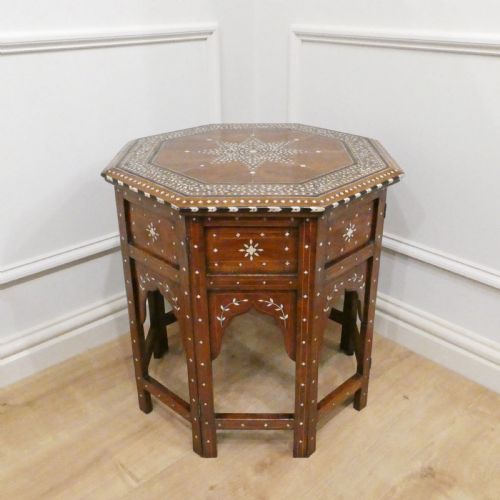
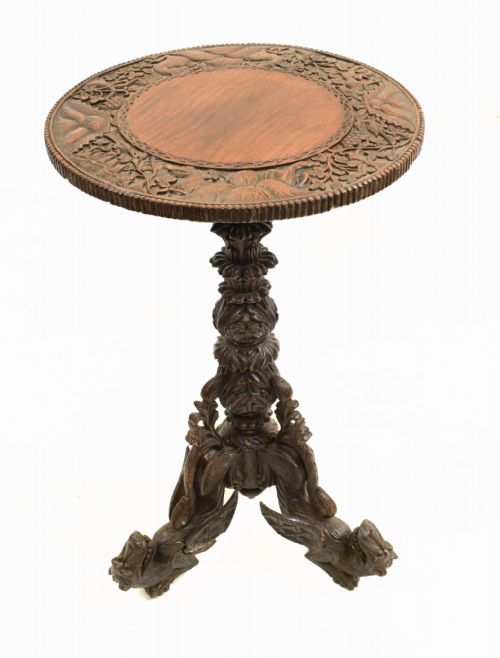


Carved Teak Occasional Table
These carved teak occasional table pieces are dense colonial furnishings designed for versatile display, bringing heavy botanical relief to domestic spaces.

Forms and Origins
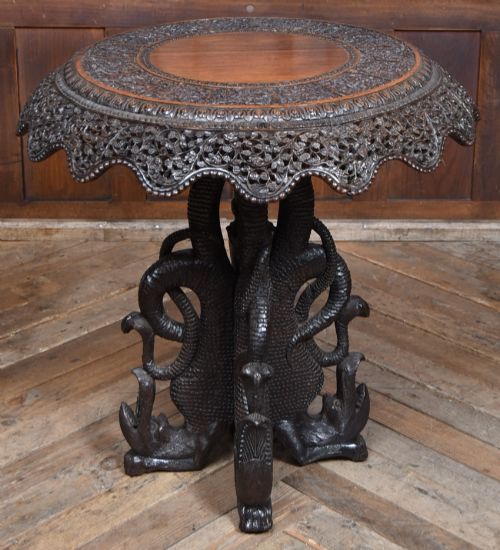
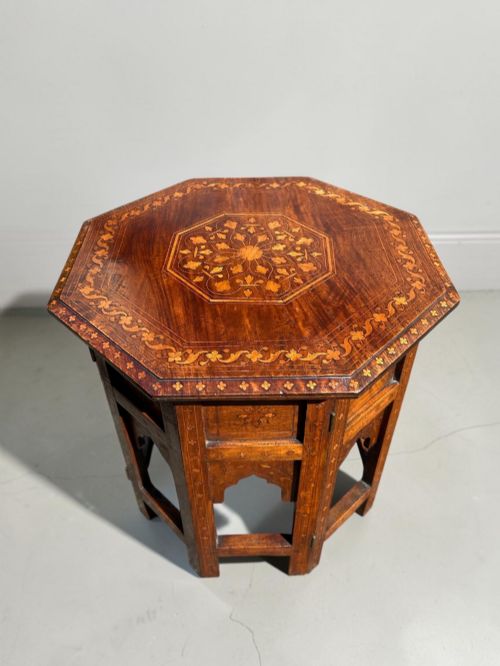
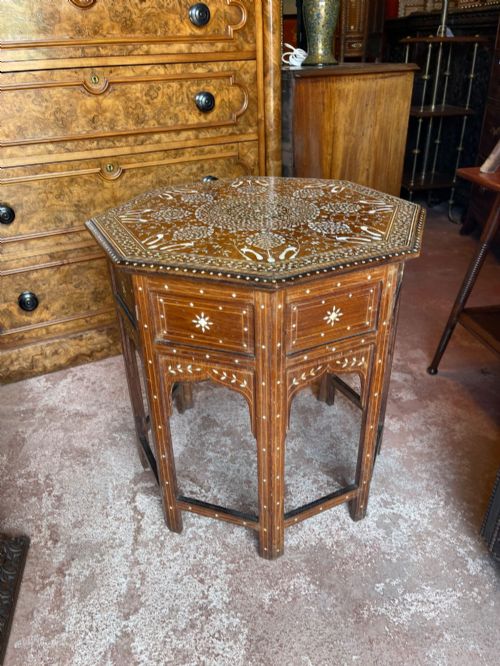
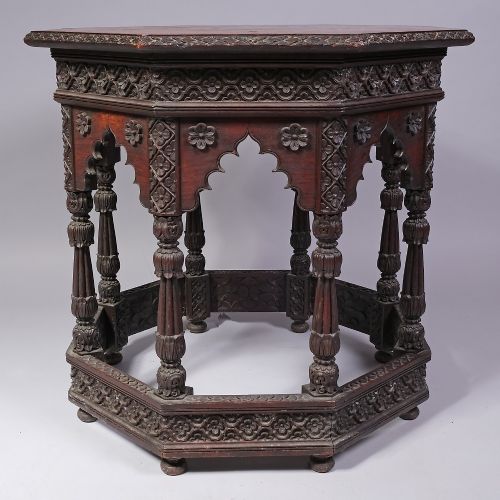
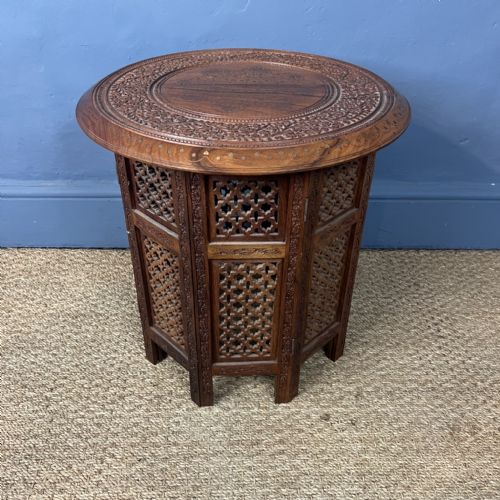
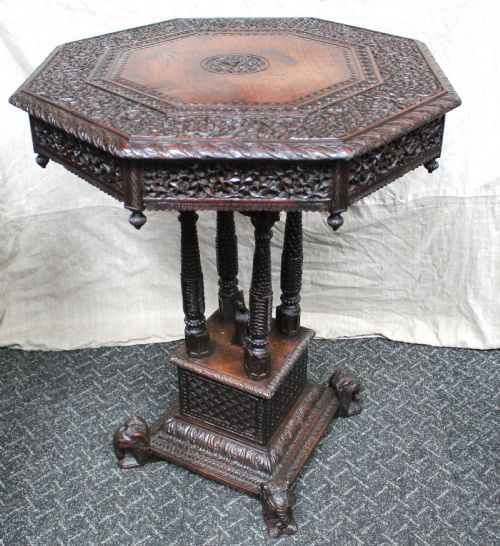
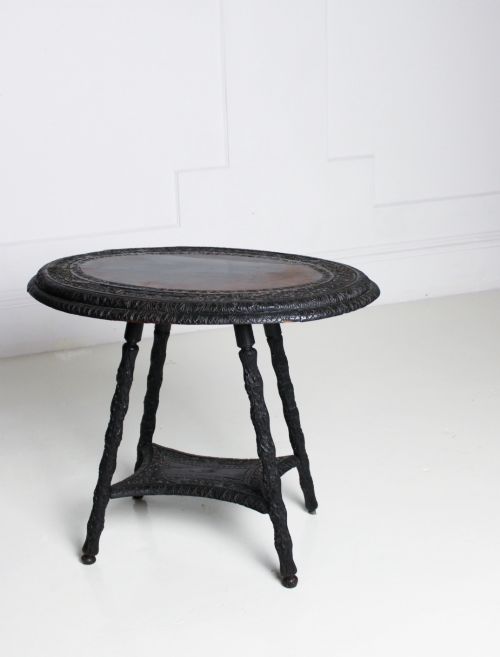
A carved teak occasional table combines dense regional timber with intricate surface relief, originating largely from British colonial workshops in India and Burma. These domestic items arrive in various shapes including octagonal, lobed, circular, and oval configurations, often functioning as lamp tables, side surfaces, or low display stands.
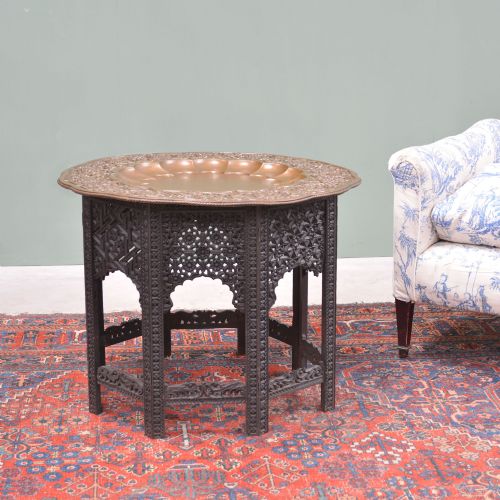
The pieces encountered span the nineteenth century, the Victorian era, and early twentieth-century dates up to nineteen thirty. Folding tray formats and rigid forms with elephant leg supports demonstrate the utilitarian yet decorative scope of these colonial imports.
Anglo-Indian and Anglo-Burmese styles dominate the selection, showing how local artisan traditions adapted to British drawing-room demands. The combination of dense hardwood and deep chisel work defines every surviving example.
Materials and Techniques
Makers utilised teak, rosewood, and other dense hardwoods as the primary structural and decorative medium. Timber selection focused on grain stability to support heavy, uninterrupted surface carving.
Artisans applied deep relief carving techniques, often covering every visible surface with foliate scrolls, geometric tracery, and figurative elements like elephants. Selected examples incorporate bone inlay or openwork fretwork to create contrasting textures.
Folding mechanisms on specific tray tables rely on ingenious hinged or interlocking fret-cut bases that collapse flat. Fixed variants utilise sturdy pillar or figural supports, such as carved elephant trunks, joined securely to the top.
Retail Price Guide 2026
Typical UK retail prices for carved teak occasional table, calculated from the Sellingantiques database of over a million retail prices indexed since 2003. This retail price guide relies exclusively on Sellingantiques data; no external sources or auction records are used, so the figures do not describe the wider market.
Recorded periods across the archive span the nineteenth century, Victorian eras, and nineteen thirty.
The Spectrum of Quality
Quality rests in the depth, crispness, and spatial depth of the chisel work rather than surface sheen alone. Superior examples maintain sharp undercut details in the foliage without splintering the dense grain.
Structural integrity separates functional survivors from compromised items, particularly in folding joints and figural supports like elephant legs. Better pieces demonstrate precise joinery that prevents wobble despite the heavy timber weight.
The Carved Teak Occasional Table Glossary
- Teak
- A dense, durable tropical hardwood with natural oil content that resists moisture and supports intricate carving. This timber forms the substantial base of nearly every piece listed.
- Fretwork
- Openwork ornamentation cut through wood using a fine saw to create geometric or floral patterns. This technique appears on folding tray tables and aprons.
- Anglo-Indian
- A descriptive term for furniture made in India during the British colonial period, combining local craftsmanship with European forms. These objects often feature dense botanical carving.
- Occasional table
- A small, movable table designed for specific, intermittent use rather than central dining. These formats include side, lamp, and coffee table heights.
Frequently Asked Questions
How do I date a carved teak table?
Dating relies on recorded periods such as the nineteenth century, Victorian era, or early twentieth century alongside construction methods. Folding mechanisms and style markers provide additional chronological clues.
Examination of the timber patination and tool marks helps confirm whether a piece belongs to the Victorian period or later production phases.
Were these tables made for export?
Most pieces reflect Anglo-Indian or Anglo-Burmese trade production intended for British colonial homes. They combined traditional regional carving with domestic furniture forms suited to Western parlours.
This export market drove the creation of portable folding tables alongside sturdy fixed occasional stands.
How do I care for carved teak furniture?
Maintenance involves dusting the deep relief carving regularly with a soft brush to prevent dirt accumulation in the recesses. Avoid harsh liquid polishes that can build up within the intricate wooden grain.
Keeping the timber away from direct heat sources prevents the dense hardwood from drying out or splitting.