



Carved Teak Coffer
A carved teak coffer brings robust construction and intricate surface relief into a room, offering practical storage alongside distinctive regional ornamentation.
Carved Teak Coffer
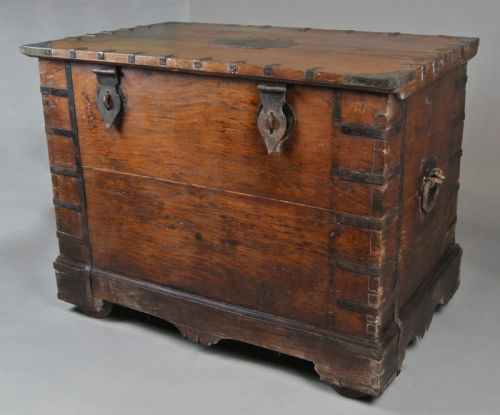
A carved teak coffer is a substantial storage piece shaped by colonial, Anglo-Indian, and traditional Indian traditions. Buyers looking at this phrase encounter heavy blanket boxes, dowry chests, and travel trunks built to endure.
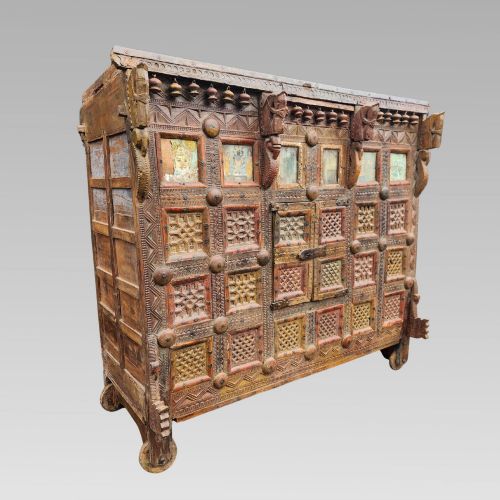
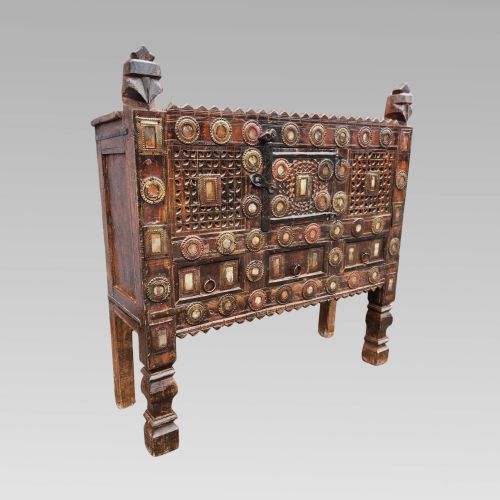
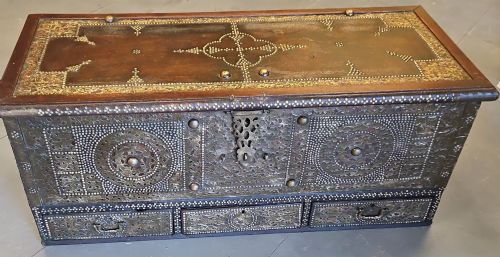
The pieces on this page span the nineteenth century and the early twentieth century, taking forms such as the Zanzibar chest and the Indian Damchiya storage cabinet. Alongside standard coffers, the selection includes related storage furniture like lacquer trunks on stands and occasional ceremonial armchairs.
Origins vary across regional workshops influenced by British presence and local craftsmanship, yielding distinct regional styles including Anglo-Indian Colonial and Indian Folk Art. These forms serve primarily as functional anchors in a hallway or living space while displaying deep surface carving.
Materials and construction
Makers built these pieces predominantly from dense teak and related hardwoods, chosen for durability and resistance to local climates. Iron and brass provide structural reinforcement through heavy corner brackets, strapwork, and decorative studding.
Surface decoration relies on deep chiselling and relief carving, sometimes paired with applied lacquer or glass accents. Iron bindings and brass fitments secure the corners and lids, combining structural utility with ornamentation.
Carved Teak Coffer Retail Price Guide 2026
Typical asking prices for carved teak coffer among the pieces listed under this phrase on Sellingantiques today, from the lower quarter to the upper quarter. They describe what is for sale here now, not the wider market.
Regional styles include Anglo-Indian, Zanzibar, and Indian Folk Art traditions represented through trunks, coffers, and storage cabinets.
Assessing quality
Quality rests in the crispness and depth of the hand-carved relief work across the teak panels. Sharp, well-defined motifs demonstrate superior workshop execution compared to softer, more perfunctory surface patterns.
The integration of metalwork distinguishes superior examples, where brass studs and iron straps are securely hammered and fitted to the hardwood frame. Original mounting hardware and intact hinges indicate a higher standard of preservation.
The Carved Teak Coffer Glossary
- Damchiya
- A traditional Indian storage cabinet or dowry chest often set with low relief carvings and multiple compartments. These pieces formed an essential part of household furnishings.
- Zanzibar chest
- A distinct type of trading trunk characterised by heavy brass studding, strapwork, and often a concealed interior till. They reflect East African and Indian Ocean trade routes.
- Anglo-Indian
- A descriptive term for furniture made in India during the British period, combining local cabinet-making techniques with European forms. The style spans residential and campaign pieces.
Carved Teak Coffer: Frequently Asked Questions
Where should I place a carved teak coffer?
These pieces sit well in hallways, living rooms, or large bedrooms where their substantial proportions anchor the space. They provide deep interior storage for blankets, linens, or bulky items while serving as a firm surface for lamps or decorative objects.
Because the timber is dense and heavy, select a permanent spot with stable humidity away from direct heat sources. This protects the joinery and maintains the condition of the carved panels.
How do I care for teak furniture?
Dust the carved surfaces regularly with a dry, soft cloth to prevent grime from settling into the deep recesses of the relief work. Avoid harsh chemical cleaners that can strip the natural oils from the hardwood.
Occasional treatment with a suitable furniture wax helps nourish the timber and keeps the grain looking rich. Keep the piece out of direct sunlight to prevent uneven fading of the wood.
What is the difference between a coffer and a trunk?
A coffer typically describes a heavy box with a flat lid built primarily for stationary indoor storage of household goods. Trunks often incorporate metal handles, reinforced corners, and strapwork designed for travel and transport.
In practice, historical terminology overlaps considerably, and many regional workshops produced pieces that served both domestic storage and transit functions.
How can I tell a nineteenth-century piece apart?
Nineteenth-century examples display hand-cut joinery, forged iron bindings, and manual carving marks visible inside the panels. The timber weight, patination, and the specific style of brass studding offer clues to the period.
Examining the interior construction and the wear patterns on the base helps distinguish older workshop output from twentieth-century reproductions.