


Carved Teak Chest
A carved teak chest brings substantial timber and deep relief work into a room, offering robust storage with centuries of global trade woven into its grain.
Carved Teak Chest
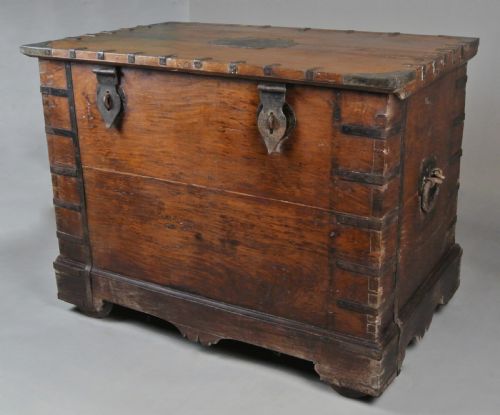
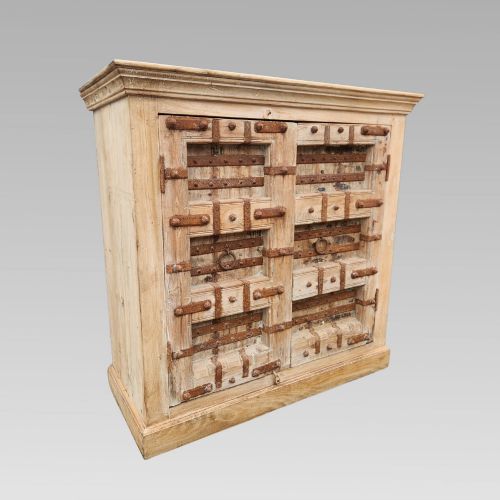
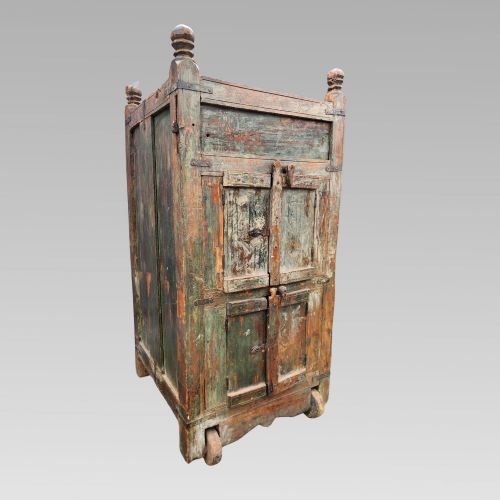
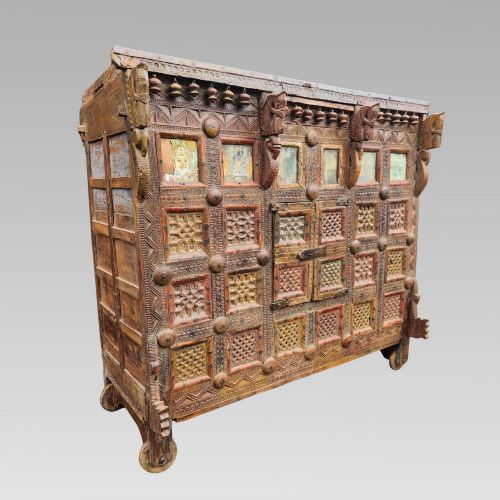
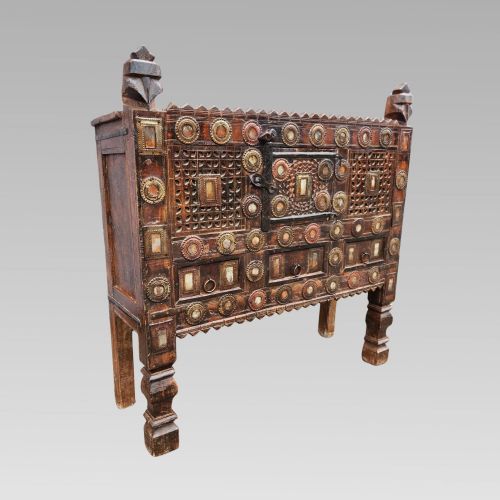
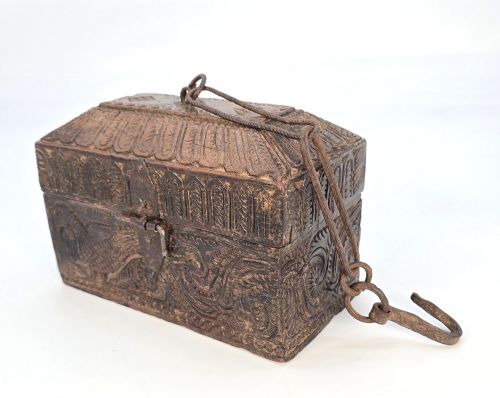
A carved teak chest represents a diverse group of storage furniture spanning trunk, coffer and dowry forms originating from Indian, Anglo-Indian, Victorian and East African traditions. These pieces vary widely in scale, from small spice boxes and blanket trunks up to monumentally large dowry chests and storage cupboards.
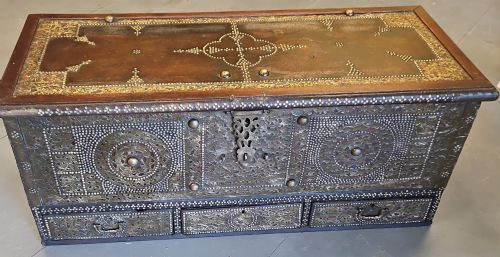
The versions most commonly met on this page include 19th-century Indian and Zanzibar trunks alongside early 20th-century storage cabinets and damchiya chests. Such items frequently combine heavy timber construction with utilitarian brass or iron mountings designed for travel or secure domestic storage.
What varies in quality
Quality rests upon the depth and crispness of the hand carving, alongside the integrity of the timber joints and structural hardware. Superior examples display dense, well-figured teak with securely fitted brass or iron mountings that remain original to the piece.
The sophistication of the joinery and the presence of specialised internal compartments, such as lidded tills or cedar-lined drawers, separate standard utility trunks from finer domestic furniture and celebration chests.
Some chests travelled thousands of miles across oceans storing spices before ever finding a home in a British parlour.
The Carved Teak Chest Glossary
- Damchiya
- A traditional low storage cabinet or dowry chest originating from India, often featuring heavily carved panel doors and drop-down or hinged compartments.
- Zanzibar Chest
- A heavy timber travel chest characterised by brass studding, strapwork, and elaborate corner mounts, reflecting East African and Indian Ocean trade routes.
- Cellarette
- A specialised lockable container designed for holding bottles or decanters securely within a domestic interior.
- Coffer
- A large, heavy box with a hinged lid typically used for safekeeping valuables, textiles, or documents before the widespread adoption of fitted wardrobes.
- Almirah
- An upright freestanding cupboard or cabinet used for storage, frequently encountered in Indian and Anglo-Indian domestic contexts.
Carved Teak Chest: Frequently Asked Questions
How were Zanzibar chests used?
These robust trunks served as portable security vaults for merchants and travellers navigating maritime trade routes across the Indian Ocean.
Owners packed them with textiles, coinage, and valuables, relying on the iron and brass reinforcement to protect contents during long sea voyages.
Where do carved teak chests originate?
The pieces hail from diverse regions influenced by British colonial trade, including the Indian subcontinent, Burma, and East African coastal trading ports like Zanzibar.
Local artisans adapted indigenous woodworking techniques to suit both domestic storage needs and the tastes of European buyers.
How do I date a teak chest?
Dating relies on examining construction methods, timber characteristics, and the style of brass or iron hardware relative to recorded 18th, 19th, and 20th-century examples.
Details like hand-forged straps, dovetail joints, and specific decorative motifs help place a trunk within Victorian, Edwardian, or earlier production periods.
Can I use one as a coffee table?
Many people place these sturdy chests in reception rooms to function simultaneously as a low table and a concealed storage compartment.
Their flat lids and robust hardwood construction make them well-suited for daily living spaces, provided the surface finish is protected.