



Carved Teak Bench
A carved teak bench brings dense, figured timber and deep relief work into an interior, offering robust seating shaped by vernacular and colonial traditions.
Carved Teak Bench
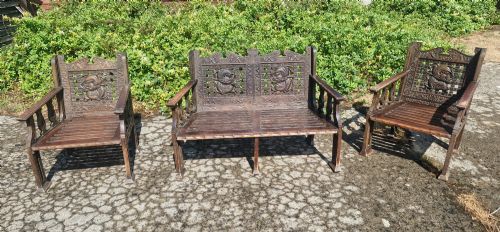
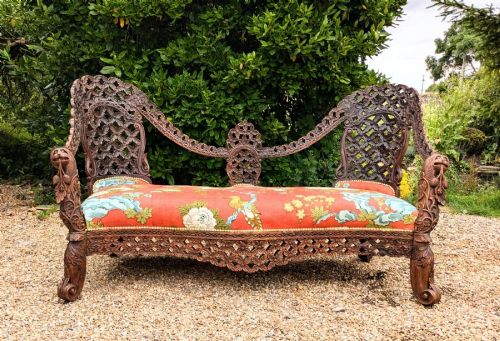
When you search for a carved teak bench, you encounter seating fashioned from heavy tropical hardwood, often drawing on Anglo-Indian, Victorian colonial, and traditional Indian styles. The forms range from simple garden seats and floor benches to elaborate caned settees and window seats featuring detailed figural carvings such as elephants.
The versions most commonly met on this page span the nineteenth century into the early twentieth century. You will frequently see regional variations like Bombay sofas, Ceylon veranda benches, and rustic root wood forms that highlight the natural grain and irregular contours of the timber.
How they were made
These pieces are constructed primarily from solid teak and assorted hardwoods, frequently combined with woven rattan, cane, and fabric upholstery. Artisans carved the dense timber by hand, creating intricate floral and animal motifs in deep relief along the backs and aprons.
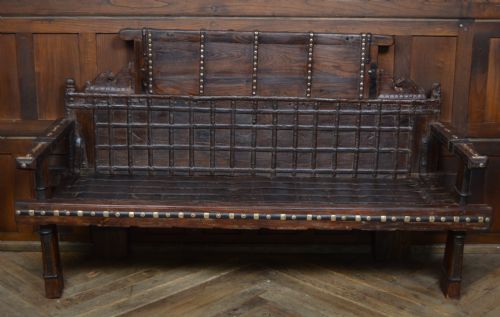
Structural elements sometimes incorporate iron or bone inlay to accent the dark wood. Surface treatments vary from natural oiled finishes and bleached timber to painted or silvered effects applied for exterior or conservatory use.
Listings here feature materials including teak, root wood, cane, and bone inlay, spanning the nineteenth century up to the 1930s.
What varies in quality
Quality rests in the crispness and depth of the hand carving, where skilled work yields sharp detail and balanced proportions rather than flat, repetitive stamping. The integrity of the joinery and the preservation of the original timber surface also distinguish finer examples.
The sophistication of the design - ranging from vernacular utility pieces like bullock cart benches to refined drawing room settees - dictates the standing of the piece. Conservation of integrated elements like cane panels or bone inlay further separates standard examples from exceptional ones.
The Carved Teak Bench Glossary
- Anglo-Indian
- Describing furniture made in India during the British period, often combining local carving traditions with European forms. These pieces frequently utilise dense teak and intricate floral motifs.
- Veranda bench
- A long seat designed for shaded outdoor corridors in tropical climates, typically built to withstand humidity while offering deep, comfortable proportions.
- Caned
- Describing a seat or back panel woven from rattan or split cane. This technique provides flexible support and a light texture that contrasts with heavy carved wood frames.
- Root wood
- Timber sourced from the underground stump and root system of a tree, displaying twisting grains and organic shapes. It is utilised to create rustic chairs and benches that follow natural contours.
Carved Teak Bench: Frequently Asked Questions
Where were these benches used originally?
Many of these pieces served in colonial verandas, conservatories, and grand halls across British India and Ceylon. They provided durable seating designed to cope with warm climates while offering ornamental presence.
In domestic settings, smaller variants functioned as window seats, hall benches, or occasional floor seating. Their sturdy hardwood construction suited both sheltered outdoor living and formal interior spaces.
How do I care for teak furniture?
Teak is naturally oily and durable, requiring minimal intervention to maintain its condition. Occasional dusting with a soft cloth and avoiding direct sources of extreme heat will preserve the timber surface.
If the piece is kept in a conservatory or garden, protect it from prolonged dampness or harsh weathering depending on its finish. Natural waxes can be applied sparingly to nourish dry wood without altering the grain.
Are these benches comfortable to sit on?
Comfort varies significantly depending on the specific form and the presence of upholstery or cushions. Many traditional benches feature sloped backs and deep seats designed for relaxed posture.
Examples with wooden plank seats or intricate carved panels often benefit from the addition of loose squabs or cushions. Caned and upholstered settees offer more give and are built for prolonged lounging.
How do I identify the period of a carved bench?
Dating relies on examining the tool marks, joinery methods, and stylistic influences present in the carving. Nineteenth-century pieces often display hand-cut joinery and dense, patinated teak surfaces that show deep age.
Changes in decorative motifs, such as the shift from strict Victorian formality to organic root wood forms in the early twentieth century, help narrow down the date. Comparing construction details with documented regional styles provides further context.