


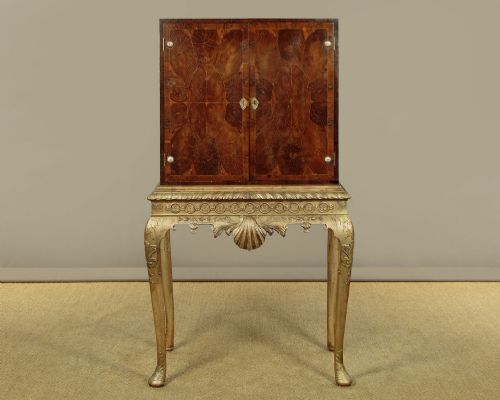
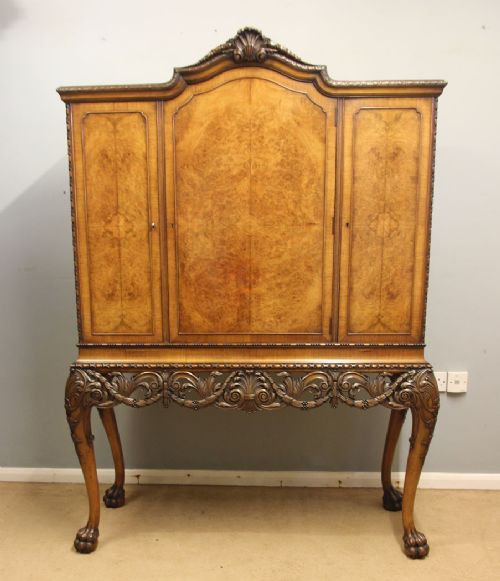
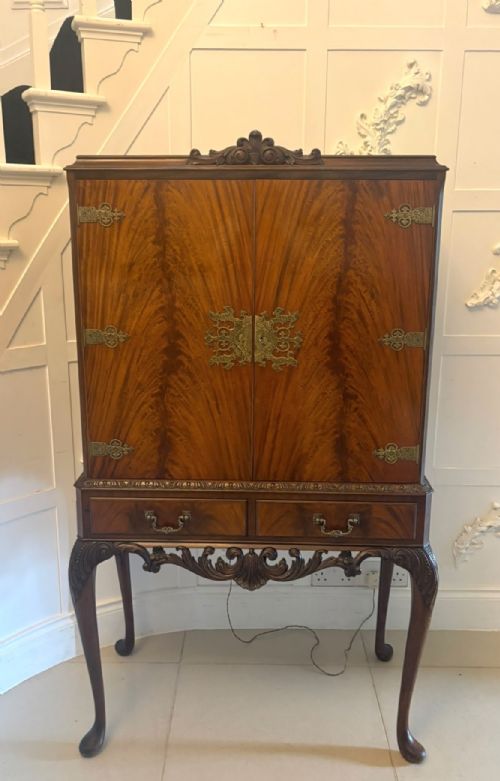
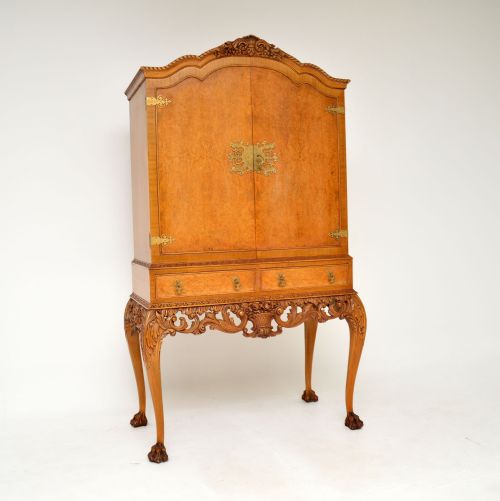


Carved Stand Drinks Cabinet
A carved stand drinks cabinet brings period craftsmanship into the modern home, offering a dedicated space for bottles and glassware.
Carved Stand Drinks Cabinet
When you search for a carved stand drinks cabinet, you are looking at specialised furniture designed to house bottles, glassware, and mixing equipment upon an elevated base or stand. These pieces draw from periods such as the Georgian, Victorian, Edwardian, and the 1920s or 1930s, displaying various regional revivals.
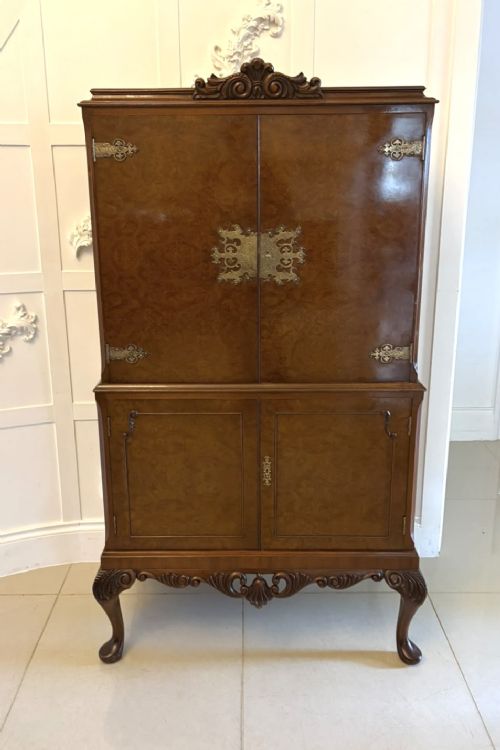
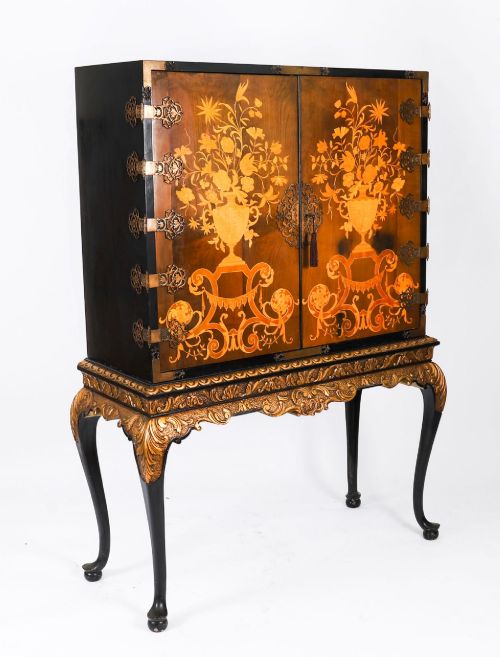
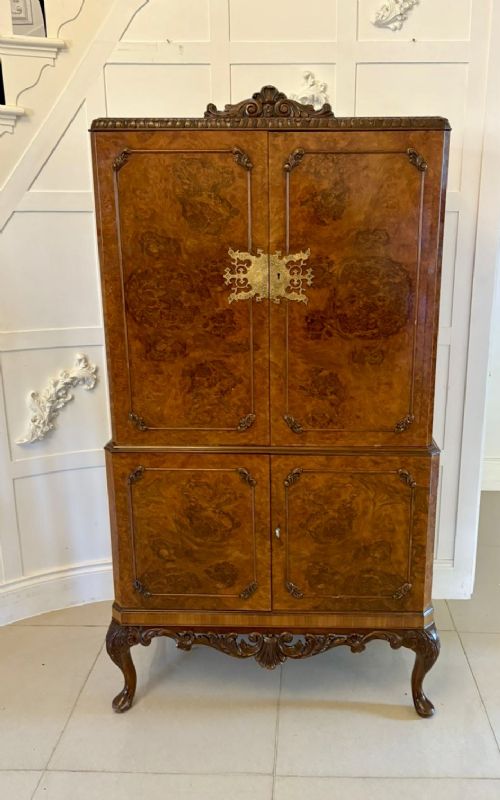
The version you are most likely to meet on this page is a walnut or burr walnut cocktail cabinet dating from the early twentieth century, often styled with Queen Anne influences or raised on cabriole legs. Alongside these, the selection includes heavier oak pieces in Jacobean or Flemish styles, as well as lacquered Chinoiserie finishes on stands.
These items serve as both functional hospitality stations and focal points in a reception room, combining enclosed storage with display surfaces. The form evolved from simpler side cabinets and pedestal cupboards into dedicated cocktail furniture equipped for entertaining.
Materials and construction
Cabinet makers utilised a foundation of solid woods like oak and mahogany, often applying decorative veneers such as burr walnut across the principal surfaces to create rich grain patterns. The stands and frames frequently feature hand-carved details, including lion masks, cabriole legs, and elaborate mouldings.
Metal fittings played a crucial functional and decorative role, with brass hinges, mounts, and handles securing the doors and dropping down to support internal pull-out shelves or serving slides. Interior compartments often incorporated specialised mirrors, glass shelves, and fitted slots for glassware.
Carved Stand Drinks Cabinet Retail Price Guide 2026
Typical asking prices for carved stand drinks cabinet among the pieces listed under this phrase on Sellingantiques today, from the lower quarter to the upper quarter. They describe what is for sale here now, not the wider market.
Some Edwardian drinks cabinets were built with internal mirrors so you could check your tie while pouring a gin.
What separates the finest pieces
The quality of a carved stand drinks cabinet rests on the selection of timber veneers and the crispness of the hand-carving on the base and frame. Superior examples display symmetrical figuring in the burr walnut or carefully matched grain across multiple doors.
Internal fitting and hardware also distinguish finer items, where original brass mounts, intact mirrors, and well-fitted sliding shelves remain undisturbed. The structural joinery where the cabinet meets its stand dictates long-term stability and indicates the workshop standard.
Denby & Spinks·Harrods·Waring & Gillows·Liberty's of London
The Carved Stand Drinks Cabinet Glossary
- Burr walnut
- A decorative timber veneer obtained from the wart-like growths on walnut trees, prized for its swirling, organic grain patterns. Cabinet makers typically applied this to the exterior doors and panels of 1920s and 1930s cocktail furniture.
- Tantalus
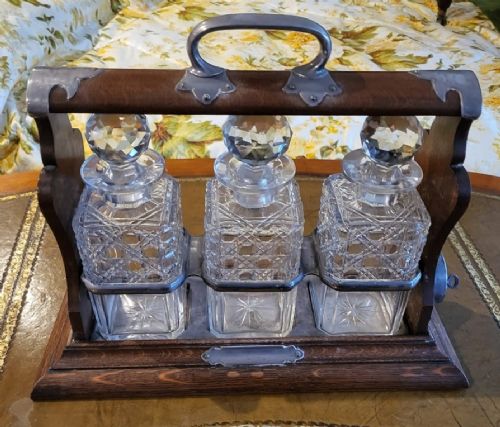
- A locked wooden stand holding decanters of spirits, designed to display the contents while preventing unauthorized access. These are frequently mounted in brass and form a distinct sub-category of drinks storage.
- Cabriole leg
- A furniture leg that curves outward at the knee and tapers inward to an ankle, finishing in a foot such as a pad or claw and ball. This shape is characteristic of Queen Anne revival pieces seen across the period listings.
- Chinoiserie
- European decorative style incorporating imitation Chinese artistic motifs, often rendered in lacquer and gilt on furniture surfaces. Harrods pieces in this style employ raised painted designs on coloured backgrounds.
- Pedestal cabinet
- A single-column storage unit raised off the floor, providing compact enclosed shelving. These items often feature panelled doors and distinct base plinths.
Carved Stand Drinks Cabinet: Frequently Asked Questions
What is a carved stand drinks cabinet used for?
These cabinets serve as dedicated storage furniture for holding bottles, decanters, glassware, and cocktail accessories within a principal living space or dining room.
Many examples feature drop-front doors that double as mixing shelves, alongside specialised interior compartments designed to keep glassware secure.
How do I identify a 1920s cocktail cabinet?
Pieces from the 1920s frequently employ burr walnut veneers, geometric paneling, and Queen Anne revival cabriole legs. They often house fitted mirrored interiors designed specifically for cocktail culture of the era.
Earlier Victorian or Edwardian variants tend to utilise solid oak or mahogany with more traditional carving, lacking the specialised internal cocktail fittings common in later decades.
Are the stands fixed to the cabinets?
On many designs, the cabinet sits securely upon a distinct supporting stand or frame, sometimes secured with internal dowels or brackets rather than forming a single solid unit from top to bottom.
This two-part construction was common for larger storage pieces, allowing easier transport and referencing earlier Georgian cabinet-on-stand forms.
How should I care for burr walnut veneer?
Burr walnut requires protection from direct sunlight and excessive heat fluctuations to prevent the delicate veneer from drying out or lifting over time. Regular dusting with a soft, dry cloth maintains the polished surface without moisture damage.
Applying a traditional beeswax polish occasionally helps nourish the wood and preserve the grain depth across the cabinet doors.