


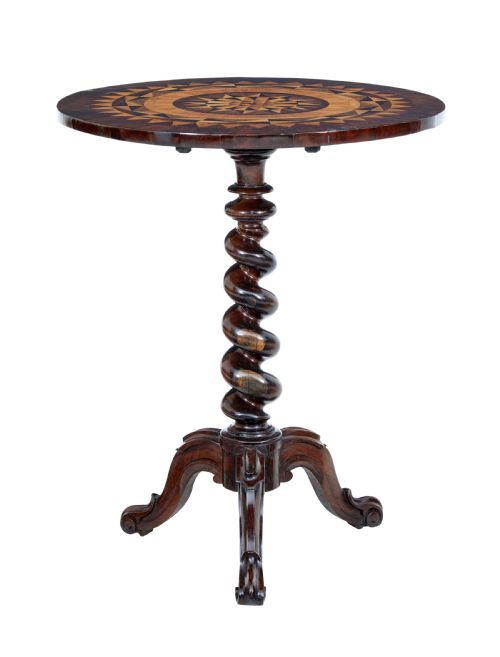

Carved Spiral Column Table
These carved spiral column table pieces offer sturdy support and rich historic character for any room.
Carved Spiral Column Table
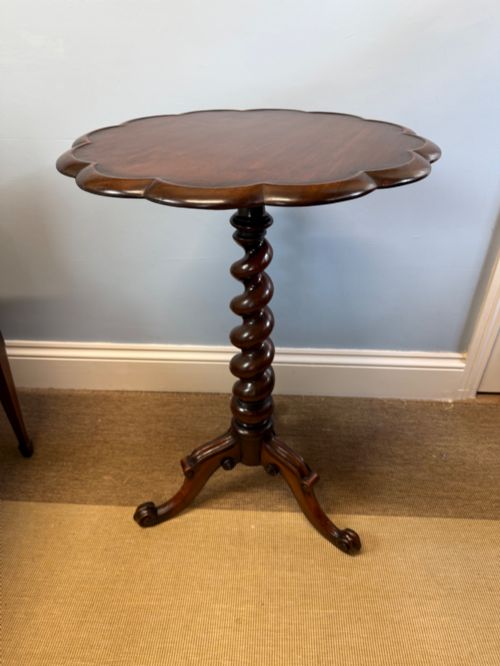
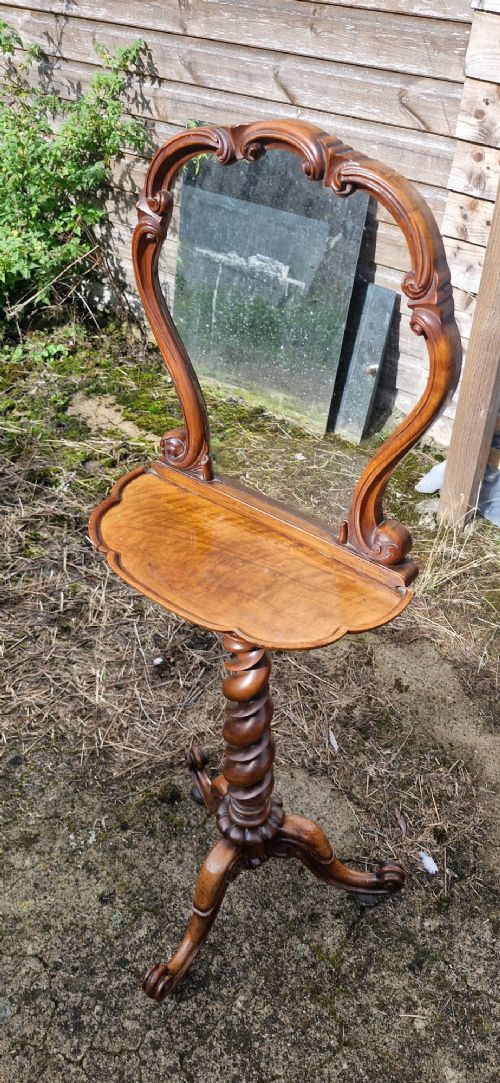
A carved spiral column table brings distinct turned woodwork to domestic spaces, functioning as an occasional table, lamp base, wine table, or plant stand. These pieces serve practical needs while adding architectural presence to a room.
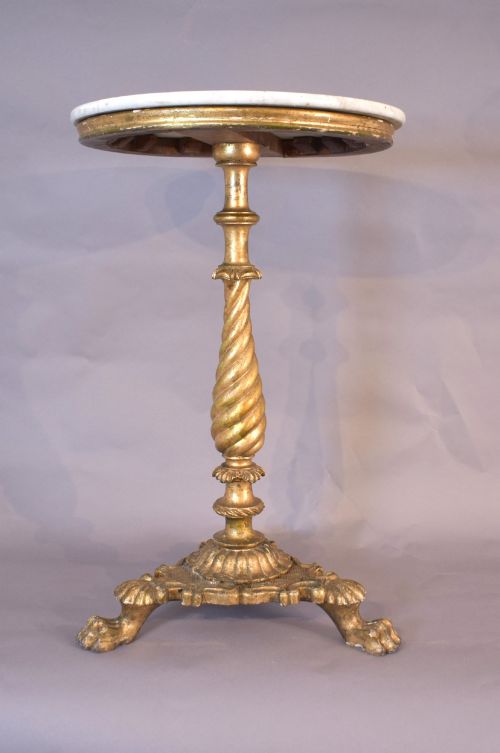
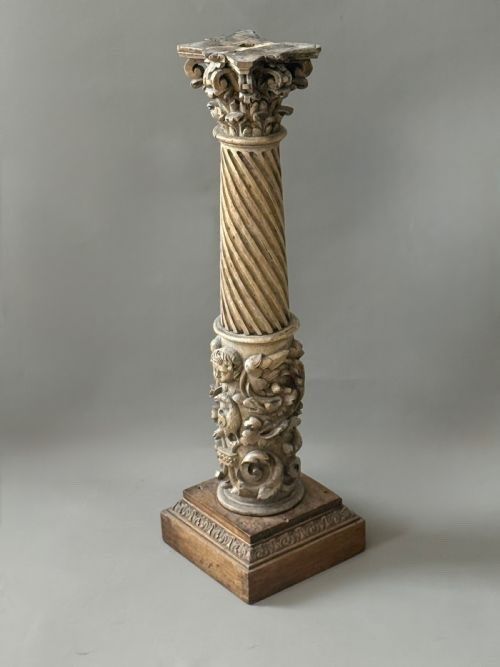
Buyers encountering this search phrase will find forms ranging from 17th-century monumental pillars and Georgian tripod tables to Victorian walnut pedestals and 1930s Italian painted side tables. Mahogany and walnut dominate the selection, frequently paired with tilt-top mechanisms or tripod legs.
Occasional tables and side tables provide flat surfaces for lamps and drinks, whilst tall torchiere stands and jardiniere stands elevate objects of interest. Each form utilises the signature twisted column to draw the eye upwards and add texture to interior schemes.
How they were made
Cabinetmakers shaped these pieces primarily from solid hardwoods such as mahogany and walnut, often employing burr veneers to create figured surfaces. Boxwood stringing and brass details frequently accent the primary timber.
The characteristic spiral columns were turned by hand on a lathe or carved meticulously to achieve uniform twists along the shaft. Gesso, giltwood, and paint finishes appear on specific continental and revival pieces to enrich the decorative effect.
Current listings span from the seventeenth century through to the nineteen thirties, featuring mahogany, walnut, giltwood, and paint.
What varies in quality
Quality rests in the crispness of the hand-carved spiral twist and the selection of timber grain, where highly figured burr walnut or rich mahogany elevate a piece. The stability of the tripod base and the precision of joinery determine the structural integrity.
Secondary elements such as boxwood stringing, inlaid tops, or original glass components indicate greater maker investment. Pieces retaining their original surface patination command stronger interest than those stripped or overly restored.
The Carved Spiral Column Table Glossary
- Tripod table
- A small occasional table supported by three legs radiating from a central pillar. This design ensures stability on uneven historical floors.
- Tilt-top
- A tabletop hinged to the pedestal so it can tilt vertically when not in use. This mechanism allowed furniture to be stored compactly against a wall.
- Torchiere
- A tall stand designed to hold a candle or lamp. The slender form showcases decorative woodturning at eye level.
- Teapoy
- A small box on a pedestal used originally for storing tea. Many examples double as occasional tables or stands for lamps.
- Jardiniere stand
- A pedestal or table designed to support a plant container. These stands protect interior surfaces while elevating greenery.
Carved Spiral Column Table: Frequently Asked Questions
What is a carved spiral column table used for?
These pieces function primarily as occasional tables, wine tables, or lamp stands in living spaces and hallways.
Taller versions serve as plant stands or torchieres to display decorative objects at varying heights.
How do I date a mahogany spiral table?
Dating relies on examining the timber species, construction joints, and secondary woods used beneath the surface.
Stylistic cues such as tripod leg profiles and inlay techniques also point towards specific periods like the Georgian or Victorian eras.
Where should I place a tilt-top table?
These tables fit well beside seating as lamp or wine surfaces when the top remains horizontal.
In tighter spaces, tilting the top downward allows the piece to rest flat against a wall as a decorative panel.
How do I care for walnut and mahogany?
Keep wooden furniture away from direct heat sources and strong sunlight to prevent the timber from drying or fading.
Regular dusting with a dry cloth maintains the surface sheen without building up heavy wax residues.