


Carved Shell Cameo Pin
A carved shell cameo pin is a miniature relief carving mounted in precious metal, offering wearers a tangible piece of classical mythology.
Carved Shell Cameo Pin
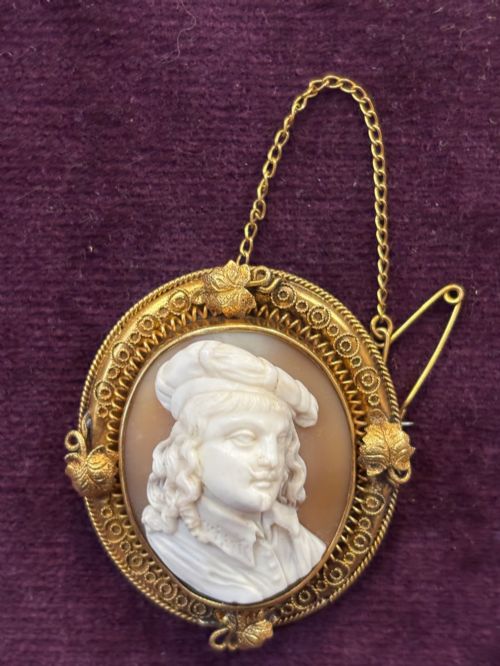
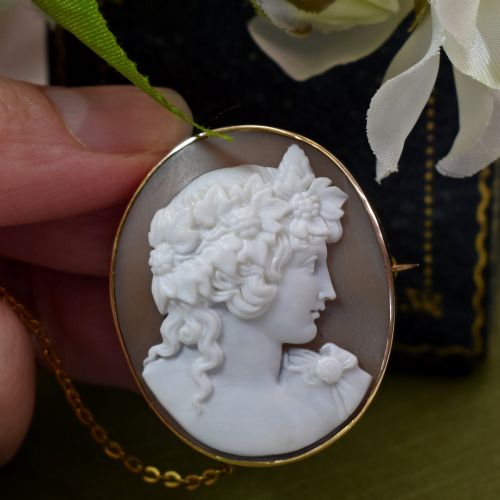
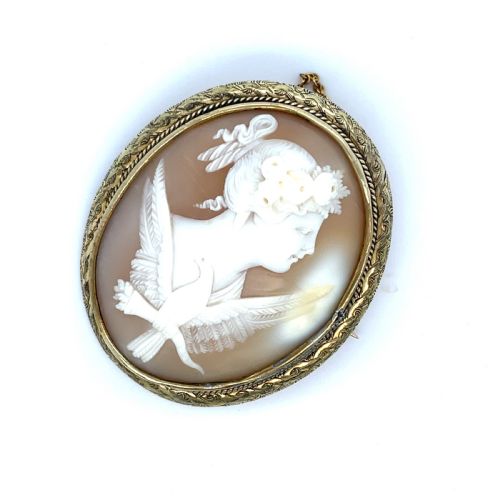
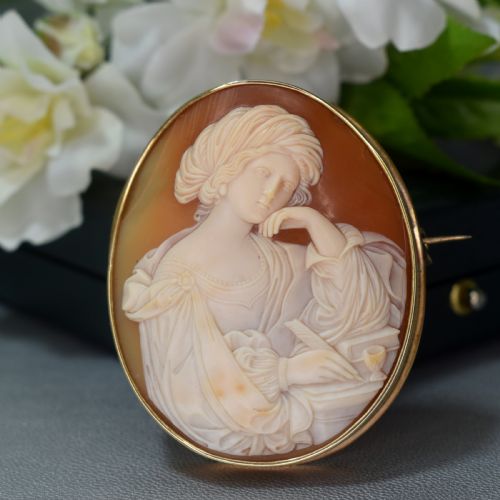
A carved shell cameo pin combines portraiture and mythology, primarily taking the form of brooches executed during the Victorian and Georgian periods. These miniature reliefs depict classical figures such as Aphrodite, Flora, Psyche, and mythological scenes derived from antique sources.
The pieces on this page span the nineteenth century, including examples mounted in gold, silver, and pinchbeck. Most items function as brooches, whilst specific listings present integrated pendant fittings or matching sets comprising earrings.
Makers and workshops across Italy and Britain produced these ornaments using layered shells to create distinct colour contrasts between the raised white figures and darker backgrounds. Collectors encounter everything from modest nine-carat gold frames to monumental signed works.
Materials and construction methods
Carvers selected natural shells possessing contrasting colour strata, typically using helmet shells to achieve the pale white relief against a reddish-brown or amber backing. Artisans utilised hand-held gravers to pare away the upper layer meticulously, leaving the delicate subject standing proud from the ground.
Mounts required independent metalworking skills, employing gold in varying purities such as nine-carat, twelve-carat, eighteen-carat, and twenty-carat, alongside silver and pinchbeck. Frames frequently featured chased details, filigree wirework, or simple bezels designed to secure the curved shell securely.
Certain Victorian ladies pinned their mythological heroes right over the heart.
Distinctions in craftsmanship and design
The construction of the metal frame dictates the overall tier of the piece, with substantial gold weights, intricate filigree, and documented signatures elevating certain works. Lesser examples rely on simpler metal housings and shallower carving depths that obscure fine details.
R. Pernice
The Carved Shell Cameo Pin Glossary
- Cameo
- A method of carving an object such as a carved shell cameo pin where the relief image stands higher than the background. This technique exploits natural colour bands in the material to isolate the subject.
- Pinchbeck
- An alloy of copper and zinc invented in the eighteenth century to imitate gold. It provides a warm yellow tone frequently found on period frames.
- Filigree
- Delicate jeweller's work consisting of twisted threads of gold or silver soldered together in openwork patterns. It adds ornate texture around the edge of a brooch frame.
- Grand Tour
- A cultural journey undertaken by wealthy young Europeans in the nineteenth century that popularised the acquisition of Italian carved shell cameos as souvenirs.
- Bezel
- A grooved rim of metal that holds the edge of a shell cameo securely in place within its frame. It forms the primary border surrounding the carved scene.
Carved Shell Cameo Pin: Frequently Asked Questions
How do I date a carved shell cameo pin?
Dating relies heavily on the style of the metal frame, the catch mechanism, and the subject matter depicted. Georgian and early Victorian pieces often feature closed backs and simpler pin attachments, whilst later nineteenth-century examples utilise more ornate chased gold or silver mounts.
The carving style itself offers clues, as Neoclassical revivals favoured specific mythological deities. Hallmarks on the precious metal mounts, where present, provide definitive dates of assay.
Were these pins worn exclusively as brooches?
Most examples double as pendants through the inclusion of a hidden or hinged loop behind the frame. This versatility allowed wearers to pin them to garments or suspend them from chains.
Some larger monumental works also survived with fitted stands for display on surfaces. The presence of multiple loops indicates how the original owner intended to utilise the jewel.
What shells were used for these carvings?
Carvers utilised large marine mollusc shells, predominantly species of helmet shells native to tropical waters. The inner layers of these shells offered the necessary contrast between opaque white and dark brown or peach.
Because shell is an organic material, each carved shell cameo pin possesses unique tonal variations in the background. The thickness of the shell determined how deep the artisan could carve the relief.
How should I care for an antique cameo?
Shell is a relatively soft material that requires gentle handling to prevent scratching or cracking. Avoid exposing antique pieces to harsh chemicals, ultrasonic cleaners, or prolonged direct sunlight.
Cleaning should be limited to a soft, dry cloth to remove dust from the carved crevices. Storage in a dedicated lined box protects the fragile relief from impact.