





Carved Settle Bench
These carved settle benches combine panelled timber, high backs, and storage seats, offering solid seating rooted in centuries of domestic use.
Carved Settle Bench
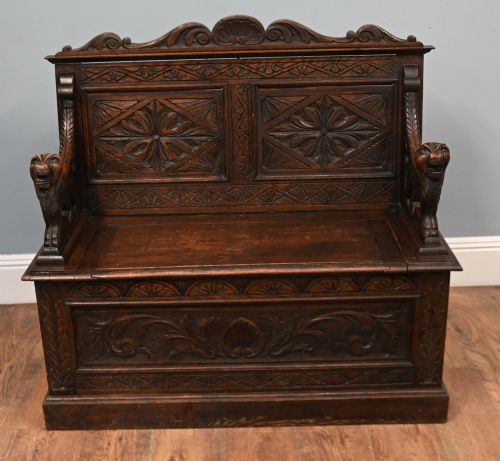
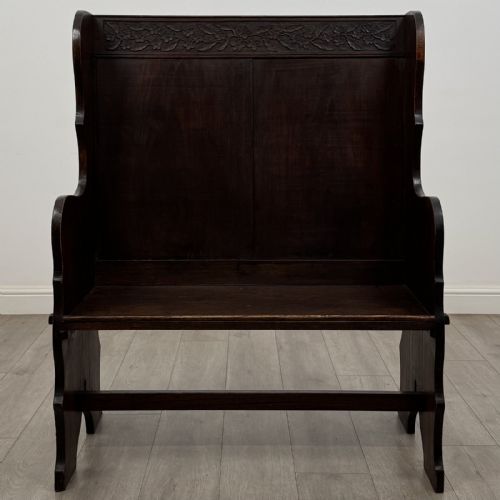
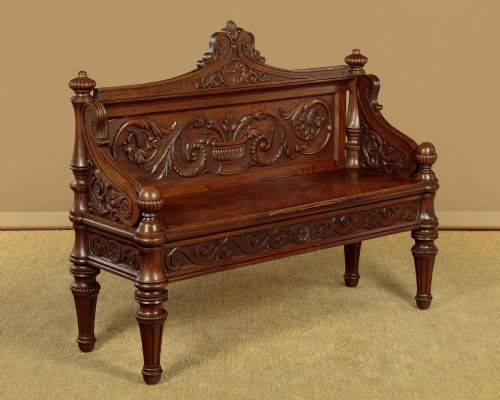
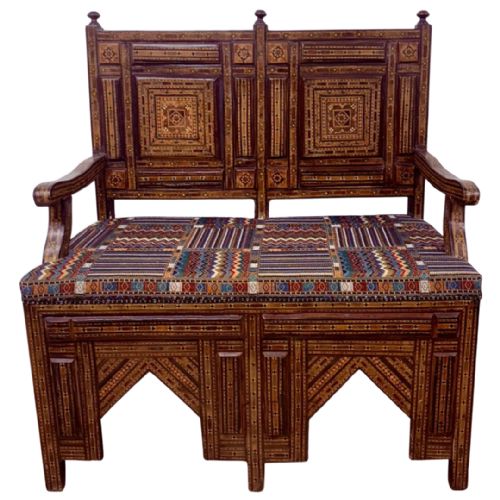
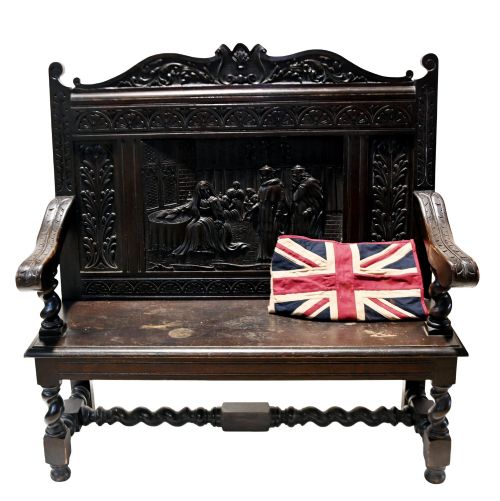
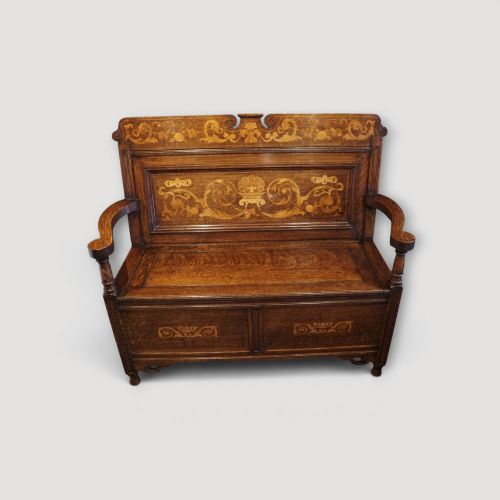
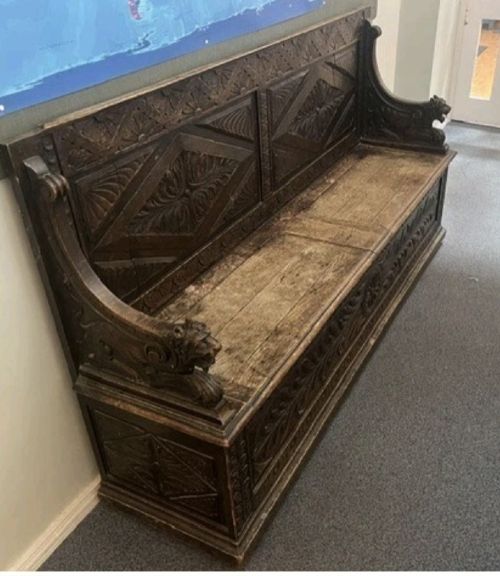
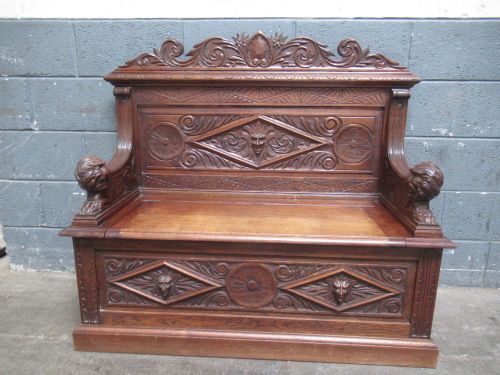
A carved settle bench provides high-backed seating designed to shield occupants from drafts in older hallways and rooms. The forms seen here span from seventeenth-century box settles to Victorian and Edwardian oak hall seats.
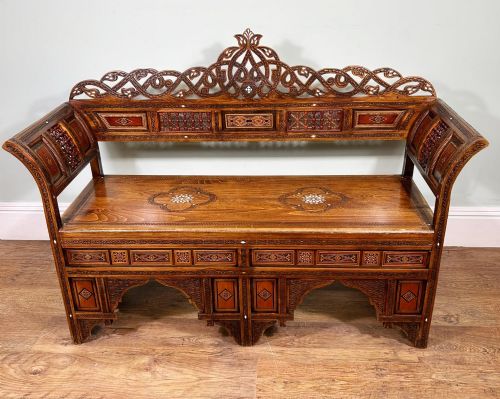
Most examples encountered on this page are constructed from solid oak in English, Gothic, or Renaissance revival styles. Regional variations include Italian walnut cassapancas, Spanish colonial hardwood benches, and inlaid Syrian pieces.
Functional adaptations range from simple panelled benches to box settles with lift-up lids, fold-over monk's top tables, and central cupboards.
Materials and Construction
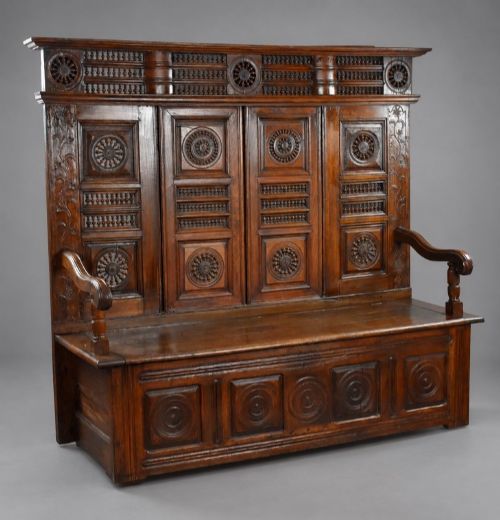
Solid oak and hardwood provide the structural foundation for the majority of these benches, joined using traditional panel-and-frame construction. Carved ornamentation often includes linenfold panels, architectural mouldings, and figurative motifs.
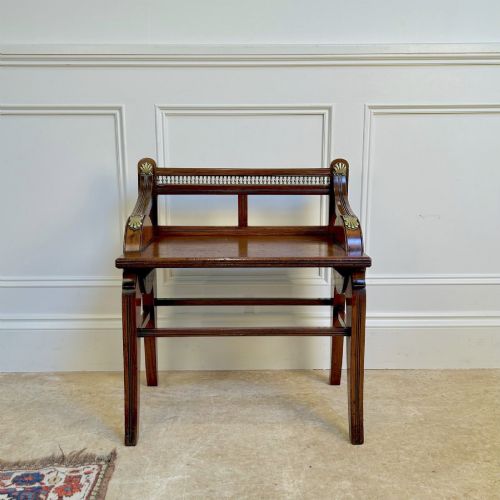
Surface decoration extends beyond carving to encompass mother-of-pearl inlay, marquetry, and cinnabar lacquer on select continental and Syrian examples. Iron brackets, brass hinges, and leather or fabric upholstery appear on specific period pieces.
Carved Settle Bench Retail Price Guide 2026
Typical asking prices for carved settle bench among the pieces listed under this phrase on Sellingantiques today, from the lower quarter to the upper quarter. They describe what is for sale here now, not the wider market.
Listings feature oak most frequently, alongside walnut, hardwood, iron, brass, fabric, leather, and bone across various periods.
Craftsmanship and Proportion
Depth of carving and clarity of detail distinguish standard revival pieces from finer examples. Crisp execution in high-relief work points to skilled hands in the workshop.
Proportion and timber selection dictate the visual weight of the bench. Pieces retain balance when the high back and enclosed box base harmonize without appearing heavy or altered.
GIllows
The Carved Settle Bench Glossary
- Settle
- A wooden bench with a high back, solid arms, and often an enclosed box base for storage. It evolved to block cold draughts in medieval and early modern interiors.
- Cassapanca
- An Italian chest bench featuring a high back and arms, functioning as both seating and a storage chest. These pieces often display Renaissance revival carving in walnut.
- Monk's bench
- A convertible form with a hinged back that folds down over the arms to create a table top. They appear in solid oak from the Victorian and Edwardian periods.
- Box settle
- A variant featuring a hinged seat lid opening to a compartment below. This design maximised utility in tight hall spaces.
Carved Settle Bench: Frequently Asked Questions
Where did people put settle benches?
These benches traditionally stood in hallways, near hearths, or in large public rooms where draughts needed deflection. Their high backs created a sheltered microclimate before central heating existed.
Modern interiors use them in similar transitional spaces, placing them in hallways, large kitchens, or dining rooms where the enclosed base provides hidden storage.
How do I spot a later revival piece?
Revival pieces from the nineteenth and twentieth centuries often employ machine-sawn timber uniformity and sharper, shallower carving styles. Examining the underside and interior reveals modern tool marks and fixings.
Older seventeenth and eighteenth-century examples display hand-adzed surfaces, pegged joints, and timber shrinkage patterns consistent with age.
What is a monk's bench used for?
A monk's bench functions as a dual-purpose item of furniture with a pivoting back that transforms the seat into a table top. This saved space in smaller domestic rooms.
Lifting the back reveals a flat surface suitable for writing or dining, while the box beneath holds household items.
Are these benches comfortable to sit on?
Early wooden settles feature upright, panelled backs designed for posture and draught exclusion rather than lounging. Many benefit from a loose squab cushion placed on the seat.
Upholstered variants and Syrian inlaid pieces offer softer seating, though most wooden benches rely on cushions for extended comfort.