
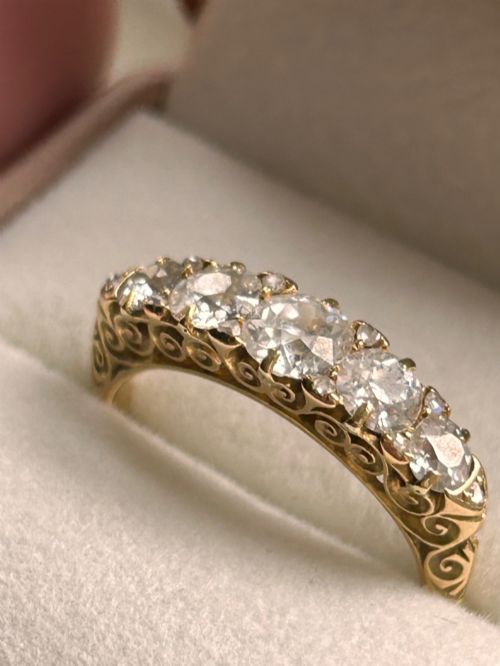
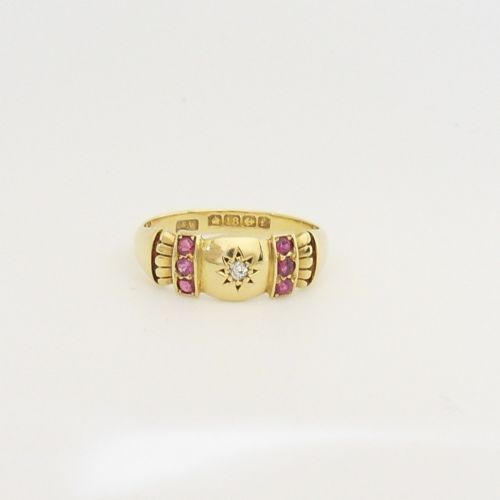
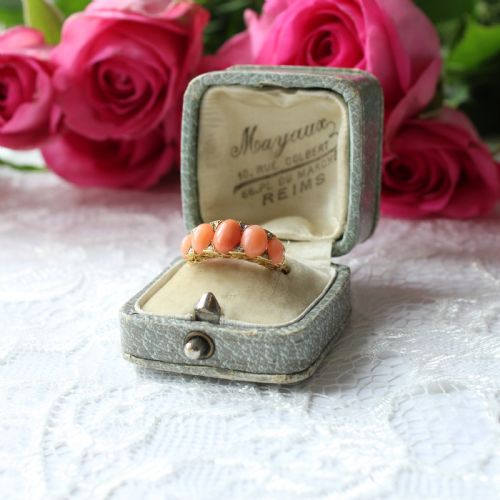


Carved Setting Diamond Ring
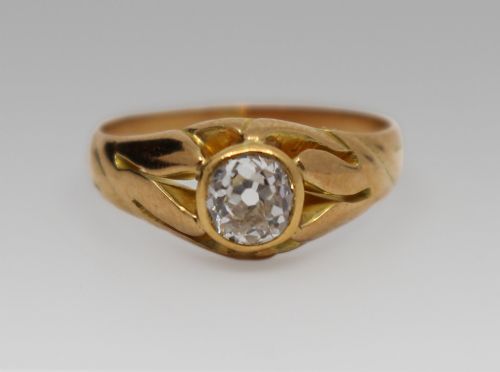
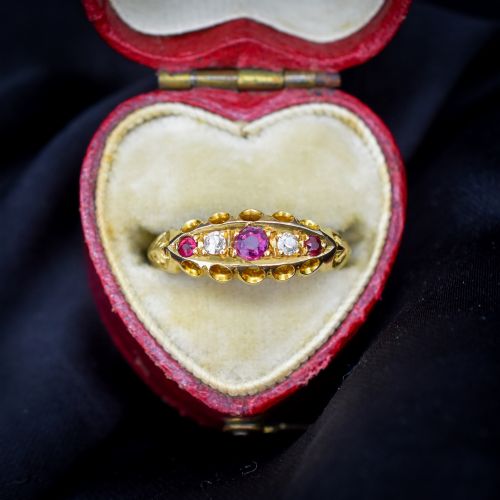
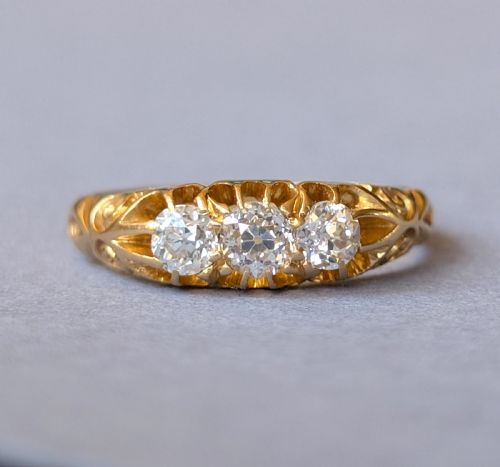
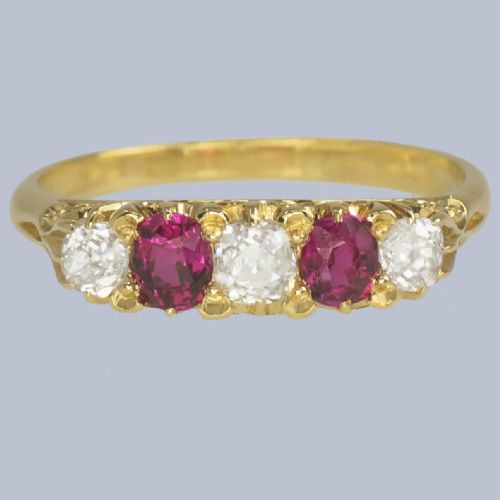
A carved setting diamond ring brings together old cut stones and secure flush metalwork from Victorian, Edwardian and Art Deco periods.
Carved Setting Diamond Ring
A carved setting diamond ring draws the eye through low profile bands and flush mountings typical of Victorian, Edwardian and Art Deco workshops. These pieces span late nineteenth century designs up to mid century half eternities, favouring secure flush mounting over high projecting prongs.
The version most commonly met on this page is the 18ct yellow gold band featuring old cut diamonds, often arranged in multi stone formations like boat shapes, five stone layouts or gypsy settings. Alongside diamonds, rubies, sapphires and garnets appear frequently in these historic mounts.
Makers from the turn of the century onwards shaped these durable bands for daily wear, combining yellow gold, rose gold and platinum with hand cut stones. Each piece reflects the shifting tastes of the Edwardian era and the geometric precision of the subsequent Art Deco movement.
Quality factors
The standard of a carved setting diamond ring rests upon the crispness of the hand carved metalwork surrounding the stones and the retention of original stone weight. Softer, worn bezel edges indicate heavy past polishing that obscures the maker's intended geometric lines.
The optical life of old cut diamonds varies according to facet symmetry and pavilion depth, distinguishing superior hand cut gems from standard commercial stones of the period. Heavier 18ct gold shanks that maintain their original thickness provide structural integrity superior to thinned bands.
Listings feature periods from the late Victorian era through Edwardian and Art Deco up to nineteen sixty, utilising 18ct gold, platinum and rose gold.
The Carved Setting Diamond Ring Glossary
- Gypsy setting
- A mounting style where the gemstone is flush with the surface of the ring, held by metal pushed up and burnished around the girdle. This technique creates a smooth, snag free profile suited to daily wear.
- Boat ring
- A boat shaped mounting design featuring a graduated row of stones curving across the finger, popular during the Victorian and Edwardian periods. The central stone typically sits highest within an oval or marquise outline.
- Old mine cut
- An early diamond cut characterised by a nearly square girdle, high crown, small table and large open culet. These hand faceted stones exhibit distinct scintillation under candlelight.
- Navette
- A boat shaped or marquise outline featuring pointed ends, housing multiple stones in an elongated geometric arrangement. This silhouette appears frequently in Edwardian and Art Deco pieces.
- Belcher setting
- A rounded style of claw setting where the metal prongs are drawn directly from the shoulders of the shank. It raises the stone slightly while maintaining a sturdy profile.
Carved Setting Diamond Ring: Frequently Asked Questions
How do I clean an antique ring?
Warm soapy water and a soft brush remove everyday oils safely from historic gold settings.
Avoid harsh chemical dips that can damage softer coloured stones like coral or garnet set alongside diamonds.
Can these rings be resized safely?
A skilled jeweller can alter 18ct gold and platinum bands by adding or removing metal at the rear of the shank.
Care must be taken near carved shoulders and flush set stones to preserve the original integrity of the metalwork.
Are old cut diamonds different?
Hand faceted old cut diamonds feature smaller tables and larger culets compared to modern brilliant cut stones.
They display distinctive warm light patterns that reflect the specific cutting techniques of the nineteenth and early twentieth centuries.
What periods do these pieces span?
The inventory covers Victorian, Edwardian, George V, Art Deco and mid century eras running from the late nineteenth century to nineteen sixty.
Hallmarks and design characteristics help identify the specific decade of manufacture for each individual band.